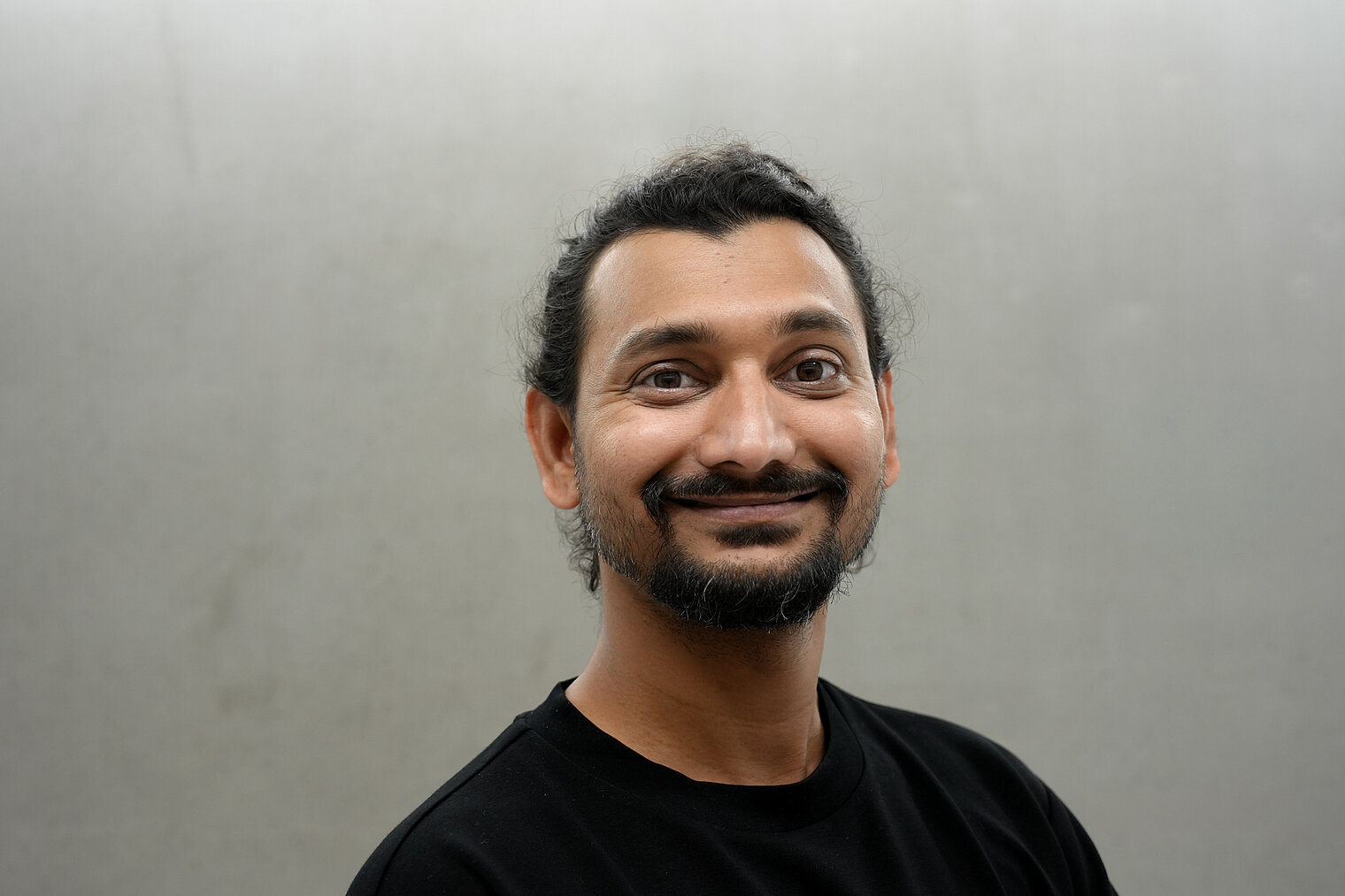
Deore’s scientific career has already taken him across several continents - from India to the United States and now to Germany, where he is further advancing his research profile at HIPS in Saarbrucken. He earned his PhD at the Indian Institute of Science (IISc) in Bangalore in the field of organic chemistry and photocatalysis; his dissertation was titled QD-based Photocatalysis and AuNP-catalysed Cascade Rearrangement Reaction. Most recently, he worked as an NIH Postdoctoral Research Fellow at San Diego State University in California, where his research focused on asymmetric photocatalysis. His scientific expertise spans organic synthesis, photochemistry, catalysis, bioactive molecules, and analytical methods.
At HIPS, a site of the Helmholtz Centre for Infection Research in cooperation with Saarland University, Deore is now applying this expertise to a research project that combines synthetic biology, protein engineering, and synthetic organic chemistry. The aim is to develop photo-stabilized mega-enzyme systems that enable the cell-free production of complex natural products, opening up new avenues for antibiotic development.
“What excites me most about HIPS is its strongly interdisciplinary research environment. Researchers in synthetic biology, medicinal chemistry, enzyme engineering, and computational science work together here to tackle important biomedical challenges,” says Deore. “Dr Bozhuyuk’s group is internationally recognized for its innovative strategies in natural product engineering, making it the ideal place to connect my research background with cutting-edge synthetic biology for drug discovery.”
The scientific goal of his project is to establish a versatile cell-free platform that will make it possible to design, synthesize, and scale new antimicrobial drug candidates more rapidly. To achieve this, stabilized multi-enzyme systems based on non-canonical amino acids and photo-click chemistry will be developed. Approaches like these could help overcome the limitations of conventional microbial fermentation and significantly accelerate the search for new bioactive molecules.
The relevance of this research is clear: antimicrobial resistance is among the greatest global health challenges of our time. New antibiotics and more efficient drug discovery strategies are urgently needed. Deore’s project is a strong example of how the Helmholtz Global Fellow Program brings international perspectives into the Helmholtz Association while also addressing current research priorities. The fellowship, which supports research stays of up to two years, provides the freedom fellows need to further strengthen their scientific independence.