Under the direction of Prof. Marc Stadler, who heads the department “Microbial Drugs” at the HZI, 13 partner institutions from 11 countries in Africa, America, Asia, and Europe are collaborating. The involved institutions can now send young scientists around the world to broaden their personal horizons and attain interdisciplinary skills that will be useful to them for their further careers. The research topics treated in the work program range from evolutionary biology and ecology to taxonomy and systematics, as well as drug discovery, plant pathology, food chemistry, biotechnology, and the bioeconomy. Results will be disseminated during several important conferences and workshops will also be held to train early-stage researchers.
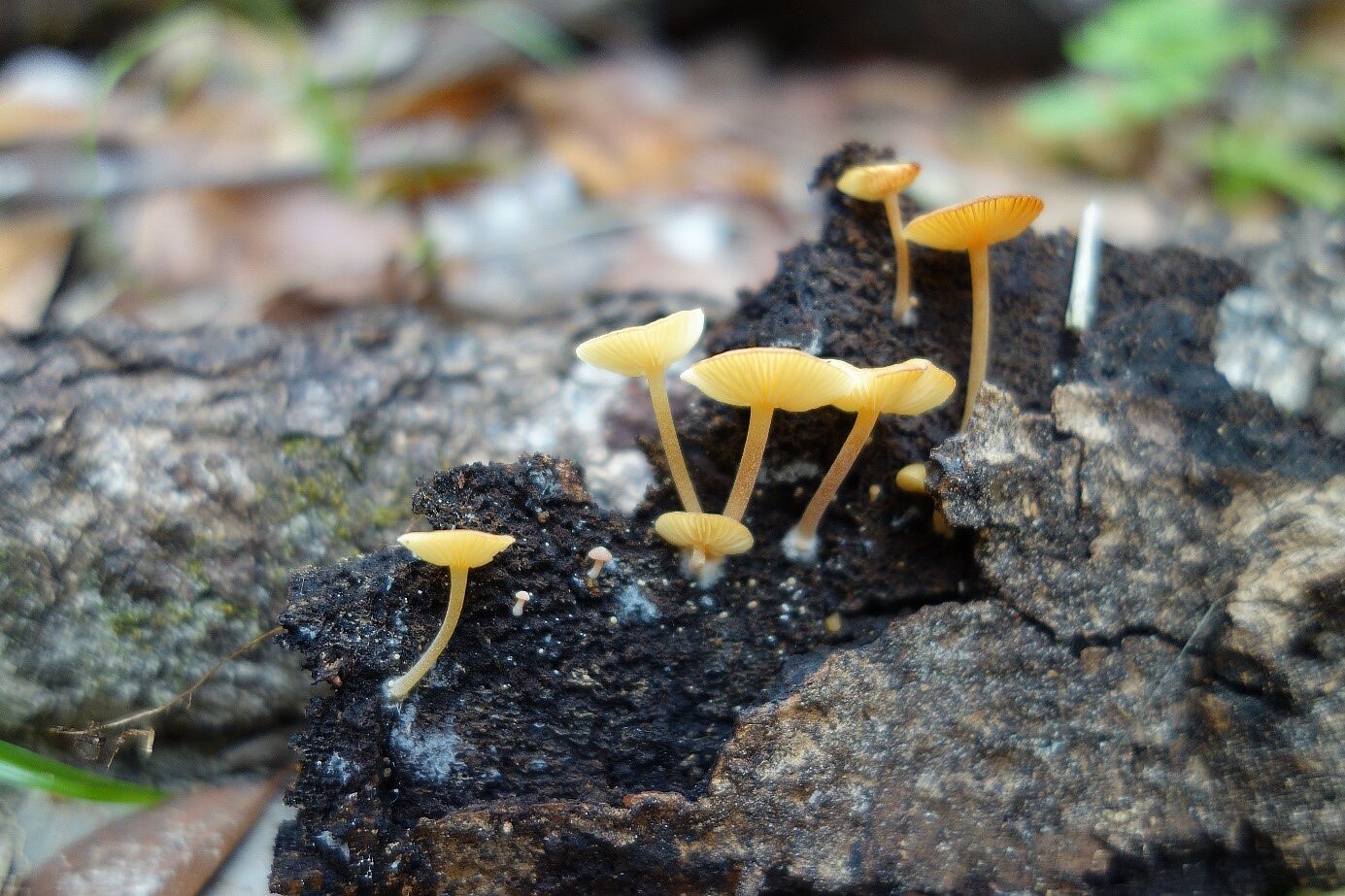
“Fungi are a largely unexploited source of bioactive natural compounds, and at the same time they open up new prospects for biotechnology, agriculture, and infection research,” says Marc Stadler. “Following the success of ‘Mycobiomics’, we aim at extending the staff exchange to additional mycological Centers of Excellence, thereby further broadening the network’s diverse range of expertise.”
The predecessor project, “Mycobiomics”, had already brought together leading mycologists from Europe, Asia, and Africa. More than 50 early-career researchers benefited from the interdisciplinary exchange. In addition, extract libraries were established, and newly studied fungal strains were permanently preserved. Partners to date include WFBI (Netherlands), BIOTEC (Thailand), CAS/IMIC (Czechia), Egerton University (Kenya), and FABI/UP (South Africa). Various other institutions like the University of Western Brittany (UBO, Brest, France), Cranfield University (UK), as well as DTU and University of Copenhagen (Denmark), the Colombian partners ICESI and UdeA, and the associated partner UFPE (Brazil) have newly joined the consortium. In the exchange program, Marc Stadler is joined by Prof. Theresia Stradal, who heads the department “Cell Biology” at the HZI, and Prof. Christine Beemelmanns, head of the research group “Anti-infectives from Microbiota” at the Helmholtz Institute for Pharmaceutical Research Saarland (HIPS). The HIPS is a location of the HZI in cooperation with Saarland University.
The scientific output of the preceding project is compiled on a project website, where almost 300 publications, presentations and theses have already been listed. The results from “Mycobiomics 2.0” will also be made available there in the future.
![[Translate to English:] Empfangsschild des Arabuko-Sokoke-Nationalparks](/fileadmin/_processed_/1/4/csm_arabuko_2_309435ebf8.jpg)