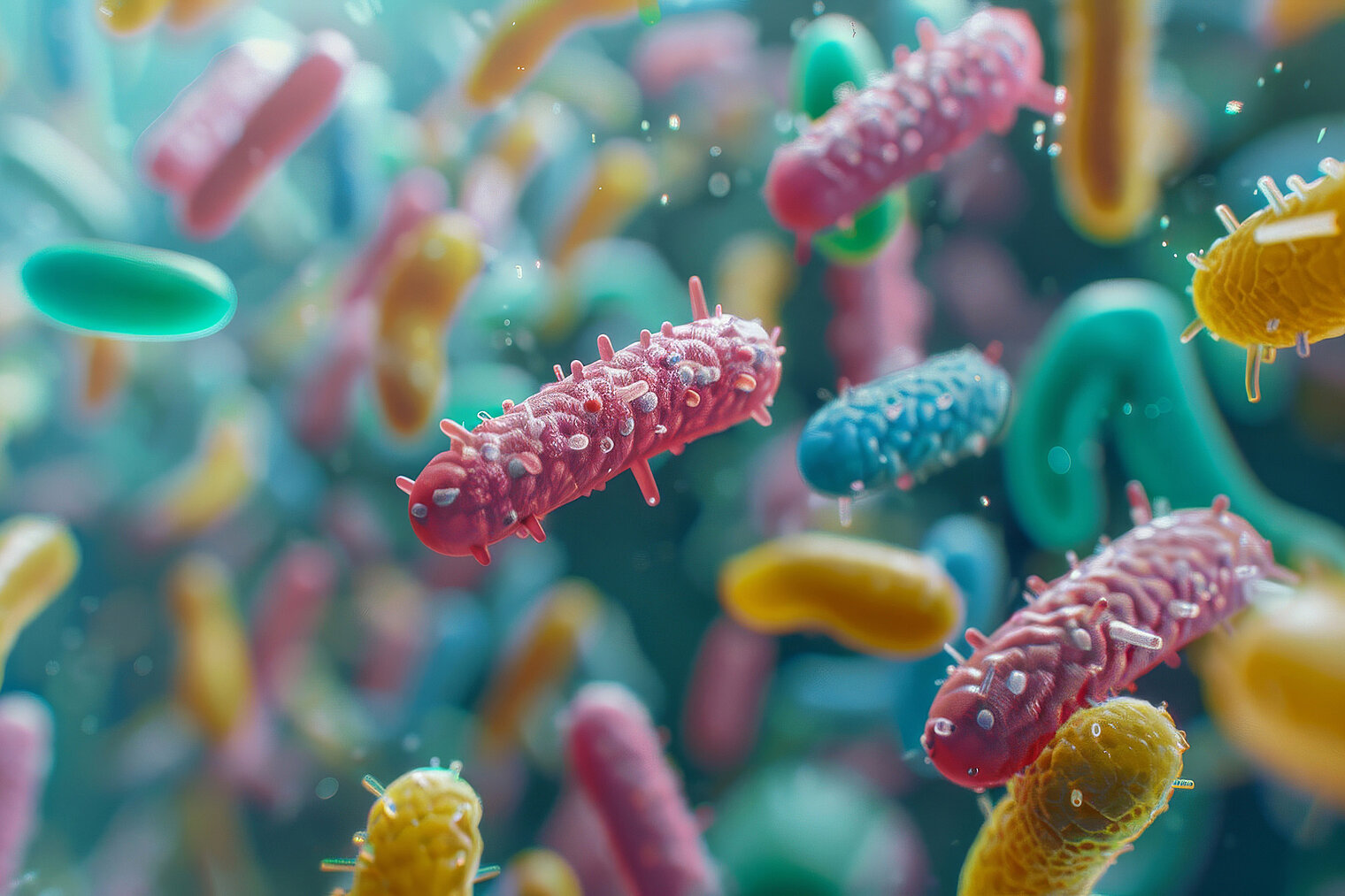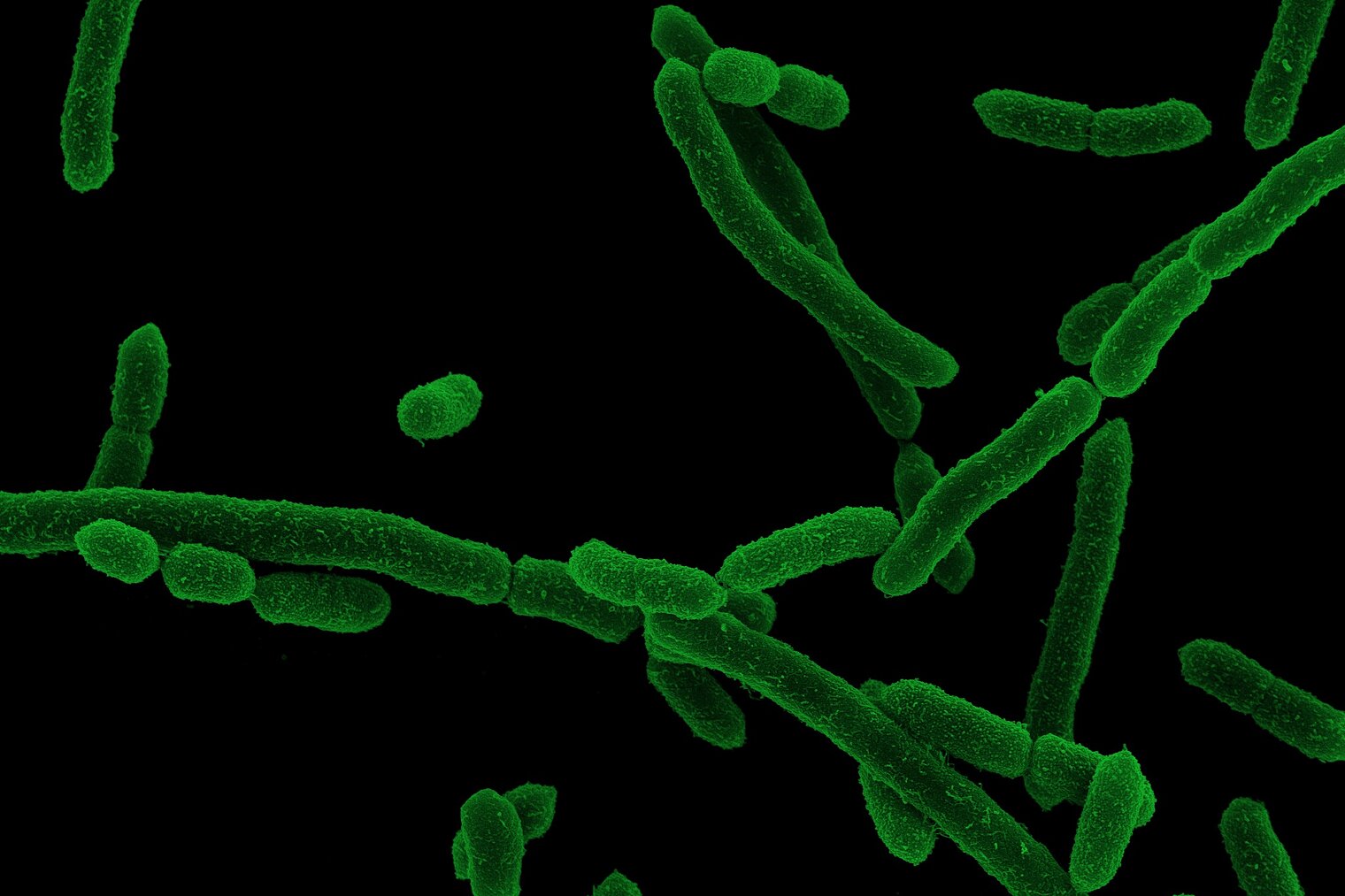
The composition of the gut microbiome does not depend solely on what people eat. The bacteria already present and their interactions also play an important role, as shown by a study conducted by a research team led by Prof. Till Strowig, head of the department “Microbial Immune Regulation” at the HZI. Using model systems, the researchers investigated how dietary components influence competition between two widespread bacterial groups in the gut. They focused on Bacteroidaceae, which are common in industrialized populations, and on Prevotellaceae—which includes Segatella copri—that are more frequently found in many non-industrialized populations.
A plant-rich diet has long been discussed as a possible explanation for regionally varying microbiome patterns. However, it is not sufficient as the sole cause. “We wanted to understand which factors actually influence the competition between these bacteria in the gut,” says Dr Caroline Tawk, one of the first authors of the study and, until recently, a researcher in Strowig’s department. Supported by a joint fellowship from the HZI and EMBL, she conducted research at EMBL in Heidelberg for several months, where she developed a highly parallelized experimental setup to investigate a wide range of dietary components.
Escherichia coli shifts the competitive balance in favor of Segatella copri
First, the team assembled a defined community of 21 human gut bacteria. They then tested 94 dietary components against this community, focusing in particular on complex carbohydrates and vitamins. More than half of the components tested promoted the growth of S. copri within this community. The team examined arabinan—a carbohydrate found in plant cell walls—in particular detail. S. copri, as well as other Bacteroidaceae, can directly utilize arabinan, so it could be ruled out that a direct benefit was responsible for the expansion of S. copri within the community. Interestingly, however, the advantage was not observed in every experimental setup. “When we brought S. copri and Bacteroidaceae together without the other members of the gut community, S. copri did not prevail despite the presence of arabinan,” says Tawk. “Only when we added Escherichia coli to the mix, the competitive balance shifted in favor of S. copri.” Other Enterobacteriaceae tested, including Klebsiella and Salmonella, also supported S. copri under certain conditions.
However, even strains of E. coli that cannot metabolize the monosaccharides produced during arabinan metabolism support the growth of S. copri. “We therefore assume that the presence of the sugars—as signal molecules, rather than their consumption by E. coli—may be sufficient to explain the observed supportive effect,” says Dr Youssef El Mouali, also a first author of the study. The exact molecular mechanism, however, remains unknown.
Microbiome data support observations under laboratory conditions
In addition, the HZI team, together with researchers from the University of Trento, analyzed publicly available microbiome data from approximately 1,000 healthy adults. As expected, S. copri and Enterobacteriaceae were more common and more diverse in the datasets from non-industrialized populations. Within this group, a higher number of different Enterobacteriaceae species was associated with a higher proportion of S. copri. This suggests that the observed effect—in which Enterobacteriaceae support the growth of S. copri—occurs not only under laboratory conditions but also in the human gut.
“Our results show that the effect of a dietary component should not be considered in isolation from the existing bacterial community,” study leader Strowig summarizes. “We need to clarify in further studies whether this knowledge can be used for personalized dietary or microbiome approaches.”
![[Translate to English:] Charlotte Schwenner](/fileadmin/_processed_/6/9/csm_Charlotte_Schwenner_7952cfe0a7.webp "Dr Charlotte Schwenner")