



Newsroom

Protein structure
News
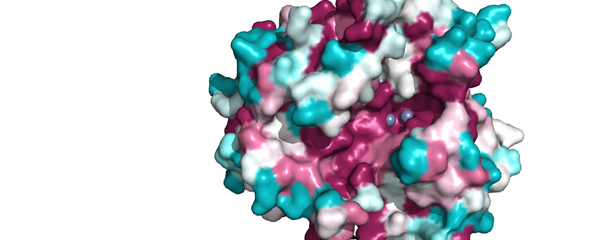
Carolacton is a natural product with antibiotic properties that is produced by soil-dwelling microorganisms. Researchers of the Helmholtz Institute for Pharmaceutical Research Saarland (HIPS) and the Helmholtz Centre for Infection Research (HZI) recently discovered that the bacterial agent inhibits a key enzyme of the metabolism of folic acid. This metabolic pathway exists in most living organisms and is essential for the growth of the organism since it is involved in the production of DNA components. Since this applies to humans also, the use of carolacton as an antibiotic might be difficult. But this target enzyme is needed strongly by rapidly growing cancer cells, which means that the growth of these cells can be inhibited by carolacton. The new evidence shows that carolacton and agents derived from this substance may be used as inhibitors in future cancer therapies. The researchers recently published their results in Nature Communications.
20.12.2017
Smartphone
News
German scientists from the Helmholtz Centre for Infection Research (HZI) and the German Center for Infection Research (DZIF) in Braunschweig and Nigerian researchers are applying the new mobile information system for the first time to combat a monkeypox outbreak in Nigeria. The monkeypox epidemic has spread since September 2017 and, by now, afflicts 128 patients in 14 federal states in Nigeria. The name of the system, SORMAS, stands for "Surveillance, Outbreak Response Management and Analysis System". It captures and analyses data upon the outbreak of dangerous infectious diseases, recognises potential hazards and manages necessary control measures at an early point in time. In line with the technological status of West African countries, the system is based mainly on mobile tablets or phones. It allows laboratories and hospitals to network with each other and to exchange epidemiological data in real-time.
14.12.2017
Biofilm Pseudomonas
News
Pseudomonas aeruginosa is a major pathogen that can cause severe infections in various organs of the human body. The infection becomes particularly harmful when the bacteria agglomerate into biofilms: They do this not only to evade attacks of the immune system, but also to protect themselves from the effects of antibiotics. This results in chronic infections that are almost impossible to treat. Scientists from the Helmholtz Institute for Pharmaceutical Research Saarland (HIPS), a joint branch of the Helmholtz Centre for Infection Research (HZI) and Saarland University, developed a molecule, which binds specifically and irreversibly to a key bacterial protein in biofilms. By binding, this molecule blocks an important component of the biofilm and can also visualise the biofilm, when it is labelled with an appropriate dye. The scientists published their results in the international edition of Angewandte Chemie.
07.12.2017
Interview with Silke Tannapfel
Interview
Silke Tannapfel has been the Administrative Director of the HZI since 01 October 2017. A lawyer with a focus on science management, she previously directed the division for extramural research support of the Bavarian State Ministry for Economy and Media, Energy and Technology in Munich. InFact spoke to her about her professional challenges and the first days at the HZI.
01.12.2017
Thomas Ebensen administers a new vaccine in a mouse via the mucous membranes – in humans, this might be done with a nasal spray in the future
Story
Vaccination affords the best protection from many infectious diseases. Vaccines are usually administered with a syringe, but researchers are working on alternatives – like a nasal spray or a vaccination cream. These would not only avoid the unpleasant injection, but even increase the effectiveness. Vaccines usually contain killed or attenuated pathogens and are injected into the patient. This ensures that the entire vaccine truly ends up inside the body. Recognising the pathogens in the vaccine as dangerous foreign material, the immune system prepares itself for defence. The administration by injection with a syringe has its drawbacks as well: It is not the natural pathway of infection and the elicited immune response therefore does not always afford optimal protection from the pathogen. Vaccination also requires trained personnel that simply is not available everywhere and at all times, especially in less developed countries.
01.12.2017
Salmonellen
News
Salmonellae are dangerous pathogens that enter the body via contaminated food and can cause severe infections. But these bacteria are also known to target tumours and to colonise them. Researchers are aiming to make use of this property for cancer therapy, but they are facing a dilemma: Salmonella infections are life-threatening. Scientists from the Helmholtz Centre for Infection Research (HZI) in Braunschweig now undertook a successful step towards the clinical application. They developed a Salmonella strain that induces only a harmless infection, but activates the immune system strongly enough to fight the tumours. Their results were published in the journal OncoImmunology.
23.10.2017

HZI in the media

... unseres Immunsystems zu entziehen. Strukturbiologen des Helmholtz-Zentrums für Infektionsforschung (HZI) konnten nun mittels ...

18.02.2026
|
Bionity.COM

of our immune system. Structural biologists at the Helmholtz Center for Infection Research (HZI) have now used cryo-electron microscopy to

16.02.2026
|
Phys.org

Was es mit Mpox – früher Affenpocken genannt – auf sich hat, welche Symptome erkrankte Personen haben und wie man sich anstecken kann.

13.02.2026
|
Apotheken Umschau

Julia Port, research group leader at Germany's Helmholtz Center for Infection Research.


"Ongoing outbreaks—particularly those driven by

12.02.2026
|
Medical Xpress

... Livia Patrono, laut einer Mitteilung des beteiligten Helmholtz-Instituts für One Health (HIOH): Denn dadurch ...

12.02.2026
|
n-tv

... für den Neubau der Klinik für Strahlentherapie Würzburg sowie für das Helmholtz-Institut für RNA-basierte ...

12.02.2026
|
mainpost.de

Project


Researchers at the Helmholtz Institute for One Health (HIOH), a site of the Helmholtz Centre for Infection Research (HZI), together

11.02.2026
|
NewsBreak

by Prof. Hortense Slevogt, Hannover Medical School, and Helmholtz Centre for Infection Research, shows that the treatment with PulmoPlas®

10.02.2026
|
Biotech Investments

... der Medizinischen Hochschule Hannover und des Helmholtz-Zentrums für Infektionsforschung. „Unsere Methode erfordert nur einen ...

10.02.2026
|
Health Capital

Fermentation und Aufreinigung, wurde ebenfalls am HZI in der Arbeitsgruppe von Prof. Marc Stadler, stellvertretender ...

06.02.2026
|
juraforum.de

... gehört habt: Phagen. Spoiler: Was am Helmholtz-Zentrum für Infektionsforschung (HZI) passiert, rettet im Zweifel Leben – ...

05.02.2026
|
Redaktionsnetzwerk Deutschland

Mattioli an: Am Helmholtz-Institut für RNA-basierte Infektionsforschung (HIRI), einem Standort des Braunschweiger Helmholtz-Zentrums für ...

04.02.2026
|
Universitätsklinikum Würzburg

Register now for the HZI-Newsletter