



Newsroom

Portrait of Thomas Pietschmann, TWINCORE
Interview
About 70 million people worldwide are chronically infected with the hepatitis C virus (HCV). Possible consequences include hepatitis, cirrhosis and liver cancer, but the disease often remains undetected for long periods of time. Thomas Pietschmann of the TWINCORE in Hannover investigates the virus and works on the development of a vaccine that could prevent HCV infections in the future.
01.05.2019
Portrait of Alice McHardy
Portrait
Alice McHardy reveals how she came to bioinformatics and what fascinates her about her work with massive volumes of data.
01.05.2019
Upper arm vaccination
Story
Carlos A. Guzmán's research team applies knowledge about the human immune system and its challengers to develop innovative vaccination strategies.
01.05.2019
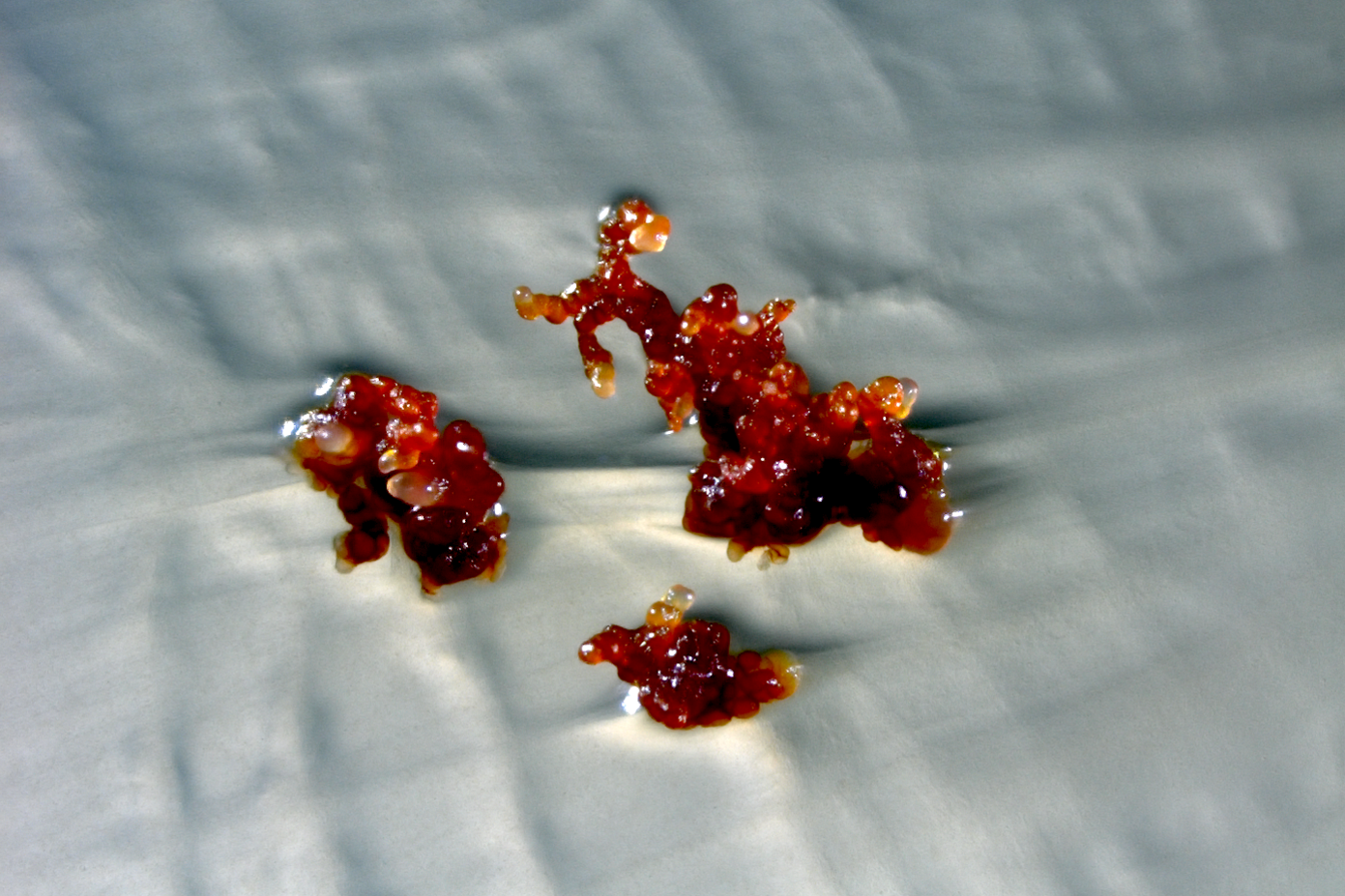
Stereomicroscopic image of Cystobacter violaceus in red.
Story
Among all the hospital germs, Gram-negative bacteria are particularly difficult to treat: Many antibiotics fail due to the double-cell membrane. But cystobactamides are providing hope for a remedy – substances from the extensive collection of bacteria held by the HZI. These bacteria are going to be further developed into drugs in a partnership with the pharmaceutical company Evotec.
01.05.2019
Infact illustration of hepesvirus in blue
Story
Herpesviruses use sneaky tricks to permanently establish themselves in our cells and to spread efficiently in the population.
01.05.2019
Logo
News
The Global Antibiotic Research and Development Partnership (GARDP) is partnering with Calibr, the Helmholtz Centre for Infection Research (HZI), in particular its location Helmholtz-Institute for Pharmaceutical Research Saarland (HIPS), and the University of Queensland’s (UQ) Community for Open Antimicrobial Drug Discovery (CO-ADD) in its efforts to develop and ensure new antibiotics are globally available to all patients who need them. The agreement allows GARDP to access and test Calibr’s ReFRAME compound library and HIPS natural products library. Both libraries will be screened by CO-ADD to discover novel compounds or combinations of drugs that will kill the priority pathogens identified by the WHO in critical need for research and development of new antibiotics.
11.04.2019

HZI in the media

for cell movement. Scientists from the Helmholtz Center for Infection Research (HZI) in Braunschweig have provided evidence that Profilin

29.09.2026
|
TakeToNews

Biology (BRICS), a joint research center of the Helmholtz Centre for Infection Research (HZI) and Technische Universität Braunschweig.

29.09.2026
|
Phys.org

... treffsicher .


Das Helmholtz-Zentrum für Infektionsforschung:


Wissenschaftler:innen am Helmholtz-Zentrum für Infektionsforschung (HZI) ...

28.09.2026
|
DeutschesGesundheitsPortal

... Fluorchinolon-Resistenz aktiv


Forscher des Helmholtz-Zentrums für Infektionsforschung (HZI) um Dr. Jennifer Herrmann haben ...

27.09.2026
|
scinexx - Das Wissensmagazin

Die WHO nennt Antibiotikaresistenzen (AMR) eine der größten globalen Gesundheitsbedrohungen. Bereits heute töten resistente Keime jährlich mehr als eine Million Menschen direkt und tragen zu fast fünf Millionen Todesfällen bei. Tendenz: steigend. Für ein wirkungsvolles Dagegenha

25.09.2026
|
Sysmex

... die Resistenzen": HZI-Podcast InFact mit Mark Brönstrup


Quelle: Helmholtz-Zentrum für Infektionsforschung (HZI)


Biodiversität ...

25.09.2026
|
Analytik NEWS

Quelle: Pressemitteilung


Helmholtz-Zentrum für Infektionsforschung

24.09.2026
|
LaborPraxis

Lange galt Dopamin als simples Glückshormon. Alena Buyx zeigt in ihrer Sendung, dass der Botenstoff ...

24.09.2026
|
3sat

Leibniz-Lungenzentrum. Das HIPS ist ein Standort des Helmholtz-Zentrums für Infektionsforschung in Zusammenarbeit mit der Universität ...

23.09.2026
|
DeutschesGesundheitsPortal
23.09.2026
|
Spektrum der Wissenschaft

Register now for the HZI newsletter