


Newsroom

[Translate to English:]
News
Stem cells in the bone marrow provide a life-long supply of blood and immune cells. If they display defects – either caused by hereditary diseases or blood cancer – the transplantation of bone marrow cells of a suitable donor is often the only therapeutic option. To avoid rejection of the transplanted stem cells, the patients immune response needs to be dampened. The consequence: Bacteria and viruses have an easy time. Especially infections with the highly prevalent Cytomegalovirus are a leading cause of clinical complications – ranging from graft rejection to life-threatening disease. Scientists of TWINCORE and the German Cancer Research Center have now switched prespective: They investigated the influence of virus infections of bone marrow donors on the success of a transplantation. Their – striking – results were recently published in „Cell Reports“.
14.06.2017
Salmonellen
News
Scientists studying infections used to focus mainly on the direct interaction of the immune system with pathogens, but have since moved on to look more closely at the interactions that go on between microbiota, immune system and pathogen. Using mouse models, researchers from the Helmholtz Centre for Infection Research (HZI) recently elucidated a relationship between gut microbiomes of various compositions and the susceptibility to Salmonella infections. In their study, the scientists from Braunschweig identified several bacterial families that have a protective effect against Salmonella. The researchers also elucidated the immune mechanism in the mucosa of the gut that is regulated by the protective bacterial families. Published in Cell Host & Microbe, the results of the study of the HZI scientists are an important step towards a better understanding of the interactions of the triad of microbiota, immune system and pathogen.
14.06.2017
Darmflora
News
Intestinal bacteria are suspected of causing cardiovascular disease, since they produce trimethylamine as a metabolic product that is hazardous to humans. They utilise food ingredients that are present mainly in meat and eggs. The causal relationships are still vague at this time, since important insights into these microbial communities are still lacking. A research team from the Helmholtz Centre for Infection Research (HZI) recently developed a special function-based diagnostic method that allows the measurement of the trimethylamine production potential of intestinal communities and identification of the specific bacterial species involved in this process. Based on these insights, the microbiome may become a target of therapeutics in the distant future. The researchers published the results in Microbiome.
06.06.2017
Gruppenbild
News
In recent years, more and more pathogens have become resistant to previously time-proven antibiotics. This scenario gives scientists all over the world cause to find new anti-infective substances and to develop them for application in medicine. A true opportunity for the discovery of new antibiotics is the investigation of previously unknown bacteria and fungi from habitats that have not yet been examined thoroughly, as these microorganisms produce a wealth of chemical substances with antibiotic activity. Scientists from the Helmholtz Centre for Infection Research (HZI) have isolated a large number of new bacterial strains, some of which show an activity against resistant pathogens and have already been promoted to the early preclinical development phase.
20.04.2017
Eva Medina
Interview
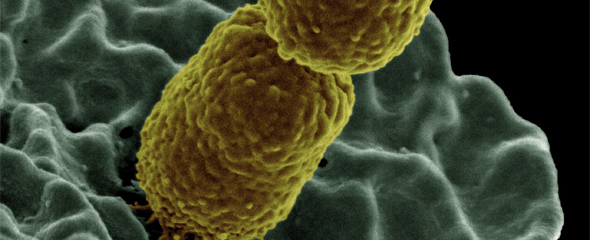
More and more pathogens are developing resistances to antibiotics. There is therefore an urgent need for new anti-infectives. In this regard, Eva Medina of the Helmholtz Centre for Infection Research is looking for therapeutic alternatives that will circumvent the renewed formation of antibiotic resistance.
03.04.2017

HZI in the media

... ÖAW in Wien und nun Gruppenleiter am Helmholtz Zentrum für Infektionsforschung in Braunschweig, forscht an ...

08.04.2026
|
DerStandard.de

... group within the Microstar Program at the Helmholtz Centre for Infection Research (HZI) and a ...

31.03.2026
|
Informations Dienst Wissenschaft

... an der Medizinischen Hochschule Hannover und am Helmholtz Institut für Infektionen in Braunschweig die Wirkung ...

28.03.2026
|
Hamburger Abendblatt

led by wildlife veterinarian Fabian Leendertz, who heads the Helmholtz Institute for One Health, took hundreds of samples from meat and

27.03.2026
|
Science.org

Gesellschaft. Apropos Standort Braunschweig: Auch das Helmholtz-Zentrum für Infektionsforschung HZI, in dessen Räumlichkeiten auf dem ...

27.03.2026
|
transkript

Helmholtz Centre for Infection Research


After infection with SARS-CoV-2, up to 10 percent of people in Germany go on to develop Long COVID.

26.03.2026
|
Mirage.News

... von verschiedenen Hörnchen, wie jüngste Erkenntnisse des Helmholtz Instituts für One Health in Greifswald kürzlich ...

26.03.2026
|
Tagesschau

zur Bekämpfung der Tuberkulose und des Helmholtz-Zentrums für Infektionsforschung erstellt. Zahlreiche weitere Fachgesellschaften und

24.03.2026
|
Deutsches Ärzteblatt

... fünf Teams durch, darunter PROTON vom Helmholtz-Zentrum für Infektionsforschung. Dieses entwickelt einen neuartigen Wirkstoff gegen ...

22.03.2026
|
Ad Hoc News

Vor allem durch die Coronapandemie sind Forschende des Helmholtz-Zentrums für Infektionsforschung in den vergangenen Jahren bundesweit bekannt geworden. Auf welche Themen die Einrichtung für die Zukunft setzt.

20.03.2026
|
Deutsches Ärzteblatt

... beschäftigt sich daneben unter dem Dach des Helmholtz Institutes für Pharmazeu­tische Forschung Saarland (HIPS) ...

18.03.2026
|
Biermann Medizin

... Ausbau von Produktions- und Vermarktungskapazitäten.


Das Helmholtz-Zentrum für Infektionsforschung HZI begrüßt den Erhalt der GMP- ...

18.03.2026
|
Bionity.COM

Register now for the HZI-Newsletter