

Newsroom

Pseudomoas aeruginosa and Quorum Sensing Inhibitors
News
The pathogen Pseudomonas aeruginosa is the cause of a large number of serious infections and places a particular burden on immunocompromised patients. The increasing spread of antimicrobial resistance makes it even more difficult to combat the dreaded hospital pathogen. A research team led by Dr Martin Empting of the Helmholtz Institute for Pharmaceutical Research Saarland (HIPS) has now discovered a new class of active compounds that disrupt the bacterium's chemical communication pathways. This not only reduces the pathogen's disease-causing properties, but also simultaneously enhances the effectiveness of antibiotics. The researchers published their findings in the journal Advanced Science. HIPS is a site of the Helmholtz Centre for Infection Research (HZI) in collaboration with Saarland University.
23.01.2023
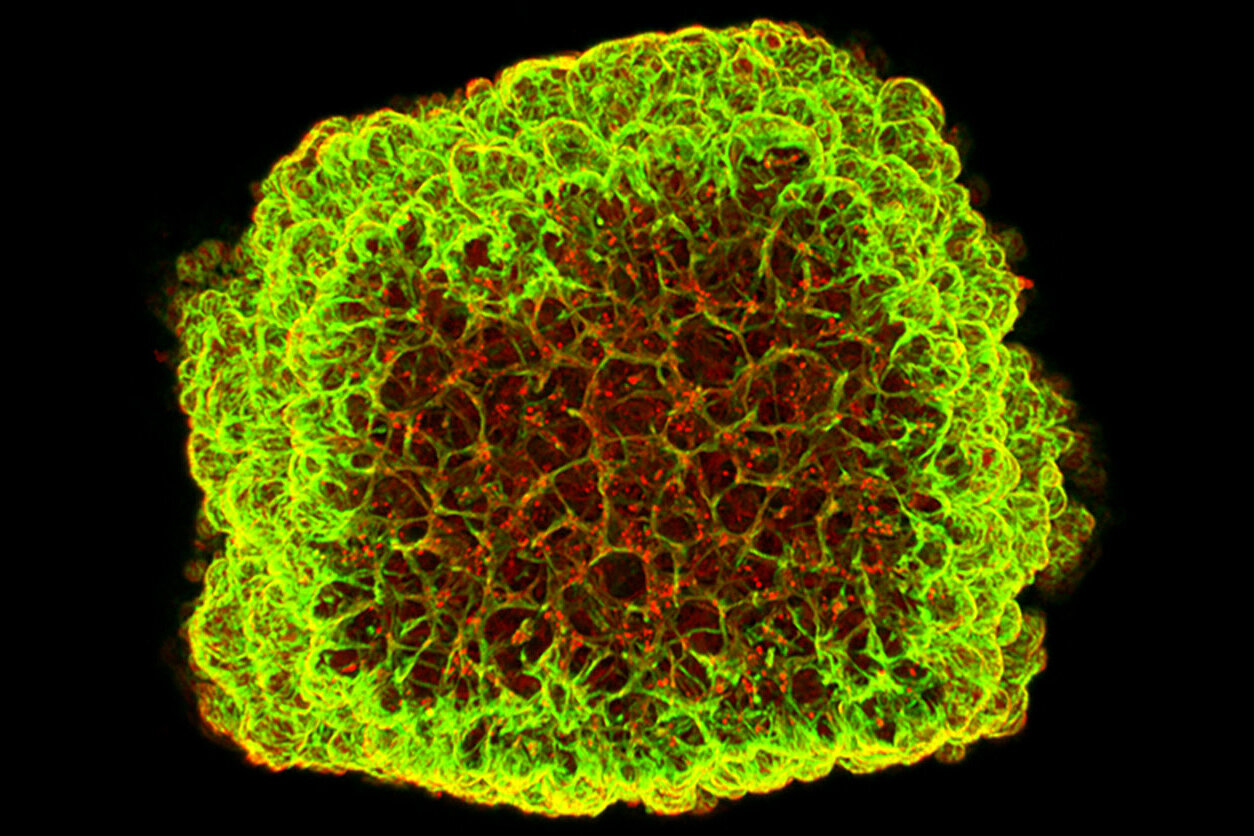
Host cells stained in blue with binding of LecA (green)
News
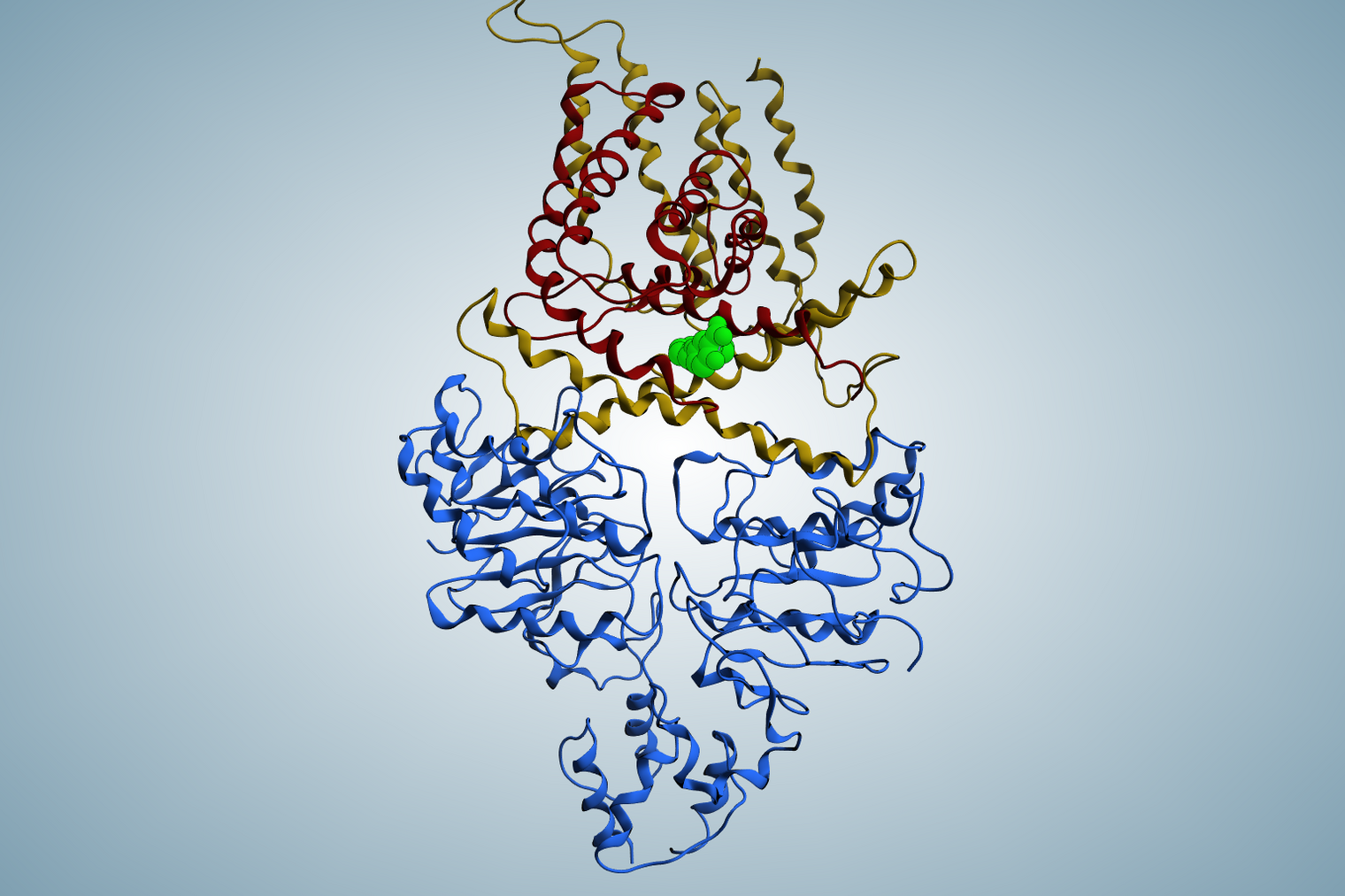
The hospital pathogen Pseudomonas aeruginosa requires the sugar-binding proteins LecA and LecB to form biofilms as well as to attach to and penetrate host cells. These so-called lectins are therefore suitable targets for active substances to combat Pseudomonas infections. Researchers from Saarbrücken and Freiburg have now produced potent inhibitors for LecA and LecB that are more stable and soluble than previous drug candidates. These optimized molecules have been tested in virulence assays and show promising properties for the development of new drugs.
16.01.2023
Symbolic image: Illustration of human cells
News
Würzburg, January 10, 2023 — Do we simply ingest a diagnostic probiotic based on programmed ribonucleic acids to analyze the intestinal health from individual cells in the future? Researchers at the Helmholtz Institute for RNA-based Infection Research (HIRI) and the Julius-Maximilians-Universität (JMU) in Würzburg have developed a new technology they call TIGER. It allows complex processes in individual cells to be deciphered in vivo by recording past RNA transcripts. The findings were published in the journal Nature Biotechnology on 5 January 2023.
10.01.2023
Portrait of Prof Gérard Krause
News
The 2022 Prize for Translational Infection Research of the German Center for Infection Research (DZIF), endowed with 5,000 euros, goes to the DZIF scientist and epidemiologist Gérard Krause, head of the department "Epidemiology" at the Helmholtz Centre for Infection Research (HZI) in Braunschweig. Prof Krause researches the spread and clinical consequences of infectious diseases in the population and develops methods for their prevention, diagnosis and epidemic control. He has now been honoured with the DZIF Prize for his outstanding contributions in the field of translational infection epidemiology and in particular for the development of the epidemic management system SORMAS.
09.01.2023
Prof. Dr. Chase Beisel and Dr. Oleg Dmytrenko.
News
It is an unexpected discovery by scientists at the Helmholtz Institute Würzburg in cooperation with Benson Hill, Inc. (Missouri) and Utah State University in the U.S.: They have found a nuclease, which they dubbed Cas12a2, that represents an entirely new type of CRISPR immune defense. Unlike any other previously known nuclease of the CRISPR-Cas immune system, the source of "gene scissors", Cas12a2 destroys DNA to shut down an infected cell. The findings could lead to new CRISPR technologies for molecular biology diagnostics, among other applications, and were published today in the journal Nature.
04.01.2023
Portrait
News
The lawyer Christian Scherf will start as Administrative Director at the Helmholtz Centre for Infection Research (HZI) in Braunschweig on 1 January 2023. The former Chancellor of the Berufliche Hochschule Hamburg succeeds Silke Tannapfel, who left the HZI at the end of 2021 to join the Hessian Ministry of Science and the Arts. The position of Administrative Director was temporarily taken over by Elisabeth Gerndt, authorised signatory and head of the Finance and Controlling Department, until 31 December 2022.
23.12.2022

HZI in the media

... können wir Pandemien früh erkennen? Forschende des Helmholtz‑Instituts für One Health zeigen, warum Mensch, ...

13.01.2026
|
Deutsche Welle

... gewinnbringend eingesetzt werden. Das HIPS ist ein Standort des Helmholtz-Zentrums für Infektionsforschung (HZI) in Zusammenarbeit ...

13.01.2026
|
juraforum.de

... nach SARS-CoV-2, sagt Fabian Leendertz. Er ist Direktor des Helmholtz-Instituts für One Health (HIOH) in ...

13.01.2026
|
Deutsche Welle

from the University Hospital Würzburg (UKW), the Helmholtz Institute for RNA-based Infection Research (HIRI), and University of Münster. The

12.01.2026
|
MSN.com

... des Universitätsklinikums Würzburg (UKW), des Helmholtz-Instituts für RNA-basierte Infektionsforschung (HIRI) und der Universität ...

12.01.2026
|
Biermann Medizin

... potential pandemics early on? Researchers at the Helmholtz Institute for One Health are showing why ...

12.01.2026
|
Deutsche Welle

Entdeckung


Forschende am Helmholtz-Institut für RNA-basierte Infektionsforschung (HIRI), einem Standort des Braunschweiger Helmholtz- ...

09.01.2026
|
Bionity.COM

tools.” – Dr. Anya Sharma, Virologist at the Helmholtz Centre for Infection Research.


Looking Ahead: The Long-Term Implications of

08.01.2026
|
ARCHYDE

Beisel at Germany's Helmholtz Institute for RNA-based Infection Research in Würzburg and Dirk Heinz at the Helmholtz Center for Infection

07.01.2026
|
News Medical

consisting of Hannover Medical School (MHH), the Helmholtz Centre for Infection Research (HZI) in Braunschweig, and the Leibniz Institute in

07.01.2026
|
Trading View

... haben nun die Studienautoren vom HIRI ‒ einem Standort des Braunschweiger Helmholtz-Zentrums für Infektionsforschung (HZI) in ...

02.01.2026
|
Biermann Medizin

... bis zur Medikamentenentwicklung", sagt Josef Penninger, wissenschaftlicher Geschäftsführer des HZI und Leiter der Abteilung Innovative ...

30.12.2025
|
Tagesschau

Register now for the HZI-Newsletter