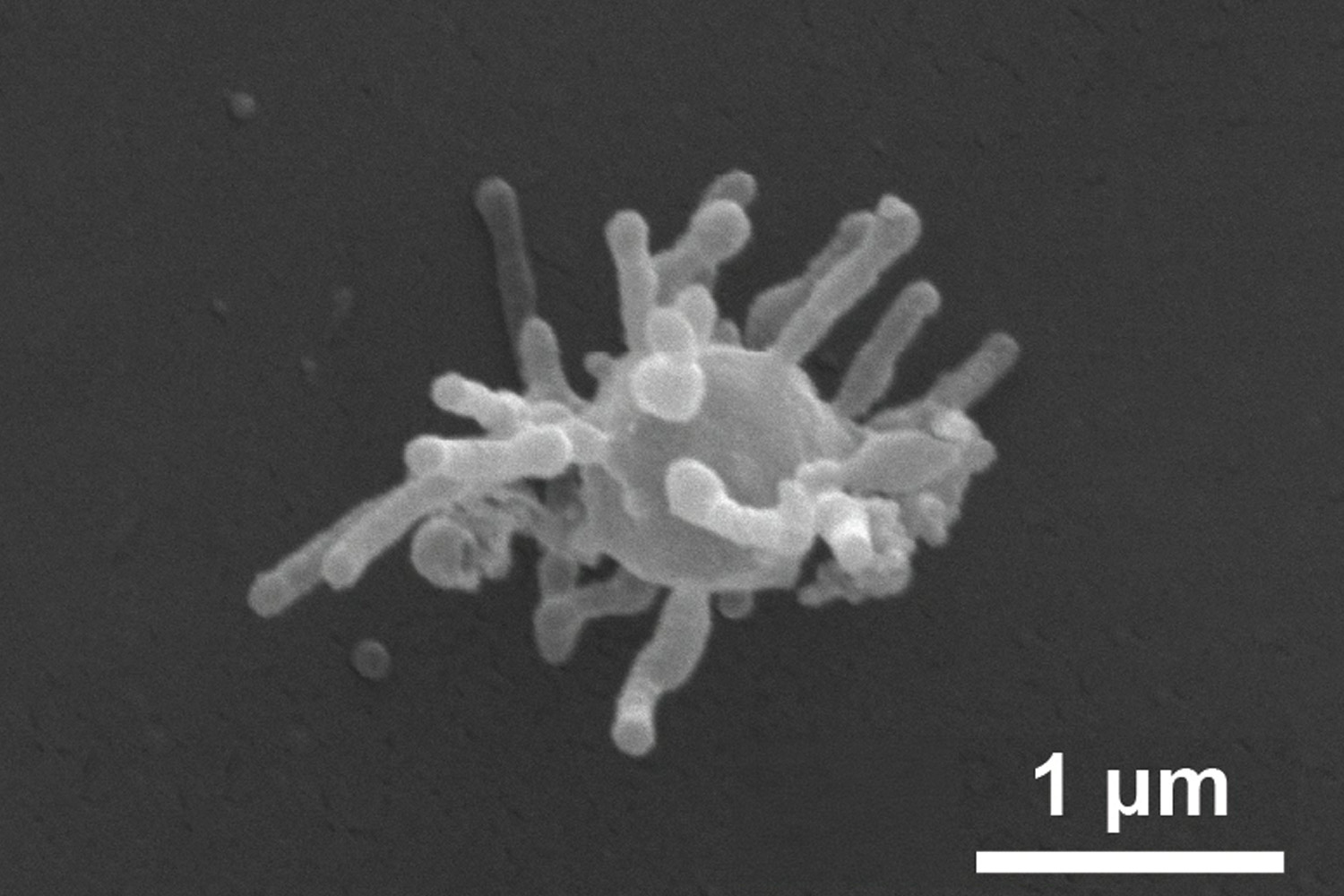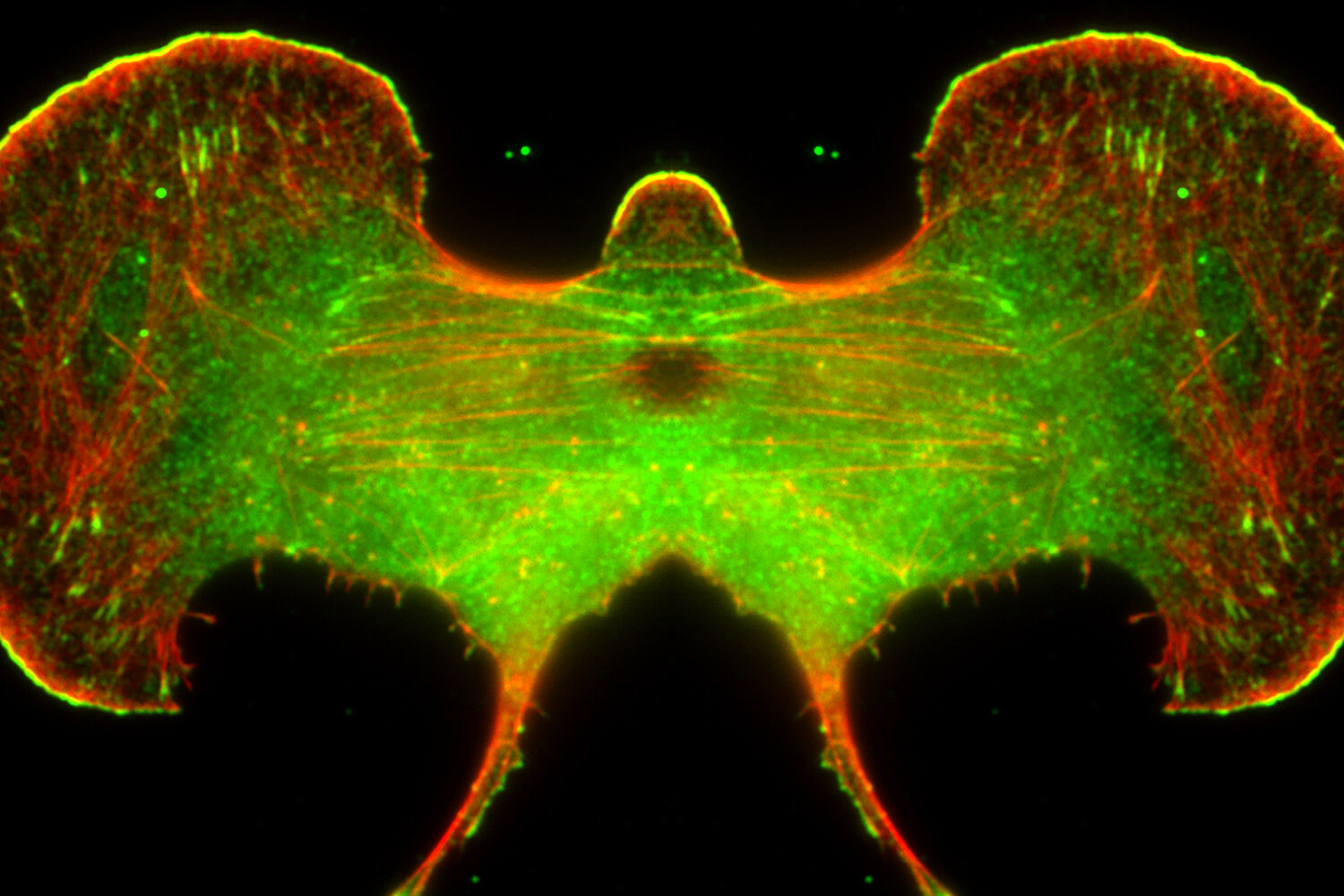
Whether in single-celled organisms such as amoebae or in complex multicellular organisms such as humans – all nucleated cells, known as eukaryotes, require actin filaments. These thin, fiber-like structures help cells to maintain their shape, move and divide, and transport substances within a cell. For an actin filament to form, several actin building blocks, also known as monomers, must be joined together to form fiber-like chains (polymers). Cells are constantly remodelling their actin filaments, sometimes more quickly and sometimes more slowly, depending on their function and subcellular location. However, for this to happen, a certain level of polymerisation pressure must prevail at all times to drive these remodelling processes. This pressure arises from a dynamic state of imbalance – a so called non-equilibrium or excess of monomers – which is obligatory for the survival of all eukaryotes.
In the DRACHE project, researchers are investigating for the first time whether the mechanisms generating this non-equilibrium are similar across a wide variety of eukaryotic organisms, or whether fundamentally different strategies have evolved to obtain this. To shed light on this question, the biophysical properties of the monomers themselves and their regulators in different organisms are being compared, the non-equilibrium is being specifically manipulated (genetically or pharmacologically), and as yet unknown intracellular sensors for its state are being identified. The findings from this basic research can due to its breadth be utilised across a wide range of scientific areas.