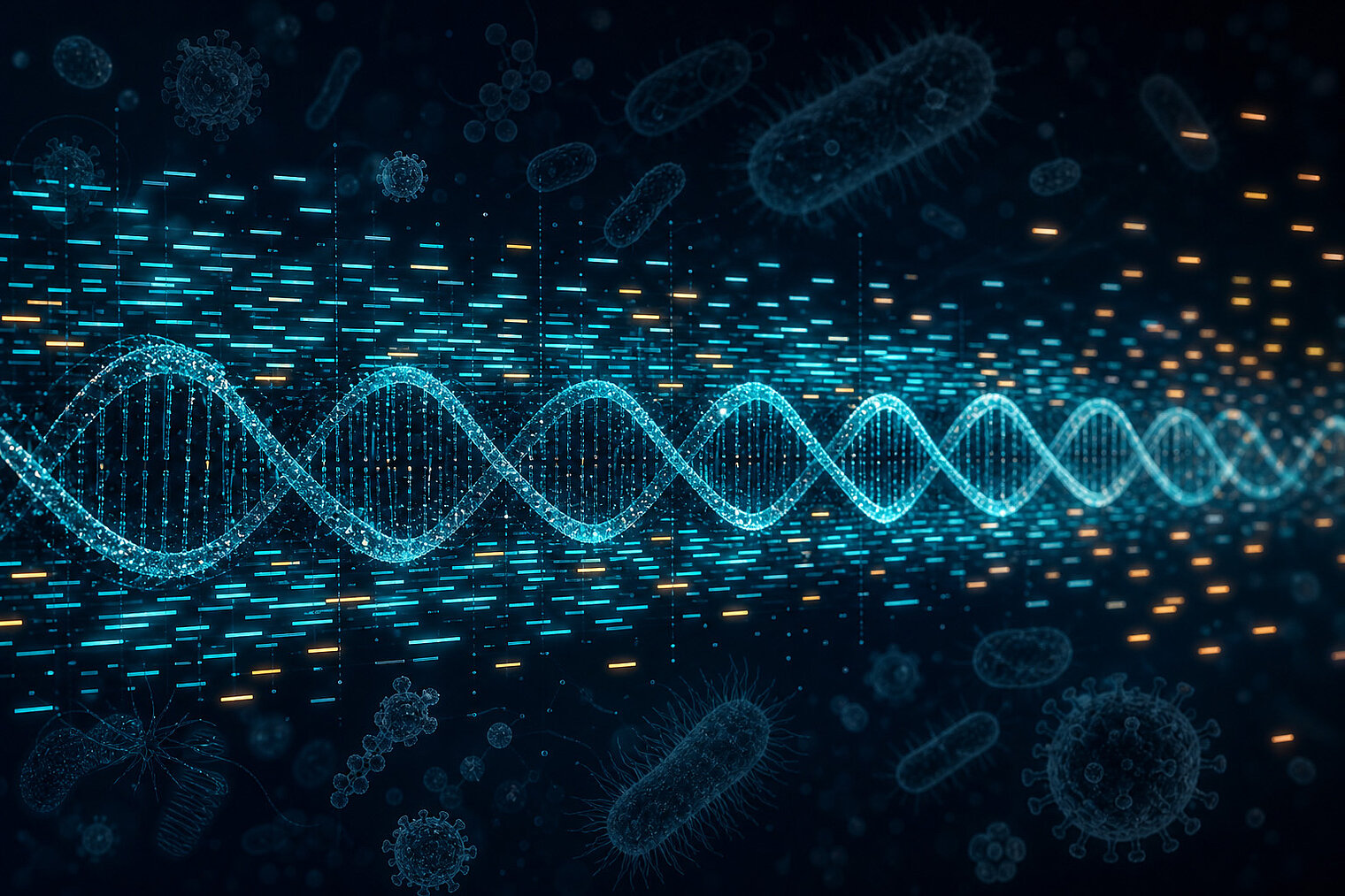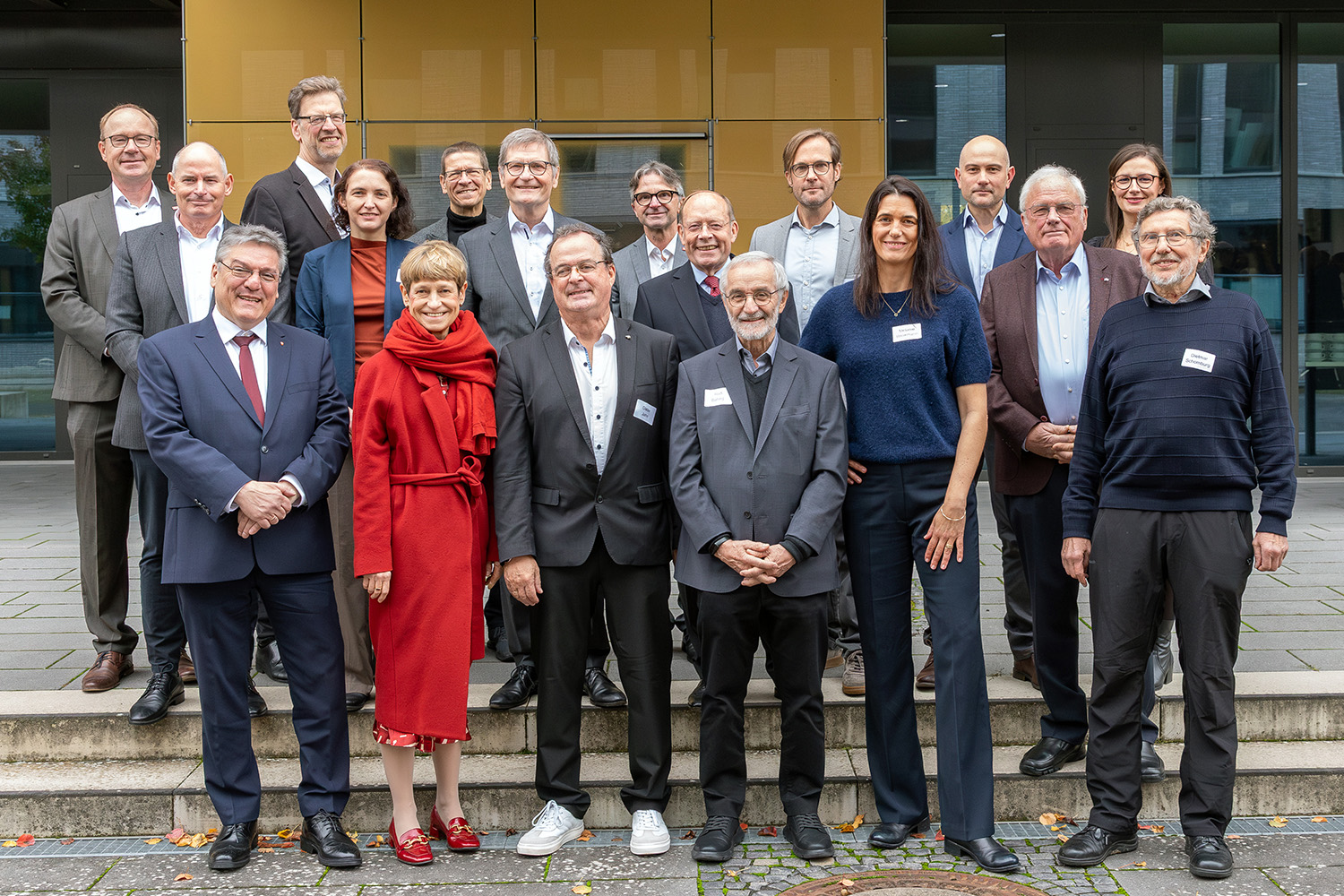
The research focuses on understanding complex biological systems. BRICS investigates how biological systems function in health, disease and the environment by examining the dynamic interactions between their subsystems. In doing so, it demonstrates how new properties emerge – from molecules and organs right through to entire ecosystems.
Preventing diseases, protecting ecosystems
The insights gained are intended to help improve diagnoses, develop personalized healthcare measures, prevent diseases and protect ecosystems. In this way, BRICS contributes to a higher quality of life and greater well-being in society. A particular strength of the center is its interdisciplinary approach: It combines experimental biology, mathematics, artificial intelligence, measurement technology and engineering into a unified systems biology approach.
Three interdisciplinary research spaces
BRICS comprises three interdisciplinary research spaces, each representing a different level of biological organization whilst remaining closely interconnected: the Eco Space, the Metabo Space and the Whole Body Space. Together, they embody the vision of understanding living systems as dynamic, interconnected and interacting networks.
This interconnectedness, which plays a central role at BRICS at a scientific level, is also reflected in the funding provided to young people and the guidance offered for individual career paths. Alongside the BRICS Women’s Network, the Future Day offers insights into the work and research carried out at BRICS.
Quotes:
“Our concept is a strong community hub: TU Braunschweig together with the Physikalisch-Technische Bundesanstalt (PTB), the Helmholtz Centre for Infection Research (HZI) and the Leibniz Institute DSMZ-German Collection of Microorganisms and Cell Cultures GmbH (DSMZ). When these renowned institutions stand united behind such a project and commit to one another, the foundation is far stronger. Together, we can achieve much more – and this approach has certainly proved its worth.” — Prof. Dieter Jahn, BRICS spokesperson from 2016 to 2026
“The tenth anniversary provides an opportunity to look back on the development of BRICS whilst also setting our sights on the future. New methods, research questions and opportunities for collaboration open up further perspectives for systems biology, which combines scientific excellence with societal relevance. As part of TU Braunschweig’s Ecoversity strategy, BRICS exemplifies a research culture based on openness, collaboration and exchange across institutional boundaries. I would like to thank all our partners and the State of Lower Saxony for their cooperation and support.” —Prof. Melanie Brinkmann, BRICS spokesperson
“Ten years of BRICS demonstrate just how much expertise we pool together with our partners in the field of systems biology. The structures we have built up and our well-established networks offer researchers long-term prospects for further developing this knowledge. Strong partnerships help us to achieve this – not least because they give researchers the freedom to pursue new ideas together and to break new scientific ground. This happens every day at BRICS. As a university, we are very proud of this.” — Prof. Angela Ittel, President of TU Braunschweig
“The HZI regards BRICS as a key building block for the interdisciplinary advancement of future biological research at a systems level. A data-driven understanding of complex biological networks, achieved through mathematical modelling and artificial intelligence, lays the foundation for translating scientific results more quickly into innovative solutions for the prevention, diagnosis and treatment of infectious diseases, whilst also strengthening Lower Saxony as a centre of scientific excellence.” — Prof. Michael Meyer-Hermann, Helmholtz Centre for Infection Research (HZI)
“The collaboration with BRICS is strategically important for the DSMZ and its networking within the region. Interdisciplinary collaboration in the fields of microbiology, metabolomics, genomics, bioinformatics, databases and data science enables us to understand biological systems at various levels. As one of the world’s largest collections of biological resources, the DSMZ possesses unique biological resources and extensive expertise, which we contribute to joint research projects.” — Prof. Ulrich Nübel, Leibniz Institute DSMZ-German Collection of Microorganisms and Cell Cultures GmbH
“BRICS quickly proved to be a natural and extremely successful partner for the PTB. It brings together expertise in the fields of infection biology, ‘omics’ technologies, bioinformatics, computer-aided modelling, bioprocess engineering and artificial intelligence. Combined with the PTB’s expertise in metrology, this creates an exceptional environment for tackling some of the most important challenges facing modern Biology and health research.” — Prof. Gavin O’Connor, Physikalisch-Technische Bundesanstalt