Around 115,000 people in Germany live with collagen diseases. These conditions are chronic, and there is currently no cure. Whilst medication can alleviate symptoms, finding the right treatment often takes a long time, which can cause considerable suffering and incur high costs.
A team of researchers and doctors from MHH, TWINCORE, and HZI are working together to change this. Their project, “PREcision DIagnostics to CombaT Connective Tissue Diseases” (PREDICT-CTD), aims to develop a new diagnostic method. The aim is to ensure that patients can receive more targeted and personalized treatment in future.
Treatment depending on the cause of the illness
To this end, the team is building on the understanding that, although collagenoses cause a wide variety of symptoms, they can be classified into two groups based on the predominant inflammatory responses, depending on the underlying immune reactions. “Either the inflammation is primarily triggered by specific immune cells, namely B cells, or by specific immune system messengers, namely type 1 interferons. Accordingly, the optimal treatment depends on the primary cause in each case,” says Dr. Dr. Theresa Graalmann, who is leading the project alongside Prof. Yannic Bartsch.
To date, there is no routine clinical diagnostic method available to identify the predominant inflammatory response in the tissue of affected patients, which would enable the appropriate treatment to be initiated quickly. At present, the appropriate treatment must be tried out. The aim of the new project is to develop routine clinical diagnostics that can specifically analyze the individual type of inflammation and identify the appropriate treatment. This will help to avoid unnecessary treatments.
Focus on immune system responses
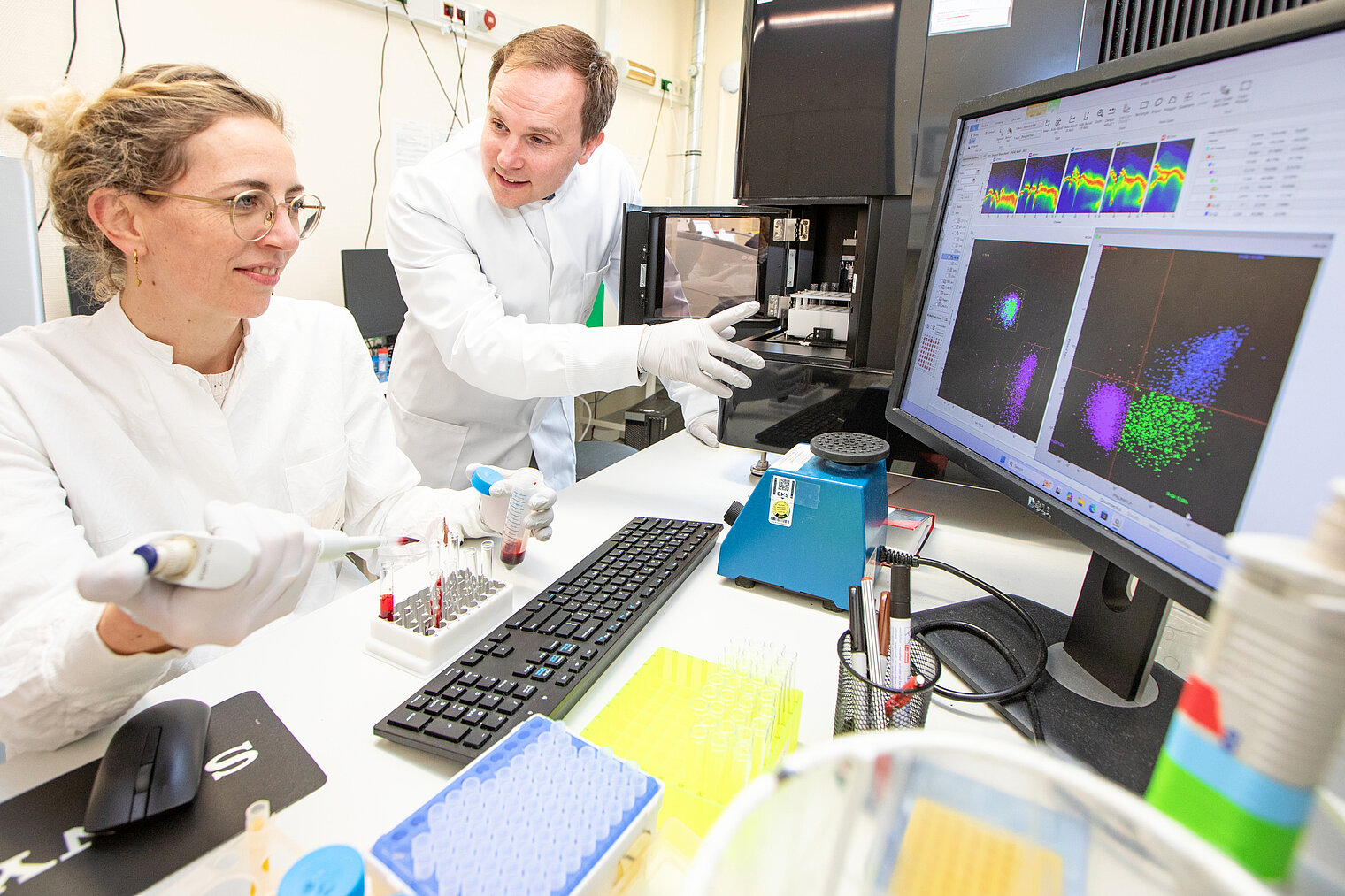
The study will involve approximately 200 children and 2,000 adults with collagen diseases. In addition to clinical factors, the team will analyze their blood samples, genetic factors and tissue samples, particularly skin samples. The focus will be on the immune system’s responses.
The project will launch on 1 July 2026 and is scheduled to run for five years. The State of Lower Saxony and the Volkswagen Foundation are supporting the initiative with 2.7 million euros as part of the “zukunft.niedersachsen” program. The program funds projects aimed at developing new diagnoses and treatments for rare diseases. Diseases are considered rare if they affect fewer than five in 10,000 people. They are often particularly difficult to diagnose and treat.
One term – many clinical presentations
Collagen diseases encompass several different conditions. The most common include: systemic sclerosis, systemic lupus erythematosus, Sjögren’s syndrome and inflammatory myopathies. Mixed forms are also possible.
These conditions can manifest in very different ways: systemic sclerosis involves scarring of the connective tissue. This can affect both the skin and the internal organs. Systemic lupus erythematosus can affect not only the skin and joints but also the kidneys, heart or nervous system. Sjögren’s syndrome leads to dry eyes and a dry mouth, but can also affect various organs. Inflammatory myositis is associated with chronic inflammation of the muscles and, consequently, muscle weakness.
The causes of collagen diseases are varied and include both genetic factors and environmental influences such as smoking, particulate matter, infections and hormones. To date, there is no cure for collagen diseases. There are various ways to alleviate the symptoms.
Text: Bettina Bandel
![[Translate to English:] Charlotte Schwenner](/fileadmin/_processed_/6/9/csm_Charlotte_Schwenner_7952cfe0a7.webp "Dr Charlotte Schwenner")