Research at the human-animal-environment interface
Climate change, globalization and the loss of natural habitats are changing the spread of infectious diseases worldwide. Pathogens are increasingly crossing species barriers, while antimicrobial resistance continues to grow. The establishment of the HIOH in 2021 as a site of the Helmholtz Centre for Infection Research (HZI) in Braunschweig laid the foundation for a new research focus in Greifswald. At its core is the One Health approach, which recognizes the health of humans, animals and the environment as closely interconnected.
„Even in its early development, HIOH is already an internationally recognized research institution focused on preventing the health crises of tomorrow. With this new building, the state is investing in state-of-the-art infrastructure for health research and, together with the federal government, creating an internationally visible One Health hub in Greifswald”, said Bettina Martin, Minister for Science of Mecklenburg-Western Pomerania, at the topping-out ceremony in Greifswald.
Today, HIOH scientists work together with researchers from the local partner institutions – the University of Greifswald, University Medicine Greifswald and the Friedrich Loeffler Institute – across disciplines to investigate the emergence of zoonotic diseases and antimicrobial resistance, as well as the evolution of pathogens. Understanding the origins and transmission pathways of infectious diseases and thereby reducing the risk of future pandemics is becoming increasingly important in an ever more interconnected world. Pathogens can travel around the globe within a very short time, posing a health threat far beyond their places of origin.
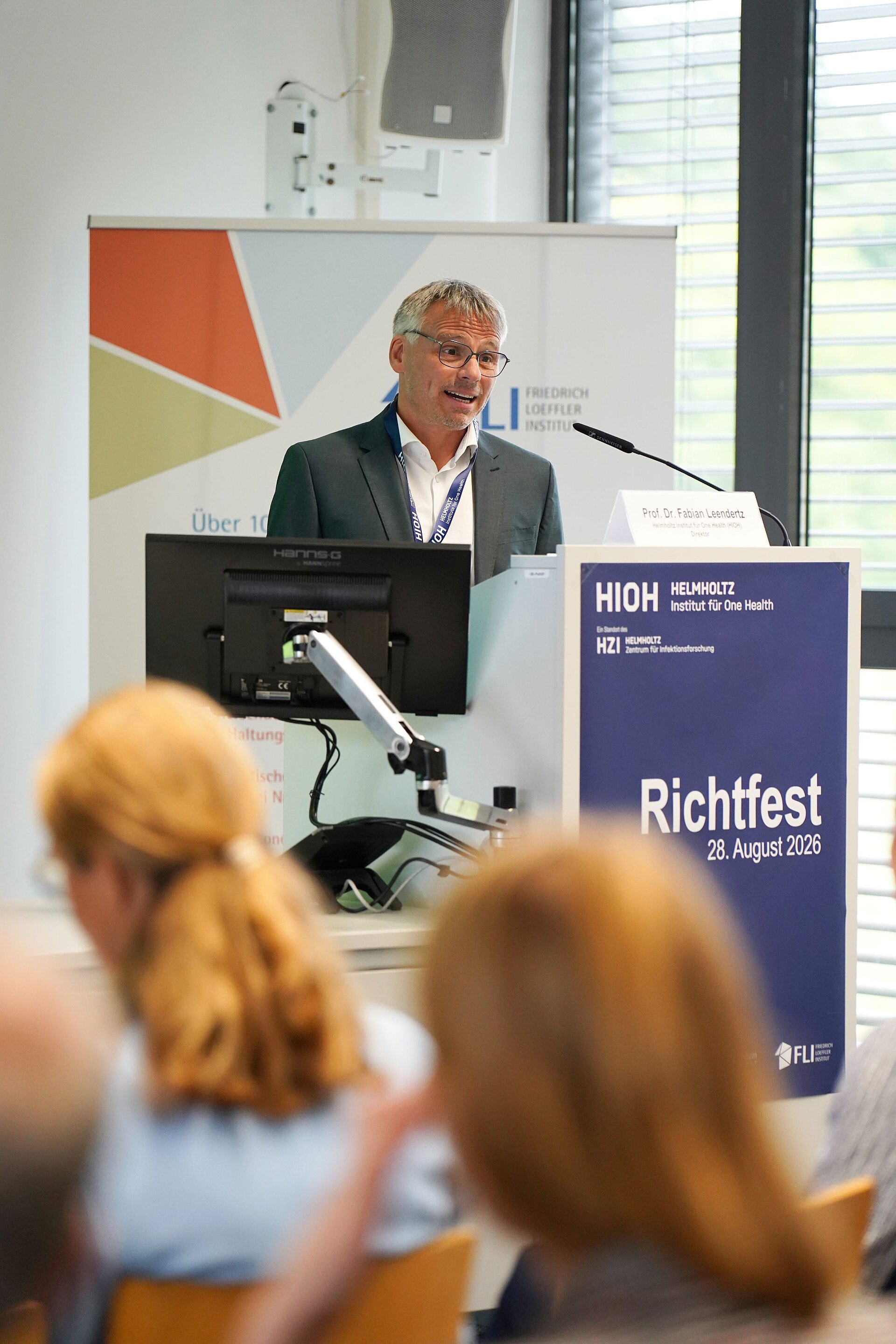
“With the support of the state and federal government, for which I would like to take this opportunity to express my sincere gratitude once again, we can further expand our interdisciplinary One Health research to develop new approaches to pandemic preparedness and help safeguard global health,” said HIOH Director Prof. Fabian Leendertz.
A joint effort by strong partners
Prof. Karlhans Endlich, Scientific Director of the University Medicine Greifswald, sees great potential: “The new building opens up new horizons for One Health research in Greifswald, which will strengthen prevention and resilience and ultimately improve healthcare.”
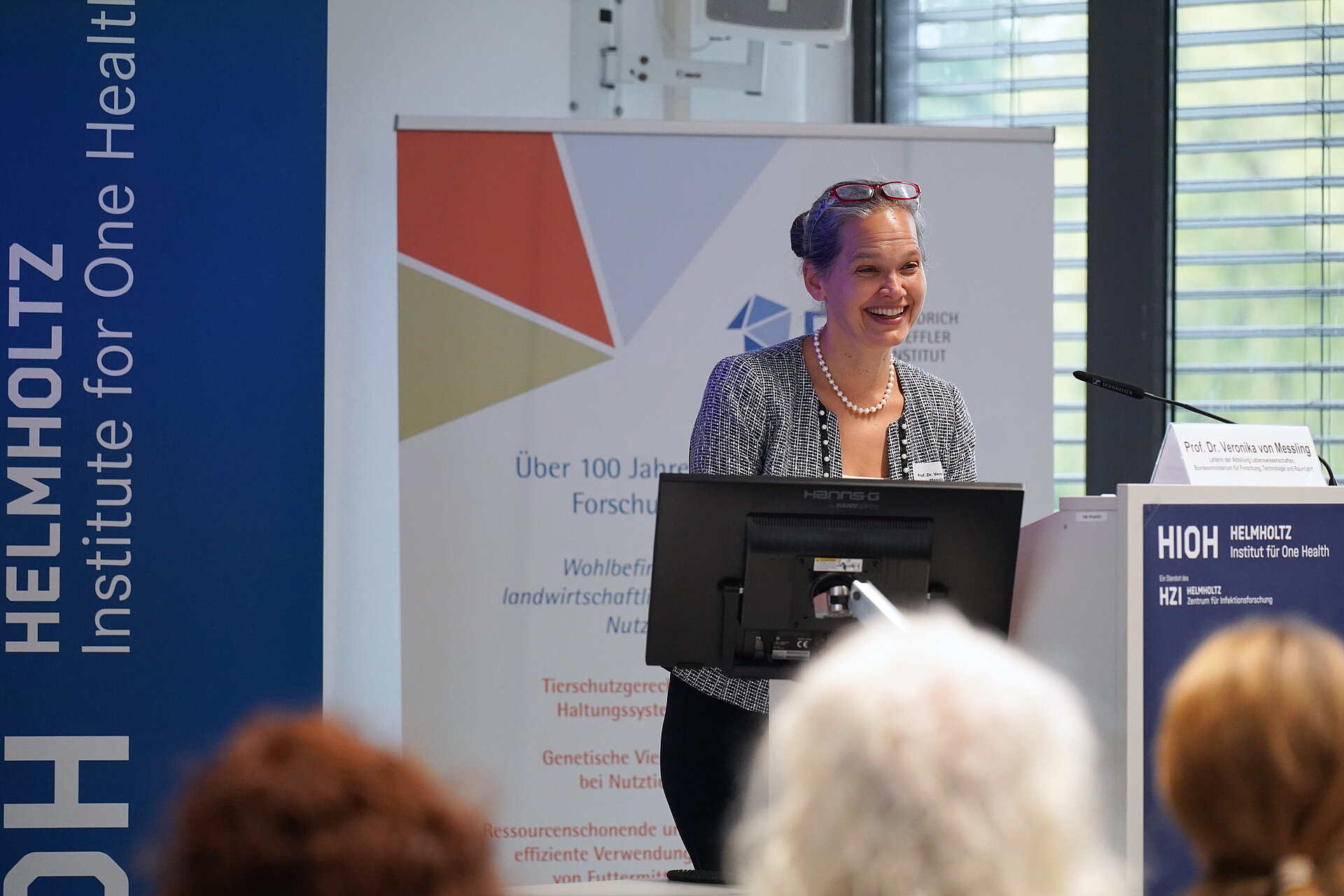
For Prof. Veronika von Messling, Head of the Life Sciences and Health Division at the Federal Ministry of Research, Technology and Space (BMFTR), the interdisciplinary and international dimension of the research is key: “One Health research does not stop at disciplinary or national borders. The new research building will give HIOH the space and opportunities to further expand its international collaborations and develop new approaches to research together with partners around the world.”
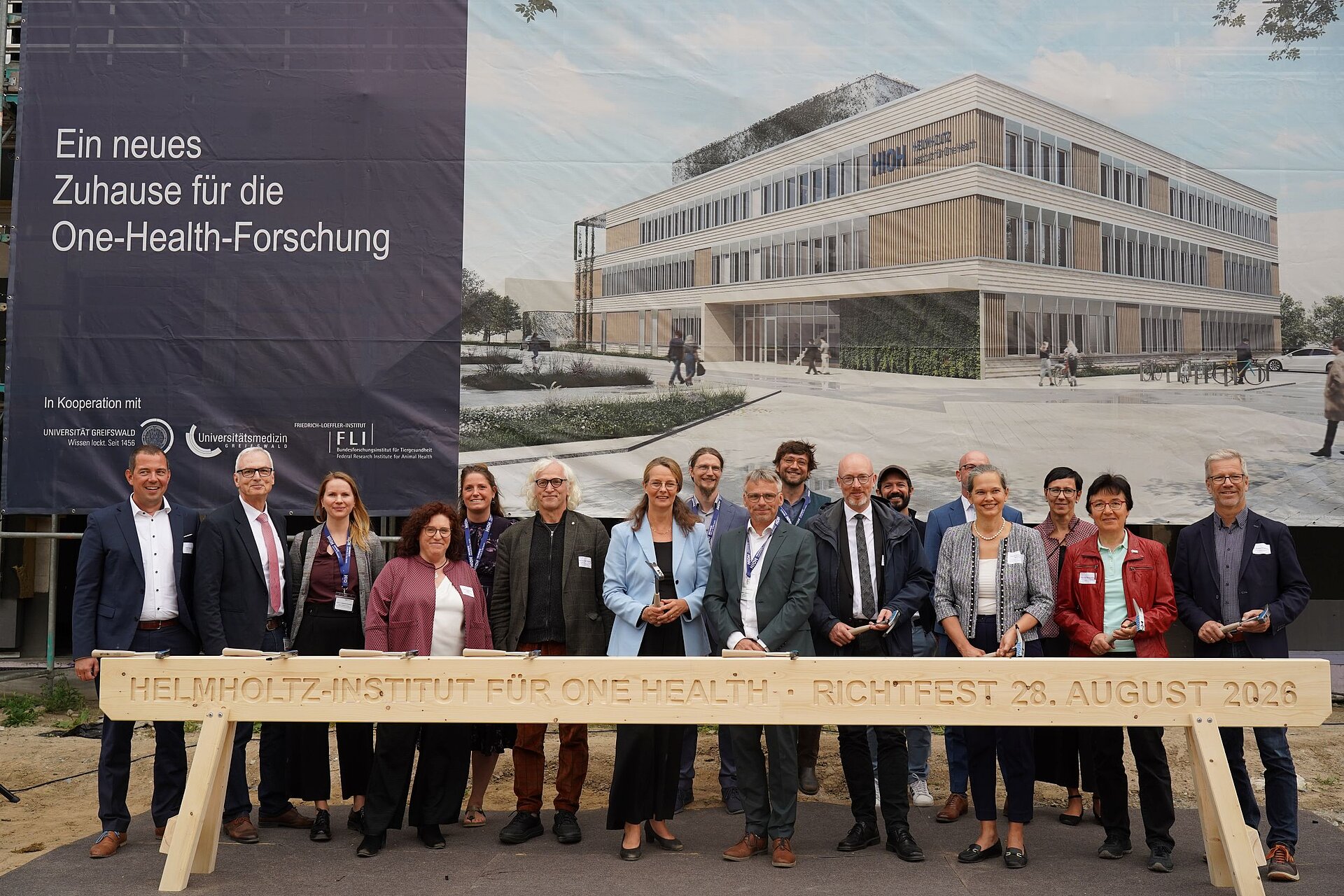
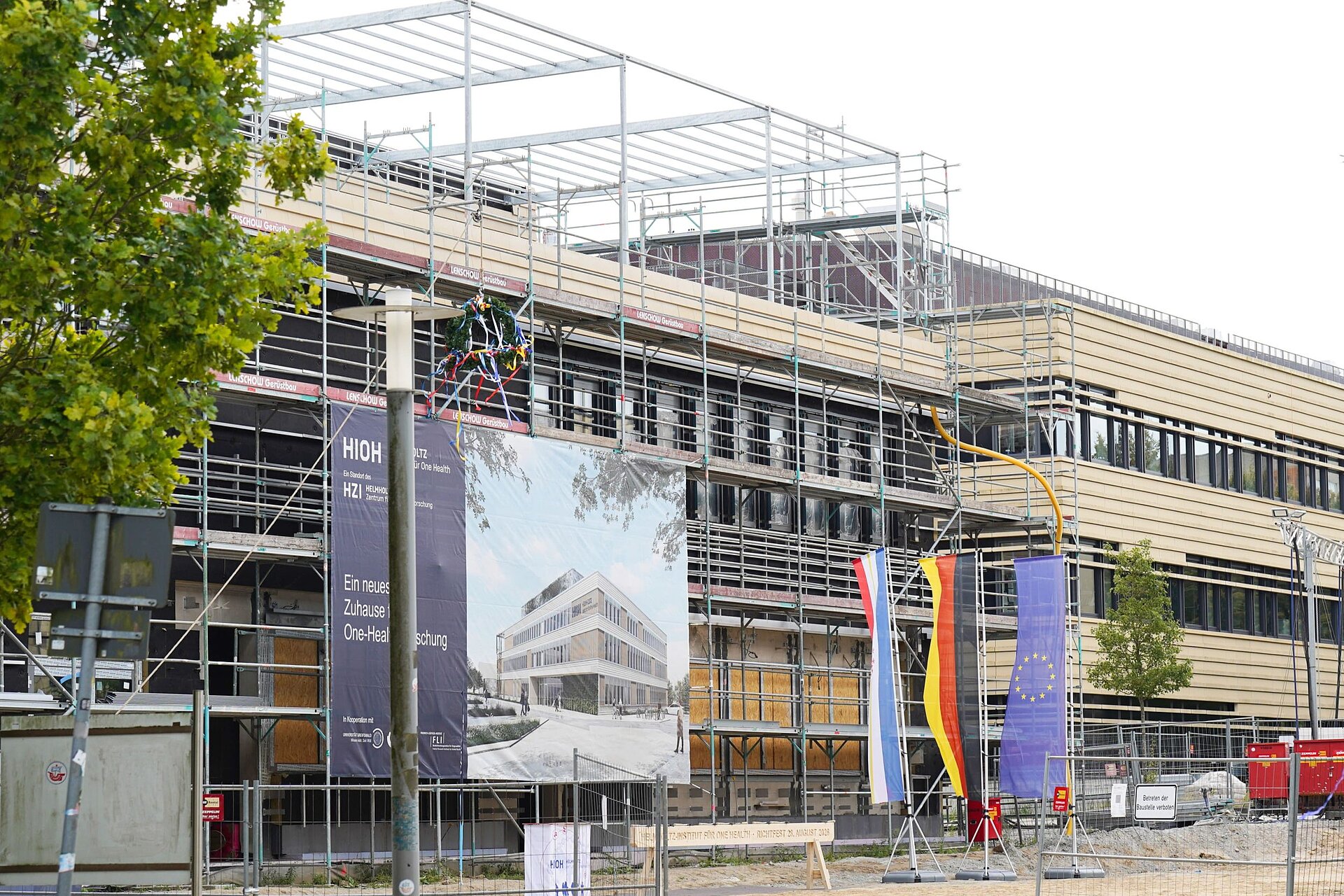
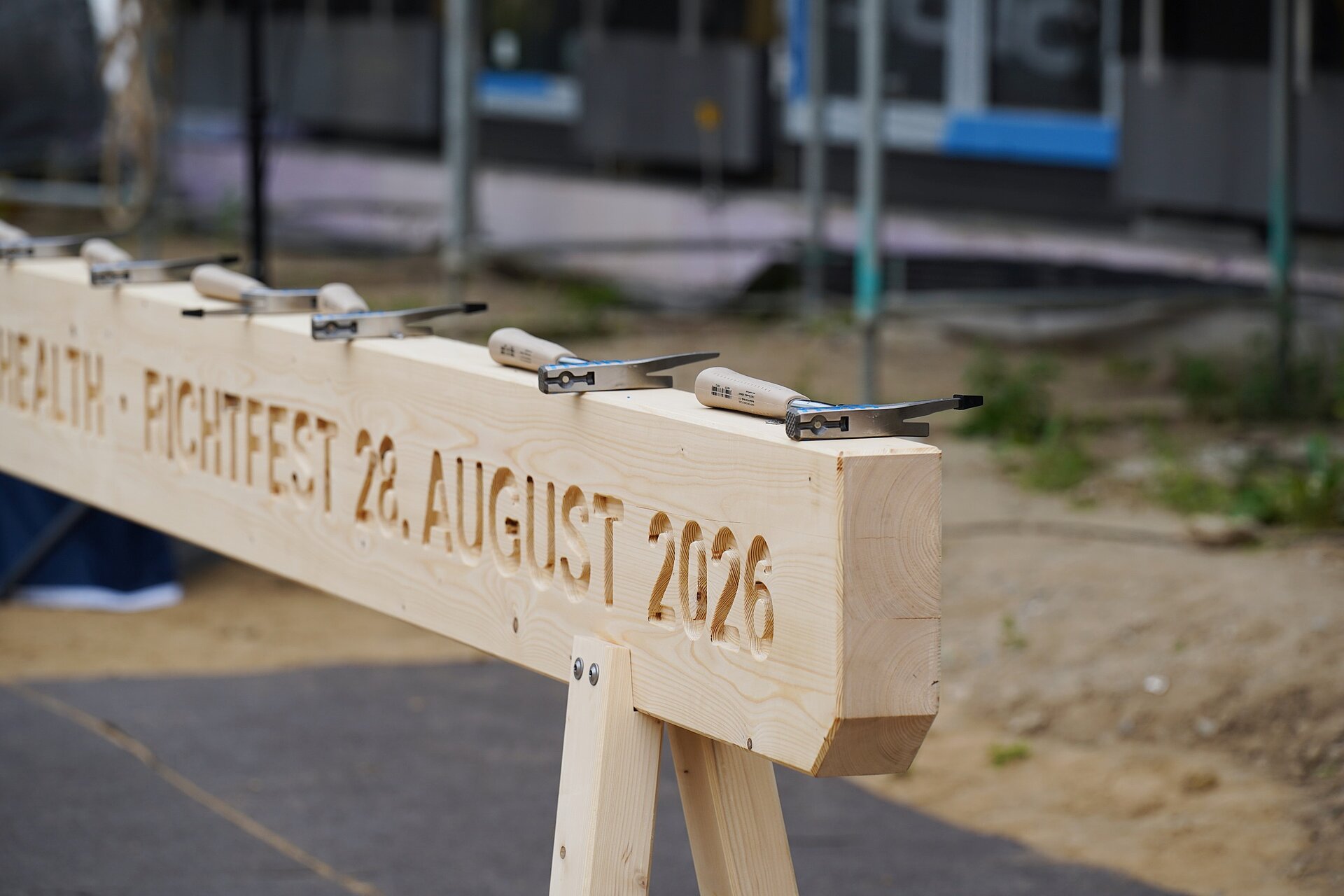
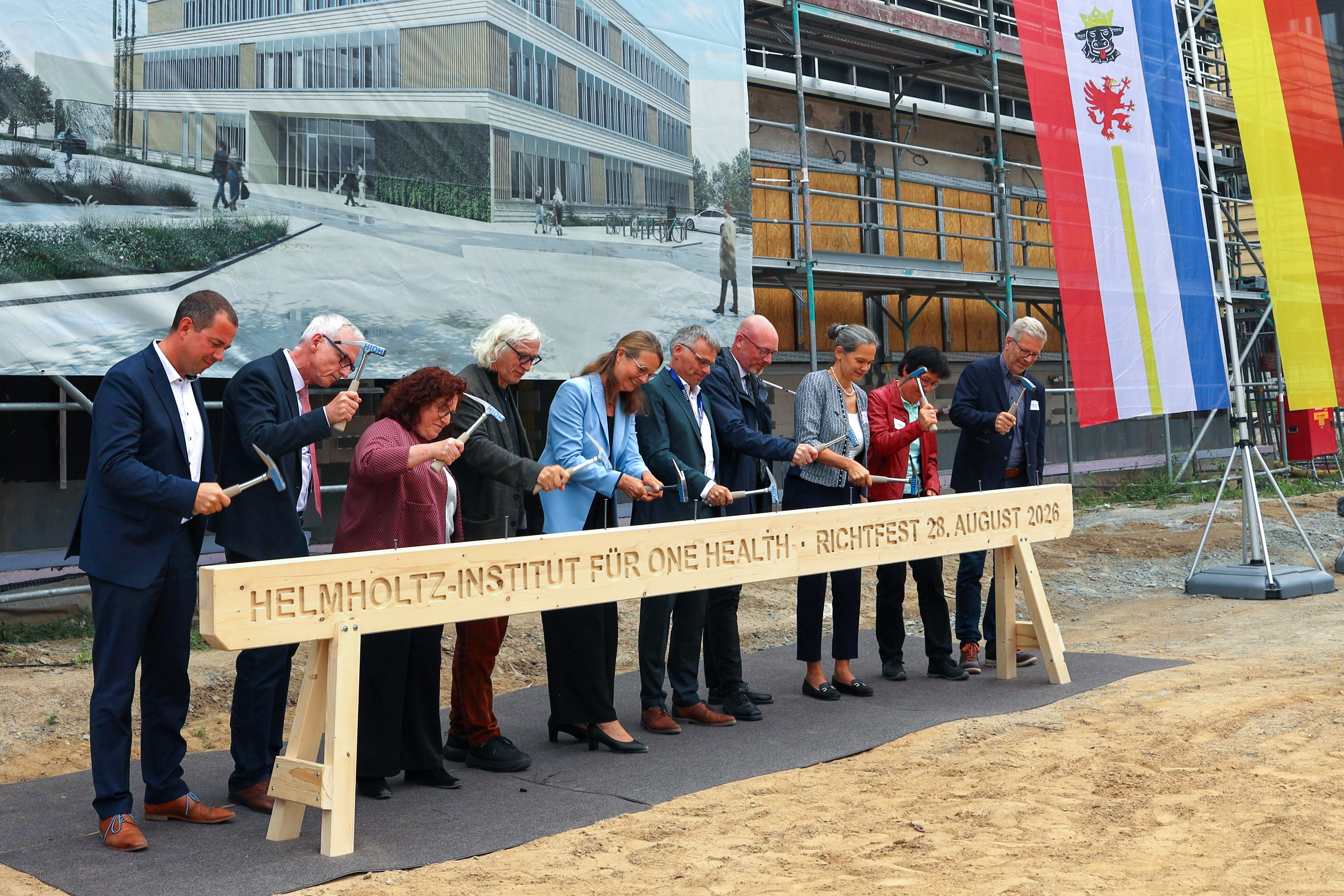
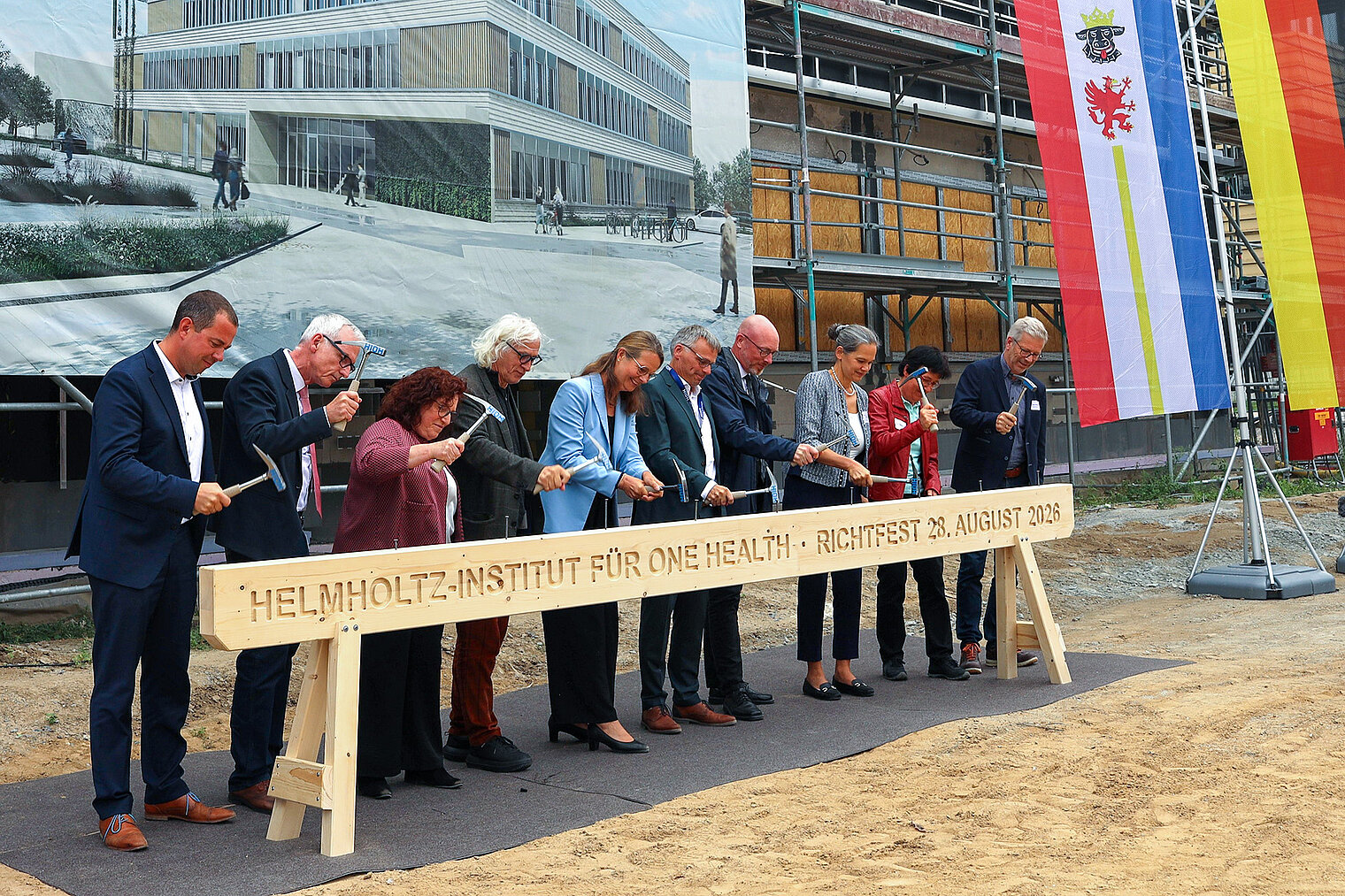
The traditional topping-out ceremony included a speech by the construction site manager, who wished the new building and its future users good fortune and blessings. The guests of honor then took up the hammer themselves to drive the symbolic last nail, marking the successful completion of the structural shell. The celebrations concluded over a topping-out lunch held outdoors.
Among those attending were Christian Pegel, Minister of the Interior and Construction of Mecklenburg-Western Pomerania, Greifswald's Lord Mayor Dr Stefan Fassbinder, Prof. Katharina Riedel, Rector of the University of Greifswald, Prof. Christa Kühn, President of the Friedrich Loeffler Institute (FLI), as well as Prof. Josef Penninger, Scientific Director of the HZI, and Prof. Joachim Schultze, on behalf of the President of the Helmholtz Association.
Modern infrastructure for international One Health research
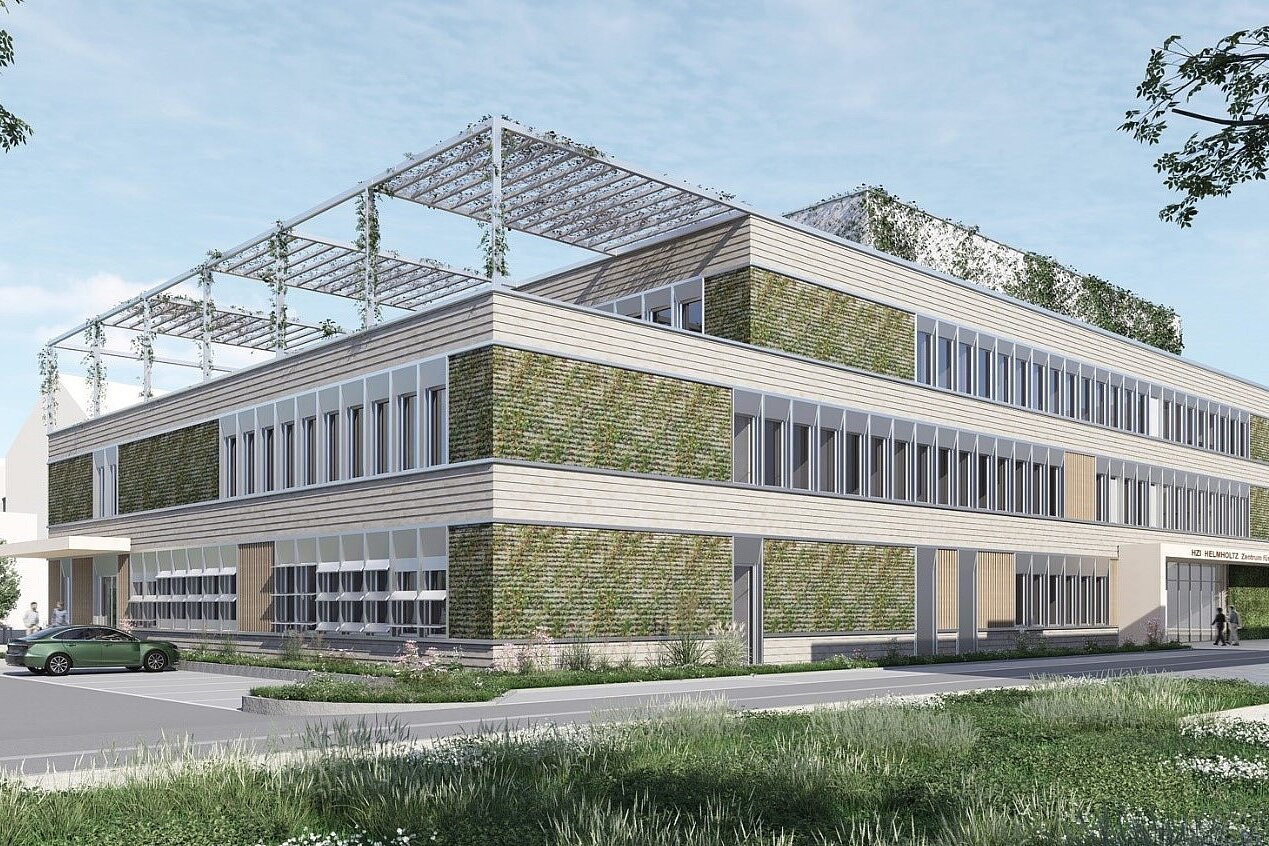
The new laboratory and office building will provide state-of-the-art facilities for interdisciplinary research at the interface of human, animal and environmental health and accommodate around 120 staff across 2,800 m². Its facilities will include state-of-the-art laboratories, among them Biosafety Level 3 (BSL-3) laboratories equipped with advanced technology to enable the safe handling of pathogens.
The building has also been designed with a focus on the responsible use of natural resources and energy-efficient operation. It will feature green roofs, water retention and storage systems, a photovoltaic system for on-site power generation and heat pumps.
Planning and execution of the construction project are handled by Goldbeck Nordost GmbH, based in Rostock. The management company rheform GmbH has been involved in the project since its inception and is coordinating the next steps leading up to its completion in 2027.