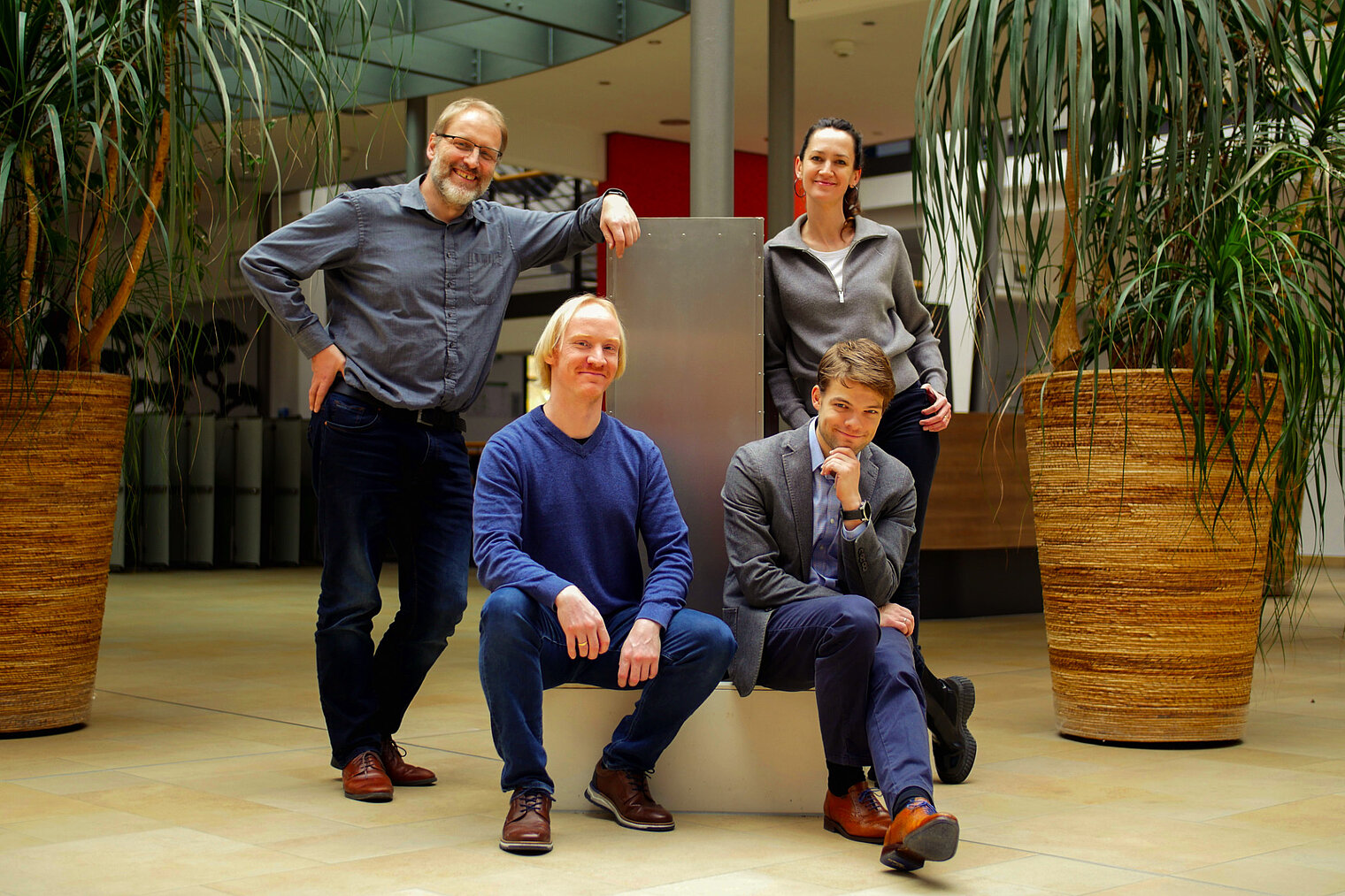
Currently, vaccinations against respiratory viruses such as RSV or SARS-CoV-2 have to be regularly boosted, because their protective effect wanes quickly. In addition to the burden this imposes on everyone involved, it also leads to high costs for the healthcare system. The ENDURIVAC project team has set itself the goal of developing vaccines that do not require booster shots and provide long-lasting protection. In the newly funded subproject VIBRANT, the team is developing an innovative vaccine design intended to offer superior protection while ensuring enhanced safety. Based on a technology called BIBAX (Body-inert B cell Activating Vaccine), the vaccine antigens developed using this approach are largely inert to the body and are thus expected to lead to optimized vaccine responses.
“I am honored that Helmholtz Enterprise is supporting us with this generous grant to take our antigen engineering platform to the next level,” says Casper Silvis, project leader of VIBRANT and researcher in the department “Personalised Immunotherapy” at the Centre for Individualised Infection Medicine (CiiM). “Beyond the funding, the training and the network of fellow spin-off teams will help us learn faster, build better, and turn ideas into execution.” CiiM is a joint venture of the HZI and the Hannover Medical School (MHH).
The funding will begin in January 2027 with a duration of 14 months. In addition to Casper Silvis, the VIBRANT team includes Prof. Kathrin de la Rosa, head of the department “Personalised Immunotherapy”, Emre Ipekoglu, Dr. Henning Jacobsen from the department “Viral Immunology” at the HZI and executive manager of ENDURIVAC, and head of department Prof. Luka Čičin-Šain.
Additional Funding: Field Study Fellowships
In this year’s Helmholtz Enterprise call for proposals, two Field Study Fellowships were also awarded to HZI researchers, each with a grant of 25,000 euros:
Dr. Philipp Münch’s project SeqDesk develops optimized workflows for sequencing laboratories by integrating sample management, metadata, analysis, and data exchange into a single platform. Münch is a researcher in the department “Computational Biology for Infection Research” led by Prof. Alice McHardy at the Braunschweig Integrated Centre of Systems Biology (BRICS), a joint institution of the HZI, the Technische Universität Braunschweig, the Physikalisch-Technische Bundesanstalt (PTB), and the Leibniz Institute DSMZ—German Collection of Microorganisms and Cell Cultures GmbH. Funding for SeqDesk began on September 1, 2026.
In the project LC-TheraSense, Dr. Mariia Nesterkina is developing infection-responsive wound dressings that detect infections, provide visual feedback, and release therapeutic agents when needed. Funding for this project began on October 1, 2026. Nesterkina is a researcher in the department “Drug Design and Optimization” led by Prof. Anna Hirsch at the Helmholtz Institute for Pharmaceutical Research Saarland (HIPS), a location of the HZI in cooperation with Saarland University.