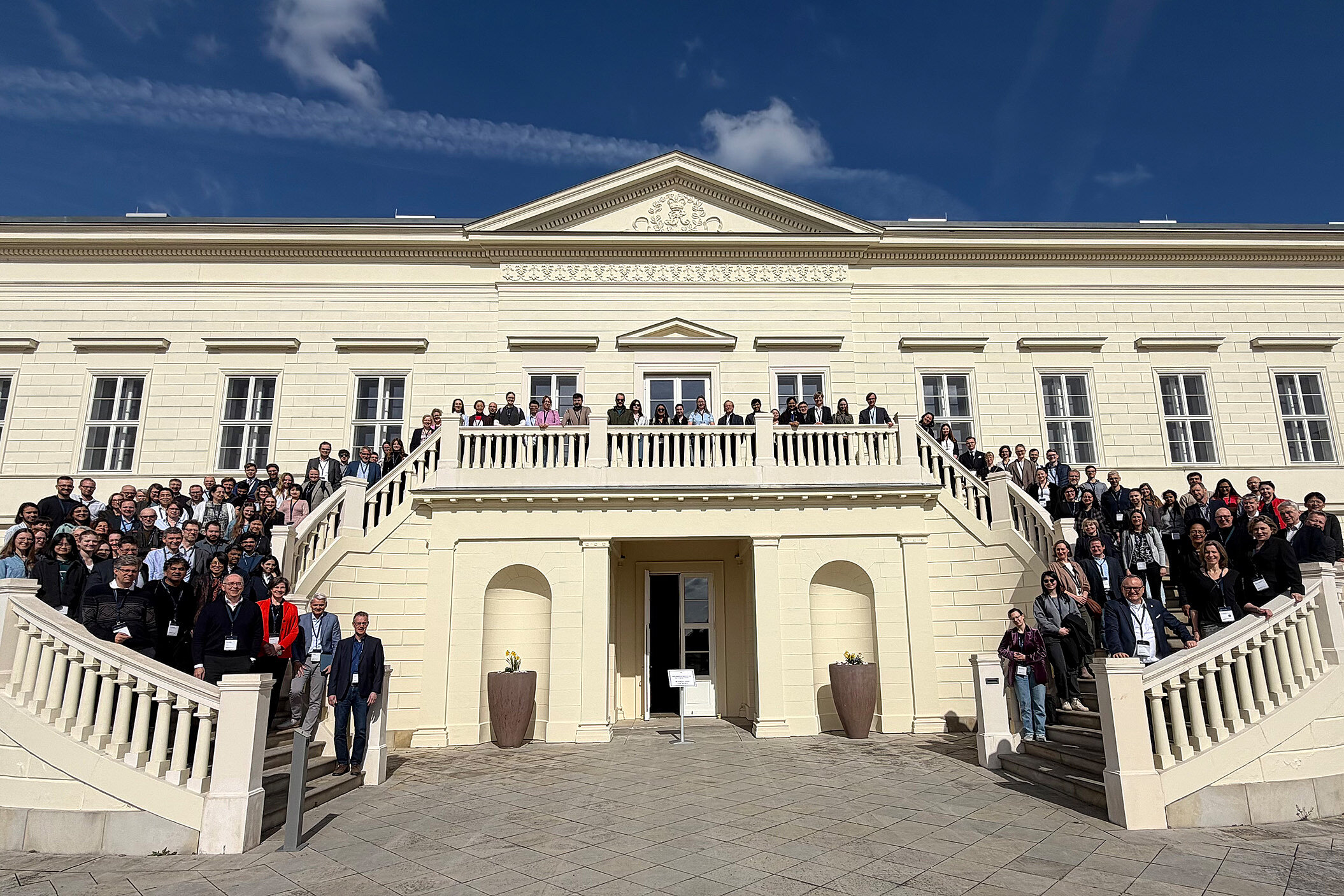
Group photo of about 100 people on the steps in front of a building entrance
Participants of the CiiM Conference
News

2nd International Conference on Individualized Infection Medicine

Individualized Infection Medicine: International conference hosted by CiiM in Hannover sets the stage for prevention, prediction and precision

Even after the COVID-19 pandemic, infectious diseases remain among the greatest challenges to global health. At the same time, advances in biomedical research, data-driven methods, and clinical innovation are opening up new opportunities to tailor prevention, diagnosis, and treatment to individual patients. How these approaches can be translated into medical care was the focus of the 2nd International Conference on Individualized Infection Medicine, which took place from March 19 to 21, 2026, at Herrenhausen Palace in Hannover.

Around 160 international experts from academia and clinical practice gathered for the conference in Hannover, which was organized by the Centre for Individualised Infection Medicine (CiiM) in cooperation with the Hannover Medical School (MHH), the Helmholtz Centre for Infection Research (HZI), and the Volkswagen Foundation. The RESIST Cluster of Excellence was also represented with its own scientific session.

Lessons from the Pandemic – Individualization as the Key

The COVID-19 pandemic has made it clear how differently infectious diseases can progress and how crucial personalized strategies are for effective prevention, early prediction of disease progression, and precise therapies. Individualized infection medicine combines these approaches with the goal of increasing efficacy, reducing side effects, and using resources efficiently.

Scientific Exchange and Support for Young Researchers

The conference opened with a video message from Falko Mohrs, Lower Saxony’s Minister of Science, as well as welcoming remarks by Georg Schütte, Chairman of the Volkswagen Foundation; CiiM Directors Prof. Yang Li and Prof. Markus Cornberg; Prof. Josef Penninger, Scientific Director of the HZI; and Prof. Heiner Wedemeyer, representing the MHH. The subsequent scientific program included 28 presentations, including seven keynote speeches, as well as several thematic sessions on current research questions in individualized infection medicine. International highlights included presentations by Prof. Facundo Batista (Ragon Institute of Mass General, MIT, and Harvard), who demonstrated how a precise understanding of antibody responses can improve the rational design of vaccines, and by Prof. Mihai Netea (Radboud University Medical Center) on the variation and adaptation of human immune responses as the basis for personalized therapeutic strategies. Poster walks, lightning talks for early-career researchers, and the presentation of a poster award underscored the targeted support for early-career researchers and international exchange.
Individualized infection medicine means consistently focusing research on patient benefits - from more precise prognoses and innovative diagnostics to tailored therapies.
Portrait Cornberg

Prof. Markus Cornberg
Co-Director of CiiM

The conference also paid tribute to the scientific legacy of CiiM’s founding director, Prof. Michael Manns. His approach to consistently translational infection medicine - which structurally links basic research and clinical expertise and raises their international profile - continues to shape the development of CiiM to this day. One session was dedicated to the topic of hepatitis, his central area of scientific focus. Speakers included Prof. Mala Maini (University College London) on the heterogeneity of HBV immune responses and their potential for individualized therapeutic strategies, Prof. Ulrike Protzer (Helmholtz Munich/Technical University of Munich) on therapeutic vaccination for hepatitis B, and Prof. Tobias Böttler (University Medical Center Freiburg) on checkpoint blockade and its significance for individualized vaccination strategies.

Translation as a Structural Principle

The CiiM was founded as a joint initiative of MHH and HZI to closely integrate experimental, theoretical, and clinical research. The goal is to bring new scientific findings into clinical practice more quickly and to systematically strengthen the interface between the laboratory and the patient’s bedside.

“Individualized infection medicine means consistently focusing research on patient benefits - from more precise prognoses and innovative diagnostics to tailored therapies. This requires interdisciplinary collaboration and a robust infrastructure,” explained Prof. Markus Cornberg, Co-Director of CiiM.

Data science, bioinformatics, artificial intelligence, and causal methods play a central role in this. Initiatives such as CAIMed, as well as close collaboration with the RESIST Cluster of Excellence - which investigates mechanisms of resistance development and develops new therapeutic strategies - strengthen the structural foundation for this advancement.

“The combination of basic research, clinical expertise, and data-driven approaches is crucial for better understanding pathomechanisms and developing new treatment options,” said Prof. Yang Li, Co-Director of CiiM.

Infrastructure as the Foundation for Innovation

One item on the conference agenda focused on the future research infrastructure of the CiiM in Hanover. The planned new building, located near the MHH, exemplifies the strategic development of the site: It is designed to physically bring together interdisciplinary collaboration and create optimal conditions for integrating laboratory research, clinical application, and data-driven methods.

With this investment, the State of Lower Saxony, the Federal Government, and the participating institutions are sustainably strengthening the framework conditions for innovation in individualized infection medicine and enhancing the international visibility of Hannover as a center of science.

Further Information

The full program and further details about the conference are available on the CiiM website.