

Newsroom

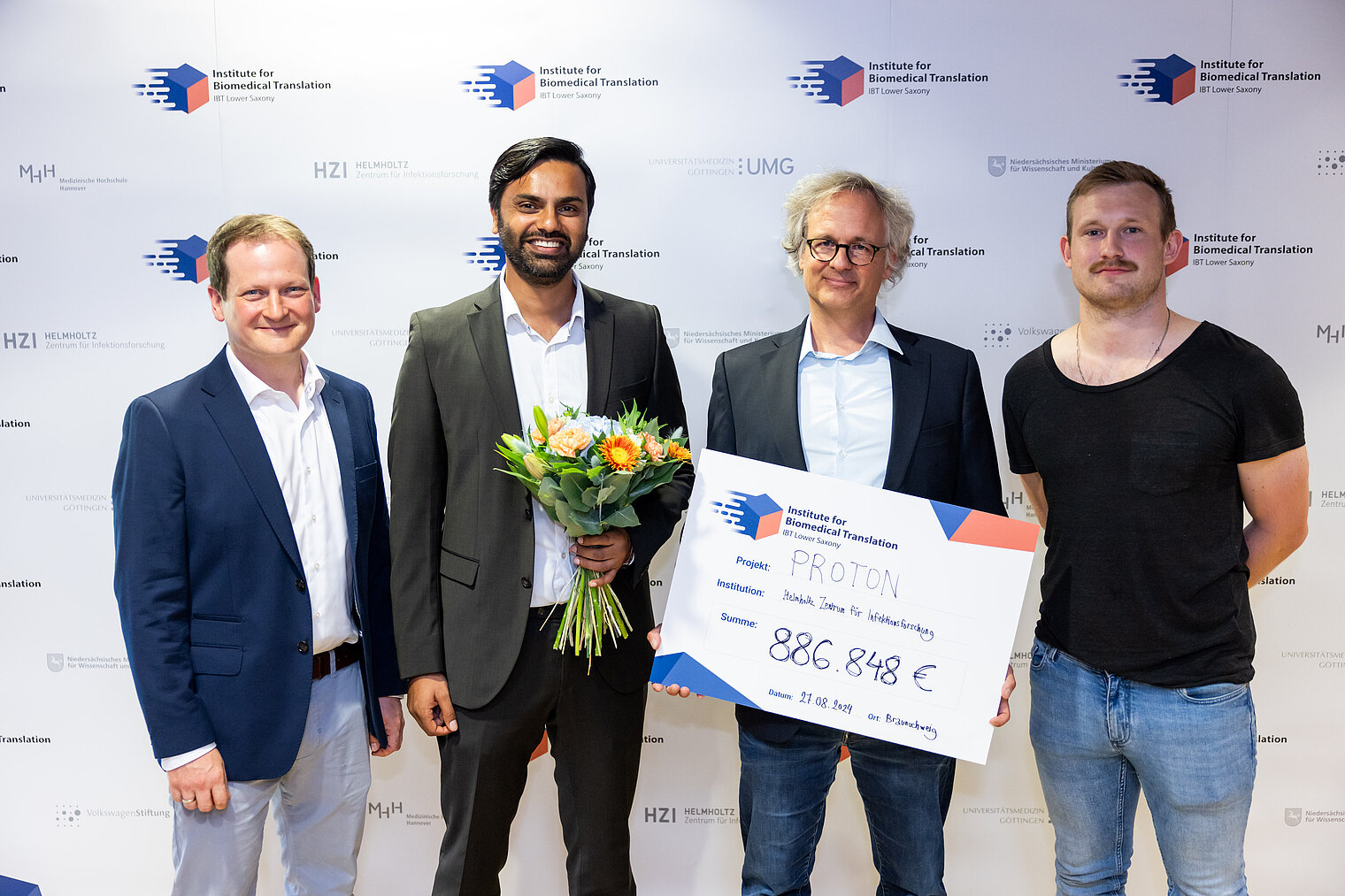
Group photo 4 scientists with a large cheque
News
Yesterday, the lighthouse project of the state of Lower Saxony reached its latest milestone: At the second portfolio conference of the Institute for Biomedical Translation (IBT) Lower Saxony, a high-caliber jury selected projects from the Helmholtz Centre for Infection Research and the Hannover Medical School that will receive funding of over 1.6 million euros. A total of 25 million euros are available to the IBT Lower Saxony until 2028 to accelerate the transfer of cutting-edge research in the life sciences in Lower Saxony and to bring it out into the world in the form of startups and entrepreneurial ideas.
28.08.2024
Marco Galardini (left) and Maureen Obara in the lab.
News
Certain changes in the genetic material of pathogens can alter their ability to infect human cells or protect them better from defense by the immune system. Researchers were able to observe this effect particularly impressive in the SARS-CoV-2 virus. During the coronavirus pandemic, an interdisciplinary team at TWINCORE, Centre for Experimental and Clinical Infection Research in Hanover, investigated the interaction between pairs of mutations that might have triggered several of these changes in infectivity and immune escape. They have now published their findings in the journal Genome Biology. The TWINCORE is a joint institution of the Helmholtz Centre for Infection Research (HZI) in Braunschweig and Hannover Medical School (MHH).
23.08.2024
Interview
The current outbreak of the Mpox virus originated in Central Africa. A first case has now been discovered in Europe. The WHO has declared the highest alert level. In an interview with Helmholtz, Fabian Leendertz, Director of the Helmholtz Institute for One Health (HIOH), puts the events in context.
23.08.2024
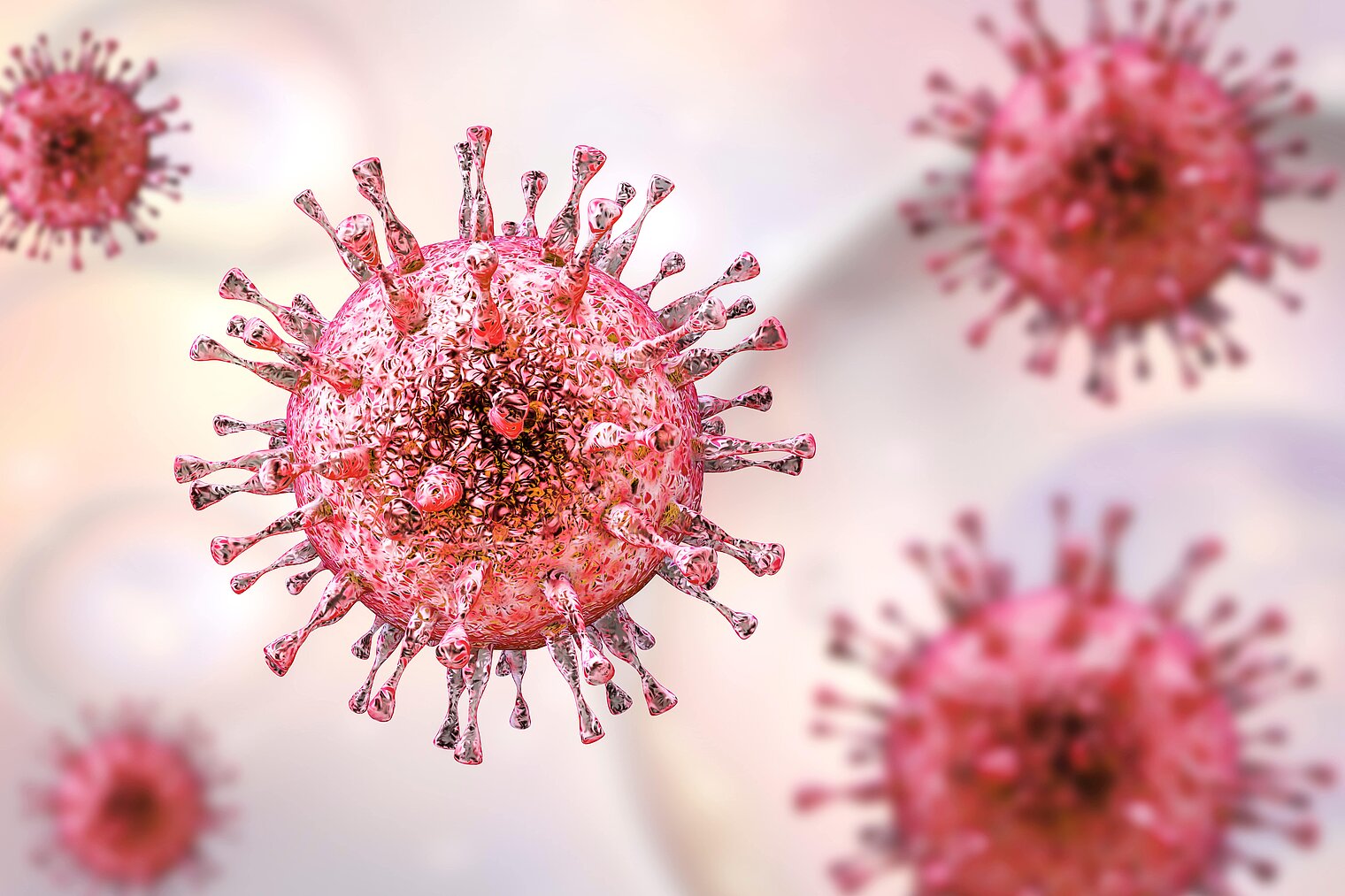
3D illustration of the cytomegalovirus
News
The protective effect of established COVID-19 vaccines is initially very robust, but wanes relatively quickly. This limitation imposes a need for periodic booster shots, which drives vaccine hesitation. In contrast, an innovative vector vaccine developed at the Helmholtz Centre for Infection Research (HZI) presents a compelling alternative. It elicits prolonged immune response in animal models, and maintains its efficacy over extended time. The concept employs an animal cytomegalovirus (MCMV; murine cytomegalovirus) as the vector that expresses and delivers the coronavirus spike protein information. Crucially, this vector poses no threat to humans, enhancing the vaccine's safety profile.
20.08.2024
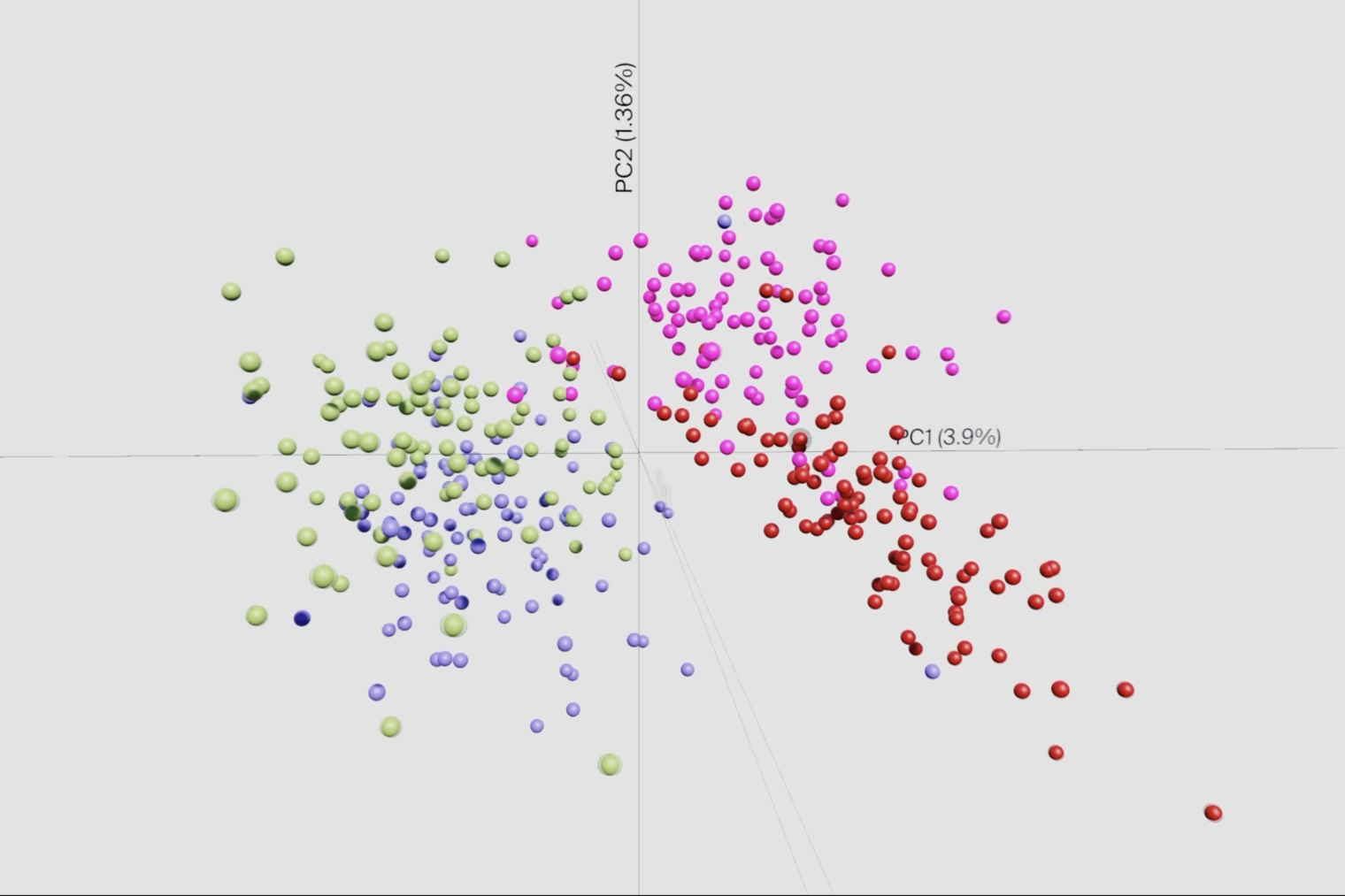
Preview of sCIRCLE
News
Modern cutting-edge research generates enormous amounts of data, presenting scientists with the challenge of visualizing and analyzing it. Researchers at the Helmholtz Institute for RNA-based Infection Research (HIRI) in Würzburg and the Technical University of Applied Sciences Würzburg-Schweinfurt (THWS) have developed a tool for visualizing large data sets. The sCIRCLE tool allows users to explore single-cell analysis data in an interactive and user-friendly way. Their results have been published in the journal NAR Genomics and Bioinformatics.
30.07.2024
3D culture of hair follicles with three hairs.
News
Hair follicle infections are often difficult to treat because bacteria settle in the gap between hair and skin, where it is difficult for active substances to reach them. In order to investigate this scenario more closely in the laboratory, researchers from the Department of Drug Delivery Across Biological Barriers at the Helmholtz Institute for Pharmaceutical Research Saarland (HIPS) have now developed a model with human hair follicles embedded in a matrix produced using 3D printing. In the future, this model can be used to test the effectiveness of new drug candidates against corresponding pathogens directly on human follicles. The team has published their results in the journal ACS Biomaterials Science & Engineering.
29.07.2024

HZI in the media

... beeindruckendes Ergebnis“, sagt Jakob Wirbel vom Helmholtz-Zentrum für Infektionsforschung (HZI). „Trotzdem schlafe ich momentan noch ...

15.10.2026
|
Der Tagesspiegel

... Lange, Leiterin der Abteilung Epidemiologie am Helmholtz-Zentrum für Infektionsforschung in Braunschweig und Mitglied der Ständigen ...

14.10.2026
|
DIE WELT

also included Japanese microbiologists and collaborators from IST Austria and HZI Braunschweig (Germany), demonstrated that actin inhibitors

14.10.2026
|
Health Medicine Network

... in der Abteilung „Virale Immunologie“ am Helmholtz-Zentrum für Infektionsforschung (HZI), hat die WHO als externer ...

13.10.2026
|
DeutschesGesundheitsPortal

tool called Metax, developed by researchers at the Helmholtz Centre for Infection Research (HZI) in Braunschweig and described in the

12.10.2026
|
Bioengineer.org

parts of the microbiome. HIPS is a site of the Helmholtz Centre for Infection Research (HZI) in collaboration with Saarland University. “We

12.10.2026
|
Technology Networks

... auch gezielte Forschungsmittel an das Helmholtz-Zentrum für Infektionsforschung (HZI): Die Forschungsgruppe von Prof ...

12.10.2026
|
Ad Hoc News

... nur in England vor. Laut Angaben des Helmholtz Zentrum für Infektionsforschung ist es dem Erreger ...

12.10.2026
|
Frankfurter Rundschau online

... und Belgien. Aus Deutschland sind das Helmholtz-Zentrum für Infektionsforschung (HZI), das Fraunhofer-Institut für Toxikologie und ...

12.10.2026
|
MTA Dialog

... weitere Versuche herstellen.


Auch das Helmholtz-Zentrum für Infektionsforschung (HZI) in Braunschweig ist beteiligt. Die ...

11.10.2026
|
t-online.de

... unterschiedlichen Regionen unterscheidet. Der Forscher vom Helmholtz-Zentrum für Infektionsforschung konnte in seiner Studie zeigen, ...

10.10.2026
|
rbb radioeins

Tawk, Youssef El Mouali and colleagues at the Helmholtz Centre for Infection Research, together with collaborators at the University of

09.10.2026
|
Bioengineer.org

Register now for the HZI newsletter