


Newsroom

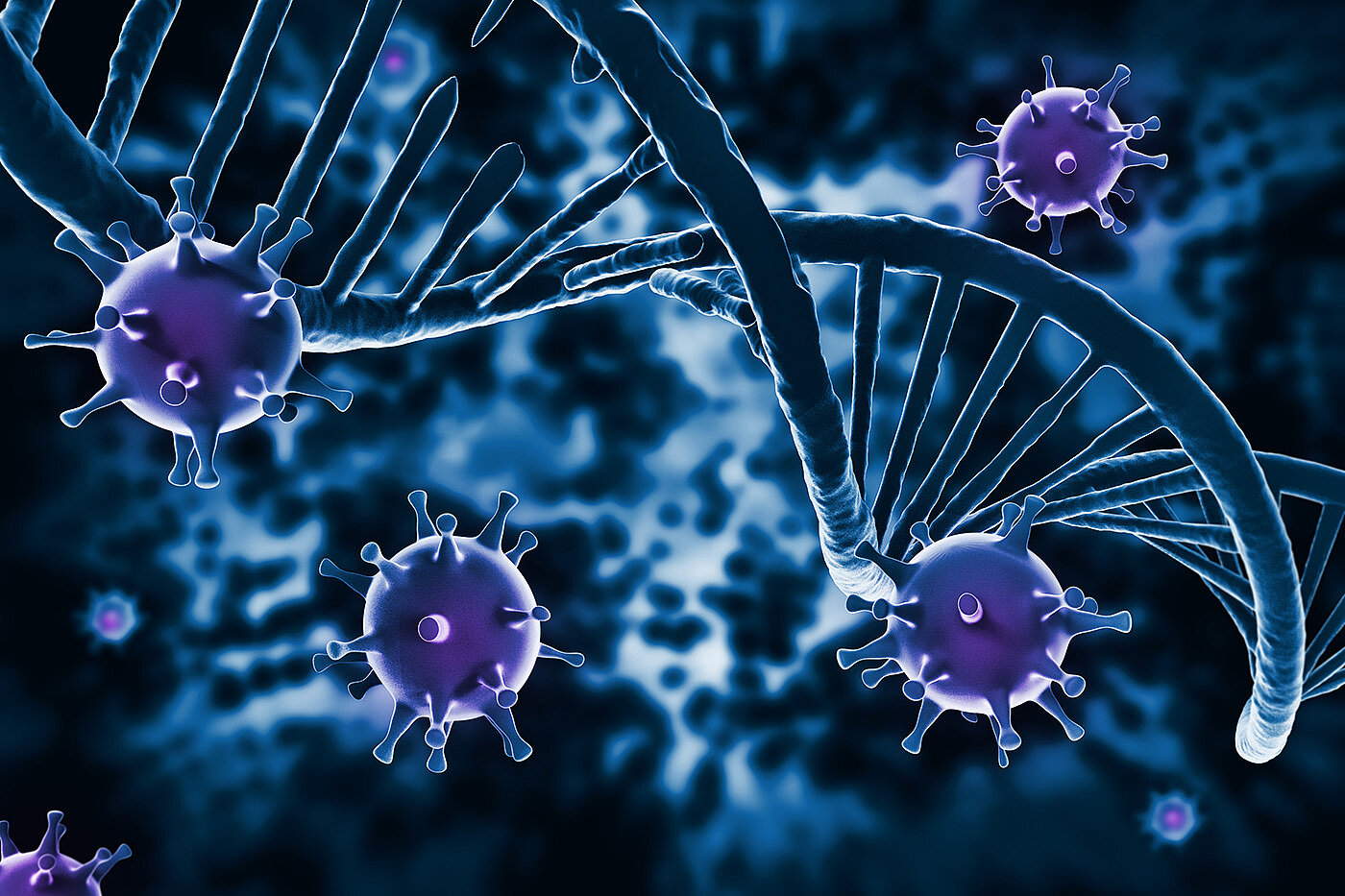
Atomic model of Bacteroides thetaiotaomicron RbpB protein with individual B. thetaiotaomicron bacteria in the background
News
Researchers at the Helmholtz Institute for RNA-based Infection Research (HIRI) and the Julius-Maximilians-Universität (JMU) in Würzburg have identified a protein and a group of small ribonucleic acids (sRNAs) in Bacteroides thetaiotaomicron, which regulate sugar metabolism. These discoveries shed light on how this gut microbe adapts to varying nutritional conditions. The findings deepen our understanding of this bacterium's role in the human gut and may pave the way for new therapeutic strategies to promote health through the microbiota. The study was published in the journal Nature Communications.
09.01.2025
Vaccination on the upper arm.
News
Researchers at the Helmholtz Centre for Infection Research (HZI) have developed a promising new vaccine technology. Their studies to date show that just one dose of vaccine leads to effective and long-lasting immune protection. The basis of this so-called MCMV vaccine vector technology is the mouse cytomegalovirus (MCMV). It acts as a carrier virus that introduces selected antigens of a pathogen to be vaccinated against into the body. In the follow-up project VIVA-VEK-2, which was launched at the HZI at the beginning of January, a proof-of-concept vaccine candidate against respiratory syncytial virus (RSV) is now to be produced and tested for efficacy and tolerability. The researchers believe that with the new vaccine technology, one vaccine dose could possibly even provide lifelong protection. The project is funded by the GO-Bio initial program of the Federal Ministry of Education and Research (BMBF) over two years with a funding volume of one million euros.
07.01.2025
The Horizon Europe project DEFENDER is exploring new targets for antiviral therapies
News
The interdisciplinary project DEFENDER is developing innovative approaches to combat (re-)emerging viruses. The project, coordinated by the Leibniz Institute of Virology (LIV), is being funded with around eight 9.6 million euros as part of Horizon Europe. Almost 700,000 euros of these will go to Prof. Mark Brönstrup, a researcher at the Helmholtz Centre for Infection Research (HZI) and the German Center for Infection Research (DZIF).
06.01.2025
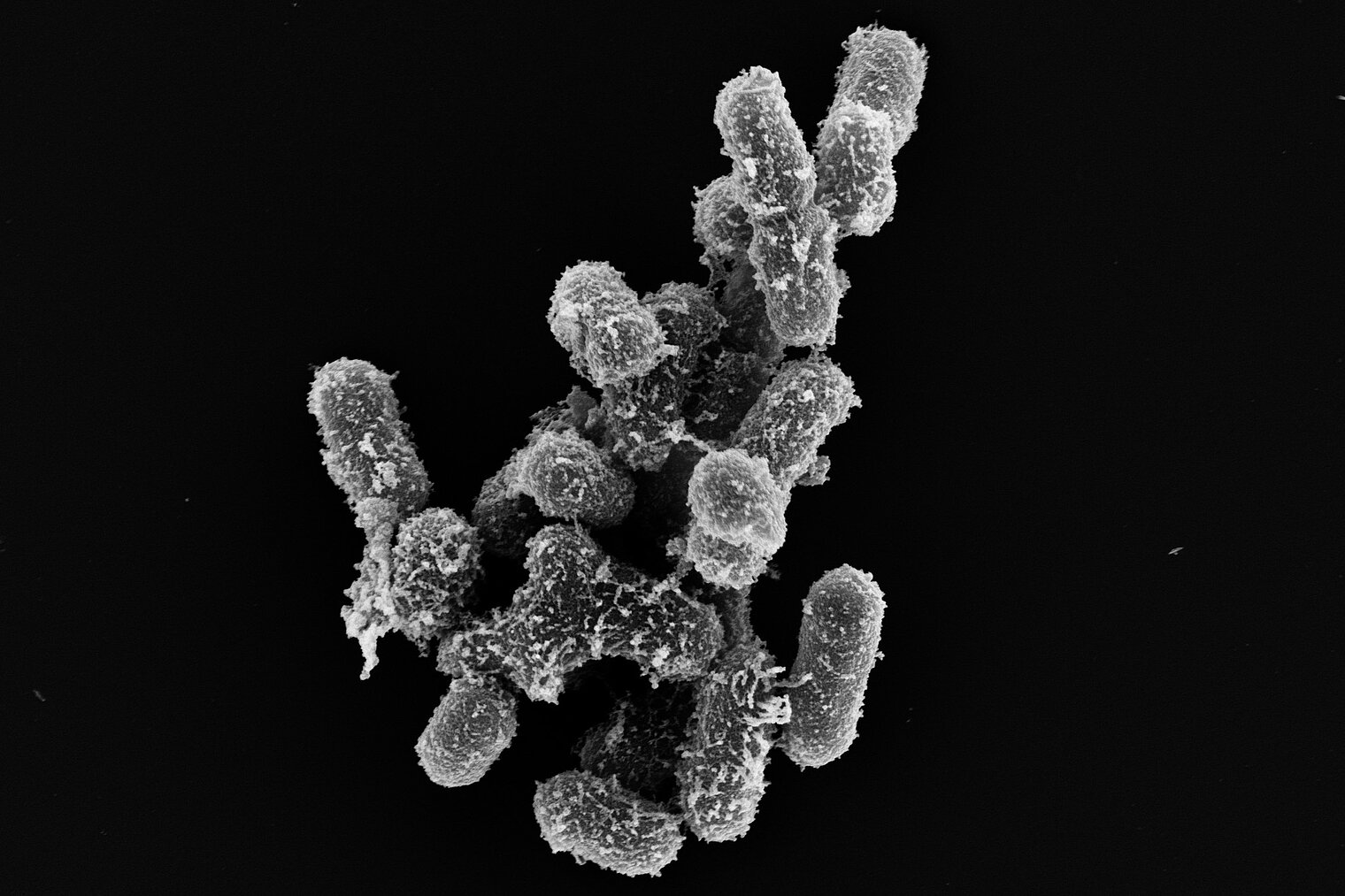
Isolated bacteria
News
A research team from the Helmholtz Institute for One Health (HIOH) has investigated the distribution and characteristics of multidrug-resistant bacteria in the Baltic Sea. The findings prove that resistant pathogens occur not only in samples taken from clinical settings but also from the environment. The BMBF-funded study also underlines the importance of an integrated strategy for combatting multidrug resistance that takes equal account of environmental and health protection. The results were published recently in the scientific journal npj Clean Water.
23.12.2024
 Scanning electron micrograph of Mycobacterium tuberculosis
News
Global migration has increased in recent decades due to war, conflict, persecutions, and natural disasters, but also secondary to increased opportunities related to work or study. A group of international experts that collaborate in the Tuberculosis Network European Trialsgroup (TBnet), led by Heinke Kunst from Queen Mary College of London, Berit Lange from the Epidemiology Department at the Helmholtz Centre for Infection Research (HZI), Christoph Lange from the Research Center Borstel and Anca Vasiliu from Baylor College of Medicine, has now identified the risk for tuberculosis and comorbidities in migrants to the European Union/European Economic Area and the United Kingdom (EU/EEA/&UK).
19.12.2024
Cultures of different Streptomyces strains
News
Microorganisms produce a wide variety of natural products that can be used as active ingredients to treat diseases such as infections or cancer. The blueprints for these molecules can be found in the microbes' genes, but often remain inactive under laboratory conditions. A team of researchers at the Helmholtz Institute for Pharmaceutical Research Saarland (HIPS) has now developed a groundbreaking genetic method that leverages a natural bacterial mechanism for the transfer of genetic material and uses it for the production of new active ingredients. The team published its results in the journal Science.
13.12.2024

HZI in the media

Die Zellen kontrollieren die Reaktion des Immunsystems und verhindern Schäden durch Selbstangriffe. Forschende arbeiten daran, sie zur Therapie einzusetzen.

05.03.2026
|
NDR Norddeutscher Rundfunk

Nachwuchsgruppe „Nanoinfektionsbiologie“ am HZI. Diese Lücke soll das Projekt ONEMUC (Respiratorischer Mukus als One Health-Schnittstelle) ...

03.03.2026
|
DeutschesGesundheitsPortal

Hochschule Hannover (MHH) und des Helmholz-Zentrums für Infektionsforschung (HZI) erforschen im Rahmen des Projektes StopPSC ( ...

03.03.2026
|
Biermann Medizin

Mdisk, stock.adobe.com


Braunschweig – Das Helmholtz-Zentrum für Infektionsforschung ( HZI ) in Braunschweig erhält für sein ...

03.03.2026
|
Deutsches Ärzteblatt

Josef Penninger, wissenschaftlicher Geschäftsführer des Helmholtz Zentrums für Infektionsforschung in Braunschweig und Professor für

01.03.2026
|
EUROPE SAYS

... Körperzellen. Damit tragen wir, wie das Helmholtz-Zentrum für Infektionsforschung (HZI) es treffend beschreibt, unseren „ganz ...

27.02.2026
|
MSN Deutschland

Eine Impfung bringt das Immunsystem in Stellung, bevor der echte Erreger kommt. Erfahren Sie, wie ...

26.02.2026
|
Apotheken Umschau

Livia V. Patrono, one of the senior authors at the Helmholtz Institute for One Health (HIOH) in Germany, said in a statement .


The research

25.02.2026
|
IFL Science

says Livia Patrono, a veterinarian and disease ecologist at Helmholtz Institute for One Health in Greifswald, Germany. In 2012, an infected

24.02.2026
|
Science News

... Dr. rer. nat. Jakob Wirbel vom Helmholtz-Zentrum für Infektionsforschung (Braunschweig). Das Experiment aus Stanford sei ...

20.02.2026
|
Deutsches Ärzteblatt

... unseres Immunsystems zu entziehen. Strukturbiologen des Helmholtz-Zentrums für Infektionsforschung (HZI) konnten nun mittels ...

18.02.2026
|
Bionity.COM

of our immune system. Structural biologists at the Helmholtz Center for Infection Research (HZI) have now used cryo-electron microscopy to

16.02.2026
|
Phys.org

Register now for the HZI-Newsletter