Newsroom

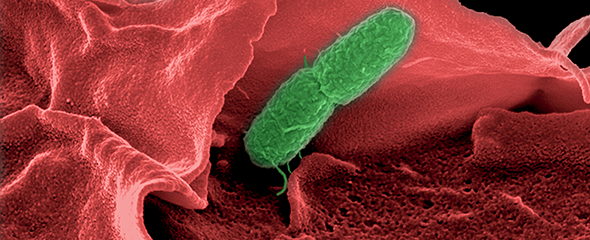
Salmonellen
News
Scientists studying infections used to focus mainly on the direct interaction of the immune system with pathogens, but have since moved on to look more closely at the interactions that go on between microbiota, immune system and pathogen. Using mouse models, researchers from the Helmholtz Centre for Infection Research (HZI) recently elucidated a relationship between gut microbiomes of various compositions and the susceptibility to Salmonella infections. In their study, the scientists from Braunschweig identified several bacterial families that have a protective effect against Salmonella. The researchers also elucidated the immune mechanism in the mucosa of the gut that is regulated by the protective bacterial families. Published in Cell Host & Microbe, the results of the study of the HZI scientists are an important step towards a better understanding of the interactions of the triad of microbiota, immune system and pathogen.
14.06.2017
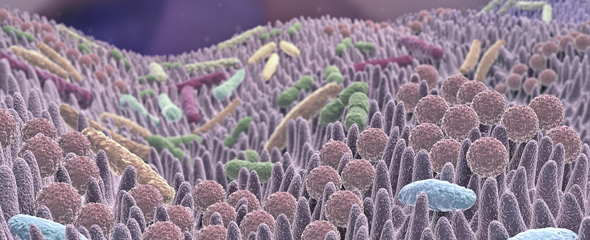
Darmflora
News
Intestinal bacteria are suspected of causing cardiovascular disease, since they produce trimethylamine as a metabolic product that is hazardous to humans. They utilise food ingredients that are present mainly in meat and eggs. The causal relationships are still vague at this time, since important insights into these microbial communities are still lacking. A research team from the Helmholtz Centre for Infection Research (HZI) recently developed a special function-based diagnostic method that allows the measurement of the trimethylamine production potential of intestinal communities and identification of the specific bacterial species involved in this process. Based on these insights, the microbiome may become a target of therapeutics in the distant future. The researchers published the results in Microbiome.
06.06.2017
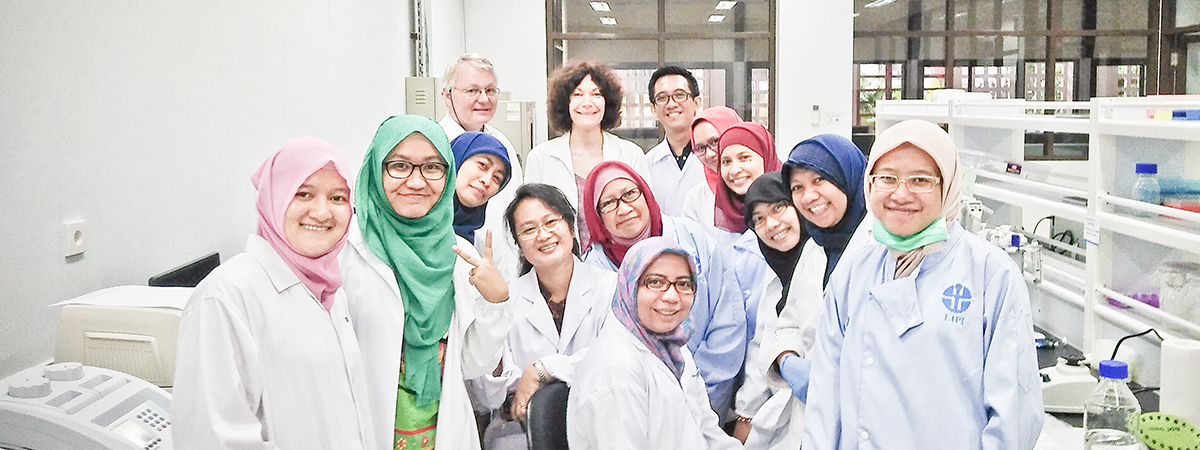
Gruppenbild
News
In recent years, more and more pathogens have become resistant to previously time-proven antibiotics. This scenario gives scientists all over the world cause to find new anti-infective substances and to develop them for application in medicine. A true opportunity for the discovery of new antibiotics is the investigation of previously unknown bacteria and fungi from habitats that have not yet been examined thoroughly, as these microorganisms produce a wealth of chemical substances with antibiotic activity. Scientists from the Helmholtz Centre for Infection Research (HZI) have isolated a large number of new bacterial strains, some of which show an activity against resistant pathogens and have already been promoted to the early preclinical development phase.
20.04.2017
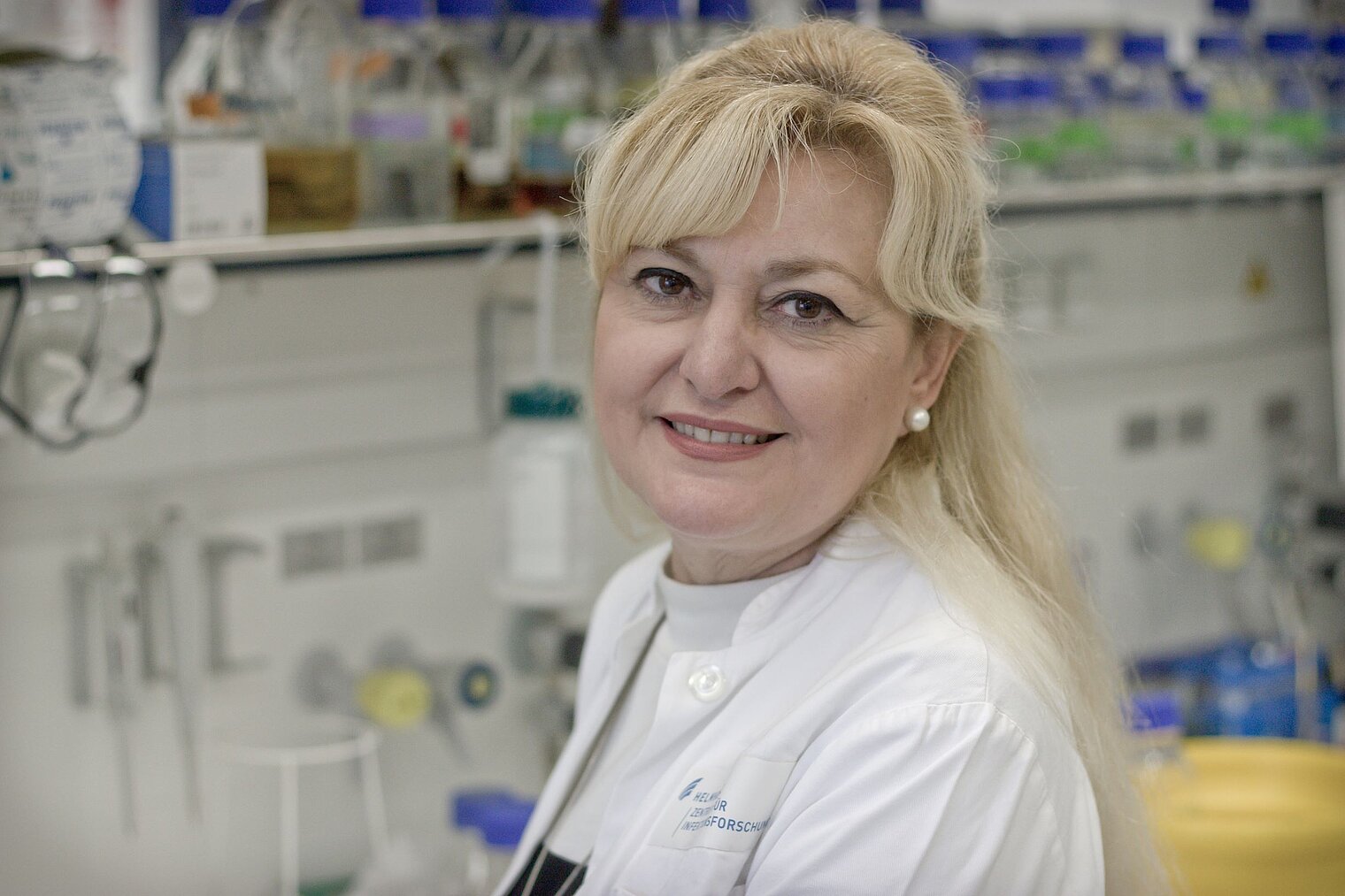
Eva Medina
Interview
More and more pathogens are developing resistances to antibiotics. There is therefore an urgent need for new anti-infectives. In this regard, Eva Medina of the Helmholtz Centre for Infection Research is looking for therapeutic alternatives that will circumvent the renewed formation of antibiotic resistance.
03.04.2017
Melanomzelle
News
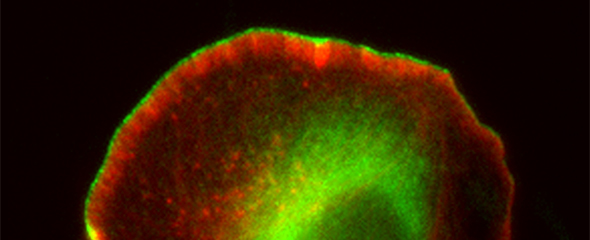
Cells inside the human body contain a flexible polymer network called the cytoskeleton which consists of actin filaments - and other components - and undergoes constant assembly and disassembly. This turnover of actin filaments allows cells to change shape and move. Such movements are important for example during embryonic development, wound healing but also for a properly operating immune system. To be able to move through tissue, cells need to expend energy and apply force. For example, immune cells advance into all regions of our body to detect and fight pathogens. In turn, though, some pathogens can abuse the cytoskeleton to adhere to or penetrate into cells.
22.03.2017
Salmonellen
News
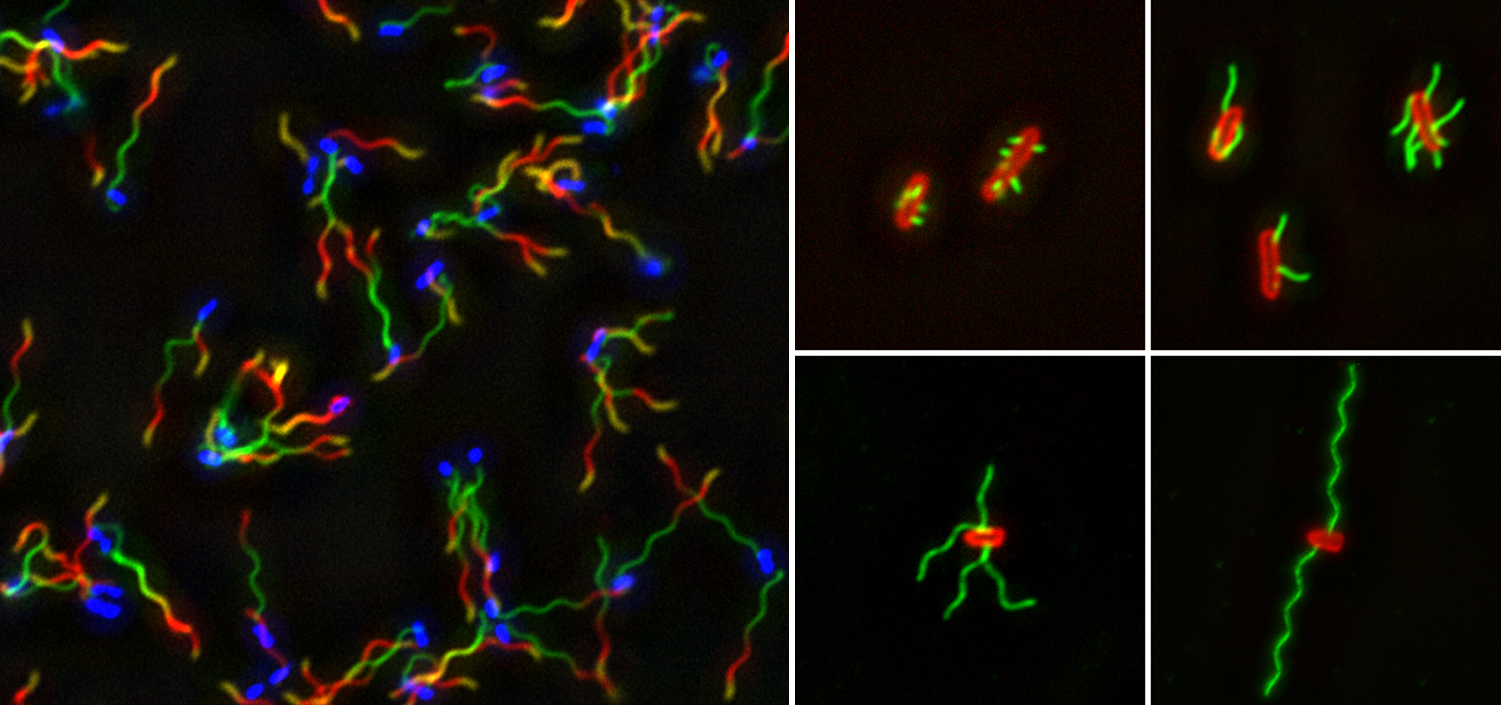
Many bacteria move by rotating long, thin filaments called flagella. Flagella are made of several tens of thousands building blocks outside the bacterial cell and grow up to ten times longer than the bacterial cell body. They allow bacteria to swim towards a nutrient source or to approach cells of the human mucosa in order to infect them. This means that flagella are also tools in infection processes and might be suitable as potential targets for new agents against pathogenic bacteria. The details of how flagella are assembled and how this process might be inhibited remained elusive. Scientists of the Helmholtz Centre for Infection Research (HZI) in Braunschweig now elucidated this mechanism using real-time observations of growing flagella. The researchers published their results in the freely accessible journal, eLife.
13.03.2017

HZI in the media

Die Erderwärmung steht für viele außer Frage – doch bei Klimaschutz und Energiewende wächst die Skepsis. ...

23.11.2026
|
3sat

Schaufler , a veterinarian and microbiologist at the Helmholtz Institute for One Health (HIOH).


Why factory ...

21.11.2026
|
Deutsche Welle

Prof. Dr. Berit Lange am Helmholtz-Zentrum für Infektionsforschung (HZI) und die molekularen Daten Dr. Harald ...

20.11.2026
|
market access & health policy

... hat Katharina Schaufler, Tierärztin und Mikrobiologin am Helmholtz-Institut für One Health (HIOH) in einer ...

19.11.2026
|
Deutsche Welle

Eine Welt ohne tödliche Infektionen oder Pandemien - dabei soll Künstliche Intelligenz helfen. Mit ihr ...

18.11.2026
|
3sat

Schaufler erforscht am Helmholtz-Institut für One Health (HIOH), einem Standort des Helmholtz-Zentrums für Infektionsforschung ( ...

18.11.2026
|
Frankfurt-Live

Schaufler erforscht am Helmholtz-Institut für One Health (HIOH), einem Standort des Helmholtz-Zentrums für Infektionsforschung ( ...

17.11.2026
|
Management & Krankenhaus

Direktor des Helmholtz-Instituts für RNA-basierte Infektionsforschung (HIRI) in Würzburgund Sprecher der Leopoldina-Arbeitsgruppe „RNA- ...

16.11.2026
|
Monitor Versorgungsforschung

13, 2026 | Maren Schubert’s lab at the Helmholtz Center for Infection Research has spent a decade refining an alternative to the field’s

13.11.2026
|
Bio-IT World

Lange, Leiterin der Abteilung Epidemiologie am Helmholtz-Zentrum für Infektionsforschung in Braunschweig erwartet insgesamt einen typischen

12.11.2026
|
Wiesbadener Kurier

... Technischen Universität Braunschweig, Forschungsgruppenleiter am Helmholtz Zentrum für Infektionsforschung.


Nach seiner Promotion über ...

09.11.2026
|
Radio38

WDR am 05.11.2026: Vitamine sind lebenswichtig. Viele greifen deshalb zu Kapseln, Pulvern und Brausetabletten, um mit einer Extraportion nachzuhelfen.


Das Geschäft boomt: Hersteller versprechen mehr Energie, ein stärkeres Immunsystem, gesünderes Altern und Schutz vor Krankheiten

06.11.2026
|
ARD Mediathek

Register now for the HZI newsletter