Evolutionary Community Ecology

Our Research

Human activities are reshaping the planet at unprecedented speed. As temperatures rise and natural habitats shrink, animal communities are shifting, with cascading effects on behaviour, ecology, and the rich microbial worlds animal’s host. Because species interact through social ties, trophic links, and shared vectors, microorganisms can move within and between species—including humans, who are increasingly embedded in these networks. Most emerging infectious diseases originate in wildlife, while pathogens also flow from humans to animals, affecting conservation and population persistence. The Evolutionary Community Ecology group studies how changes in animal communities reshape their microbial communities, disease dynamics, and pathogen transmission—including spillover risks to people.
New theoretical and practical advances in community ecology now allow us to disentangle processes acting from within hosts to landscape and regional scales. Our group develops flexible modelling frameworks and applies evolutionary and phylogenetic tools to reveal how communities assemble, how microorganisms interact, and how hosts and pathogens switch or codiverge. By integrating eDNA and other high-throughput approaches, we generate local data on biodiversity, microbial composition, and transmission to better quantify context-specific disease risks—moving beyond simple, universal rules linking biodiversity and health. These insights help inform effective, sustainable strategies for managing disease emergence in a rapidly changing world.
Our Research
Human activities are reshaping the planet at unprecedented speed. As temperatures rise and natural habitats shrink, animal communities are shifting, with cascading effects on behaviour, ecology, and the rich microbial worlds animal’s host. Because species interact through social ties, trophic links, and shared vectors, microorganisms can move within and between species—including humans, who are increasingly embedded in these networks. Most emerging infectious diseases originate in wildlife, while pathogens also flow from humans to animals, affecting conservation and population persistence. The Evolutionary Community Ecology group studies how changes in animal communities reshape their microbial communities, disease dynamics, and pathogen transmission—including spillover risks to people.
New theoretical and practical advances in community ecology now allow us to disentangle processes acting from within hosts to landscape and regional scales. Our group develops flexible modelling frameworks and applies evolutionary and phylogenetic tools to reveal how communities assemble, how microorganisms interact, and how hosts and pathogens switch or codiverge. By integrating eDNA and other high-throughput approaches, we generate local data on biodiversity, microbial composition, and transmission to better quantify context-specific disease risks—moving beyond simple, universal rules linking biodiversity and health. These insights help inform effective, sustainable strategies for managing disease emergence in a rapidly changing world.
PD Dr Jan Frederik Gogarten
Animals and microorganisms do not exist in isolation. Rather they exist in complex communities that impact many aspects of their biology and evolution. Understanding how those interactions shape these communities creates opportunities to better understand disease ecology and emergence.
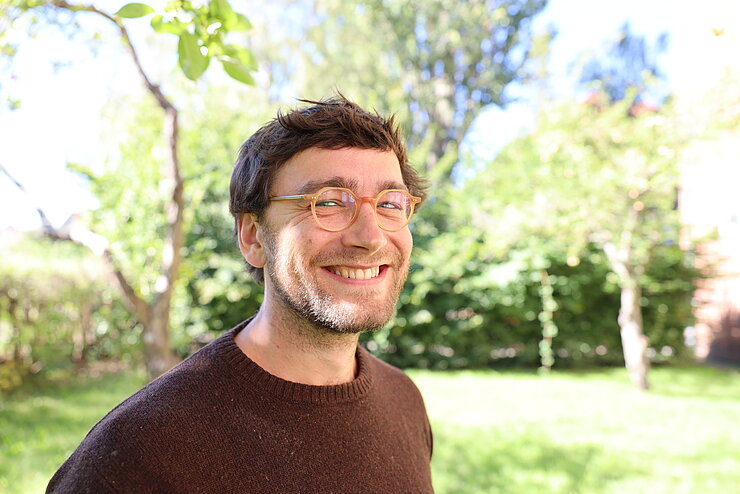
Jan Gogarten is a wildlife disease ecologist who recently founded the Evolutionary Community Ecology Research Group at the Helmholtz Institute for One Health in Greifswald. He was elected to the Global Young Academy in 2023 and has showcased a commitment to increasing the diversity of perspectives active in academia. He has worked in two biodiversity hotspots in Uganda and the Ivory Coast for the last decade, with publications on a broad range of topics across the fields of ecology and evolutionary biology, as well as microbiology and virology, highlighting his commitment to the transdisciplinarity needed for developing the One Health framework. The emergence of pathogens from ecosystems can have drastic consequences for humanity and at the same time, disease plays a critical role in regulating wildlife populations and their long-term conservation. Jan’s research seeks to build a basis for conservation policy aimed at living with biodiversity in a sustainable manner, both by understanding the processes that influence and maintain animal and microbial diversity in ecosystems, while developing strategies to understand and mitigate disease emergence in human and wildlife populations. To this end, he has developed an environmental DNA toolkit for studying hosts and pathogens at landscape scales, as well as non-invasive approaches for generating genomic data from hosts and their pathogens.
Jan Gogarten is broadly interested in health topics and especially in the factors influencing the composition of communities of hosts across landscapes, but also the communities of microorganisms within these hosts. He combines these types of data provides to provide insights into disease emergence and the transmission process between hosts and species, particularly coupling this with a phylogenetic scaffolding. He often works with wild non-human primates and utilizes a diverse molecular toolkit including metabarcoding, environmental DNA, and hybridization capture.
Jan studied Biology and Anthropology at McGill in Canada and went on to a master’s degree in Biological Anthropology at Stony Brook. He completed his PhD in Biology at McGill in 2017 with Drs. Jonathan Davies and Colin Chapman. During his PhD he was affiliated with the RKI and the MPI for Evolutionary Anthropology and worked closely with the Tai Chimpanzee Project and Drs. Roman Wittig, Fabian Leendertz, and Sébastien Calvignac-Spencer. He went on to a postdoc position at Columbia University working with Drs. Thomas Briese and Ian Lipkin, followed by a postdoc at the RKI as part of the DFG research group ‘Sociality and Health in Primates’ exploring the interplay of sociality and microbial diversity working with Sébastien Calvignac-Spencer.
Selected Publications
1. Gogarten JF*, Düx A*, Gräßle T*, Lumbu C*, Markert S*, Patrono LV*, Pléh KA*, Singa FN*, Tanga T*, Tombolomako T*, Couacy-Hymann E, Kouadio L, Mundeke SA, Nzassi PM, Calvignac-Spencer S*, Leendertz FH* (2024). An ounce of prevention is better: Monitoring wildlife health as a tool for pandemic prevention. EMBO Reports. 1-13. DOI: 10.1038/s44319-024-00156-z
2. Jahan M, Lagostina L, Gräßle T, Couacy-Hymann E, Kouadio L, Kouakou VK, Krou HA, Mossoun A, Patrono LV, Pléh K, Steiner JA, Yves N, Leendertz FH, Calvignac-Spencer S, Gogarten JF. (2023) Fly iDNA suggests strict reliance of the causative agent of sylvatic anthrax on rainforest ecosystems. Environmental DNA. DOI: 10.1002/edn3.401
3. Riutord-Fe C*, Schlotterbeck J*, Lagostina L, Kouadio L, Herridge HR, Jochum MJS, Noma NY, López-Morales A, Hoffmann D, Calvelage S, Kühl H, Mielke A, Crockford C, Samuni L, Wittig RM, Beer M, Gonedelé-Bi S, Gogarten JF, Calvignac-Spencer S*, Düx A*, Patrono LV*, Leendertz FH*. Transmission of MPXV from fire-footed rope squirrels to sooty mangabeys. Nature. DOI: 10.21203/rs.3.rs-6322223/v1
4. Lynggaard C, Calvignac-Spencer S, Chapman CA, Kalbitzer U, Leendertz FH, Omeja PA, Opito EA, Sarkar D, Bohmann K, Gogarten JF. (2023) Extensive tropical vertebrate diversity discovered through swabbing of environmental DNA from leaves. Current Biology. 33, R829–R854. DOI: 10.1016/j.cub.2023.06.031
5. Gogarten JF, Rühlemann M, Archie E, Tung J, Akoua-Koffi C, Bang C, Deschner T, Muyembe-Tamfun J-J, Robbins MM, Schubert G, Surbeck M, Wittig RM, Zuberbühler K, Baines JF, Franke A, Leendertz FH, Calvignac-Spencer S. (2021) Primate phageomes are structured by superhost phylogeny and environment. Proceedings of the National Academy of Sciences of the United States of America. 118: e2013535118. DOI: 10.1073/pnas.2013535118
![[Translate to English:] Rasterelektronenmikroskopische Aufnahme einer Escherichia coli-Zelle (rot), die von Bakteriophagen (grün) infiziert wird.](/fileadmin/_processed_/1/6/csm_Escherichia_coli_phage_c57d3dd91f.jpg)