World Immunization Week and World Day for Laboratory Animals: Research for Better Vaccine Protection
HZI project ENDURIVAC develops innovative long-acting vaccine against respiratory pathogens
According to estimates by the World Health Organization (WHO), vaccinations have saved more than 150 million lives over the past 50 years. However, their development would not have been possible without the use of animal testing. On April 24, these two topics converge: This day marks both World Laboratory Animal Day and the start of the WHO’s World Immunization Week. At the Helmholtz Centre for Infection Research (HZI), researchers in the project ENDURIVAC are developing an innovative vaccine technology that could eliminate the need for boosters in the long term. In their research, they also use animal testing to assess the vaccine’s efficacy and safety.
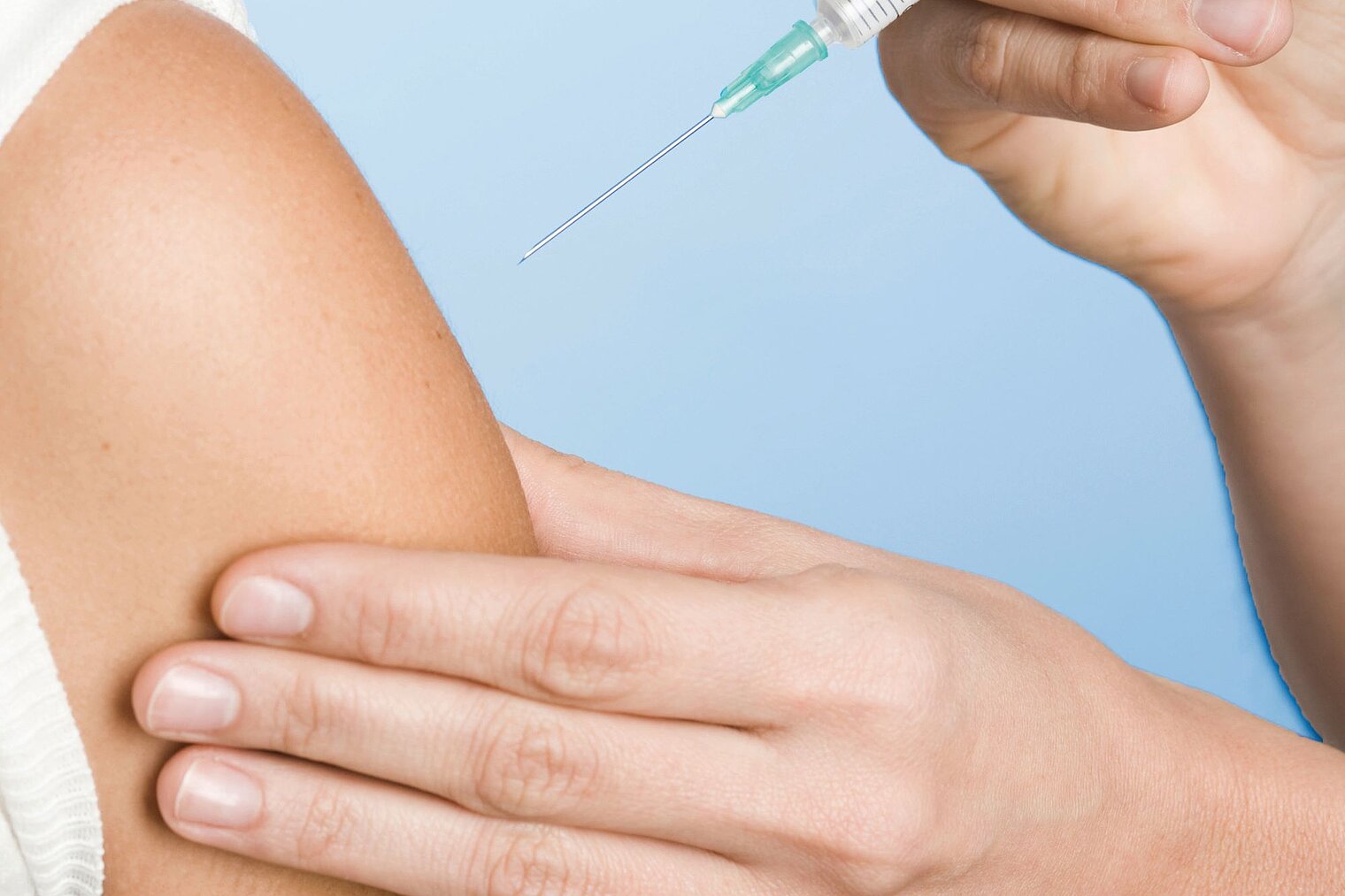
World Immunization Week, from April 24 to 30, is an annual call to recognize the crucial role of vaccinations in global health. Vaccinations “train” the immune system by presenting attenuated or inactivated pathogens, individual components, or the genetic information for these components. This enables the immune system to produce antibodies and memory cells, allowing it to respond quickly and effectively to an actual infection. For most vaccines, however, multiple doses are necessary to ensure long-lasting protection.
Will booster shots be unnecessary in the future?
Scientists in the HZI department “Viral Immunology” led by Prof. Luka Čičin-Šain aim to eliminate the need for these booster shots by developing a vaccine technology that provides long-term protection after a single dose. They are using the murine cytomegalovirus (MCMV) as a vector to deliver components of respiratory pathogens. MCMV is adapted to mice, so it cannot replicate in the human body or cause disease. In the project ENDURIVAC, the team is using MCMV to deliver a surface protein of the respiratory syncytial virus (RSV). “RSV is a good test case for our technology: There are safe and effective vaccines against the virus, but the protective effect wanes significantly after about two years,” says Dr. Henning Jacobsen, a researcher in the HZI department “Viral Immunology” and project leader of ENDURIVAC. This is where the team steps in: The immune system is activated for a long time by the RSV antigen delivered via MCMV, so that long-lasting immune protection should develop after just one vaccine dose. “Single-dose vaccines have enormous potential! Not only are they more cost-effective—since only one dose needs to be produced for complete immune protection—but they’re also easier to distribute and improve compliance because vaccination series can be completed with a single dose,” says Jacobsen, enthusiastic about the technology.
Animal experiments at HZI
In 2025, the number of animals used at the HZI was 2,959 (including 2,821 mice, 30 rats and 108 hamsters). In the previous year, the figure was 3,696 (of which 3,464 mice, 28 rats and 204 hamsters). By comparison, 11,042 animals (11,028 mice and 14 rats) were used in experiments in 2019.
The immune system – too complex for cell culture and computer simulations
To achieve this goal, HZI researchers also resort to animal testing. The protection provided by vaccines is the result of spatially and temporally finely tuned interactions between various immune cells and signaling molecules. These processes can be partially replicated in the laboratory or through computer simulations, but can only be fully studied in a living organism. Important experiments regarding vaccine safety can also only be conducted in animals. “A distinctive feature of our vaccine is the long-lasting activation of the immune system. We cannot adequately replicate these long-term processes in cell cultures. The cells simply do not live long enough there to observe immune memory,” says Jacobsen. There are also no alternative methods yet for challenge experiments, in which animals are first immunized with the vaccine candidate and then specifically infected to assess the protective effect. “The immune response following vaccination cannot, in principle, be measured in cell culture or organoids. At least not yet. This means we are reliant on animal testing. Every animal experiment conducted was first rigorously reviewed by regulatory authorities in accordance with EU directives as well as national laws and regulations to keep the use of laboratory animals to a minimum,” says HZI department head Luka Čičin-Šain. “We are already in contact with regulatory authorities regarding a preclinical development plan. This allows us to identify early on which data and experiments will be necessary for approval and to select the appropriate animal models.”
Tonsil organoids for vaccine screening
Nevertheless, the researchers are also developing technologies to further reduce the use of animal testing in their vaccine research. For example, they are currently establishing a tonsil organoid, a simplified three-dimensional model of the tonsils. In the future, they plan to screen various vaccine variants using organoids instead of mice.
We can not only introduce antigens from a single pathogen into our vector virus, but also create multivalent vaccines. This way, a single vaccine dose could protect against a whole range of respiratory pathogens.
—
Dr Henning Jacobsen
Researcher in the HZI department “Viral Immunology” and project leader of ENDURIVAC
With the RSV vaccine, the ENDURIVAC team aims to demonstrate that their technology can generate reliable, long-lasting immune protection. For Jacobsen, however, the technology is far from having reached its full potential: “We can not only introduce antigens from a single pathogen into our vector virus, but also create multivalent vaccines. This way, a single vaccine dose could protect against a whole range of respiratory pathogens.” The motto of World Immunization Week 2026 is “For every generation, vaccines work”. In line with this motto, the ENDURIVAC vaccine is intended not only to be available to older adults in the long term. It is also intended to streamline the childhood immunization schedule by combining various vaccine series into a single injection.
By developing vaccines that offer long-term protection with just a single dose, and through the responsible use and reduction of animal testing, the HZI is paving the way for vaccines that can strengthen global health protection.
Further information
Campaign page by the WHO for the World Immunization Week
Virtual 360° tour of the animal facility and further labs of the HZI
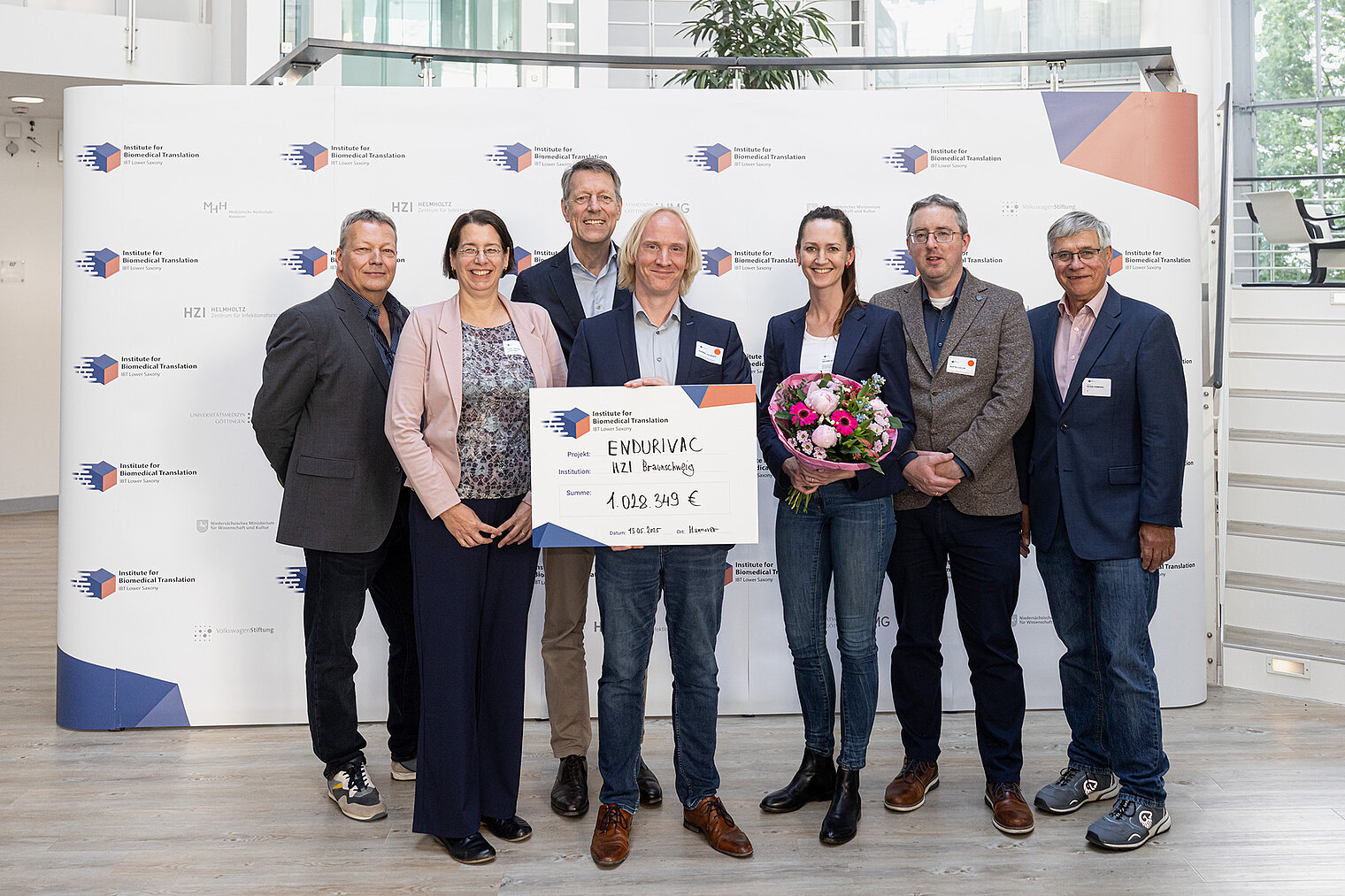
Yesterday, the biomedical project forge of the state of Lower Saxony reviewed the most promising ideas from across the region and selected the winners: At the fourth portfolio conference of the Institute for Biomedical Translation (IBT) Lower Saxony, a high-caliber jury selected projects from the Helmholtz Centre for Infection Research (HZI) in Braunschweig, the University Medical Center Göttingen (UMG) and TWINCORE - Centre for Experimental and Clinical Infection Research, which will receive funding of almost 3 million euros. TWINCORE is a joint institution of the HZI and Hannover Medical School (MHH). A total of 25 million euros will be available to the IBT Lower Saxony until 2028 to accelerate the transfer of cutting-edge research in the life sciences in Lower Saxony and bring it to the world in the form of start-ups and entrepreneurial ideas.
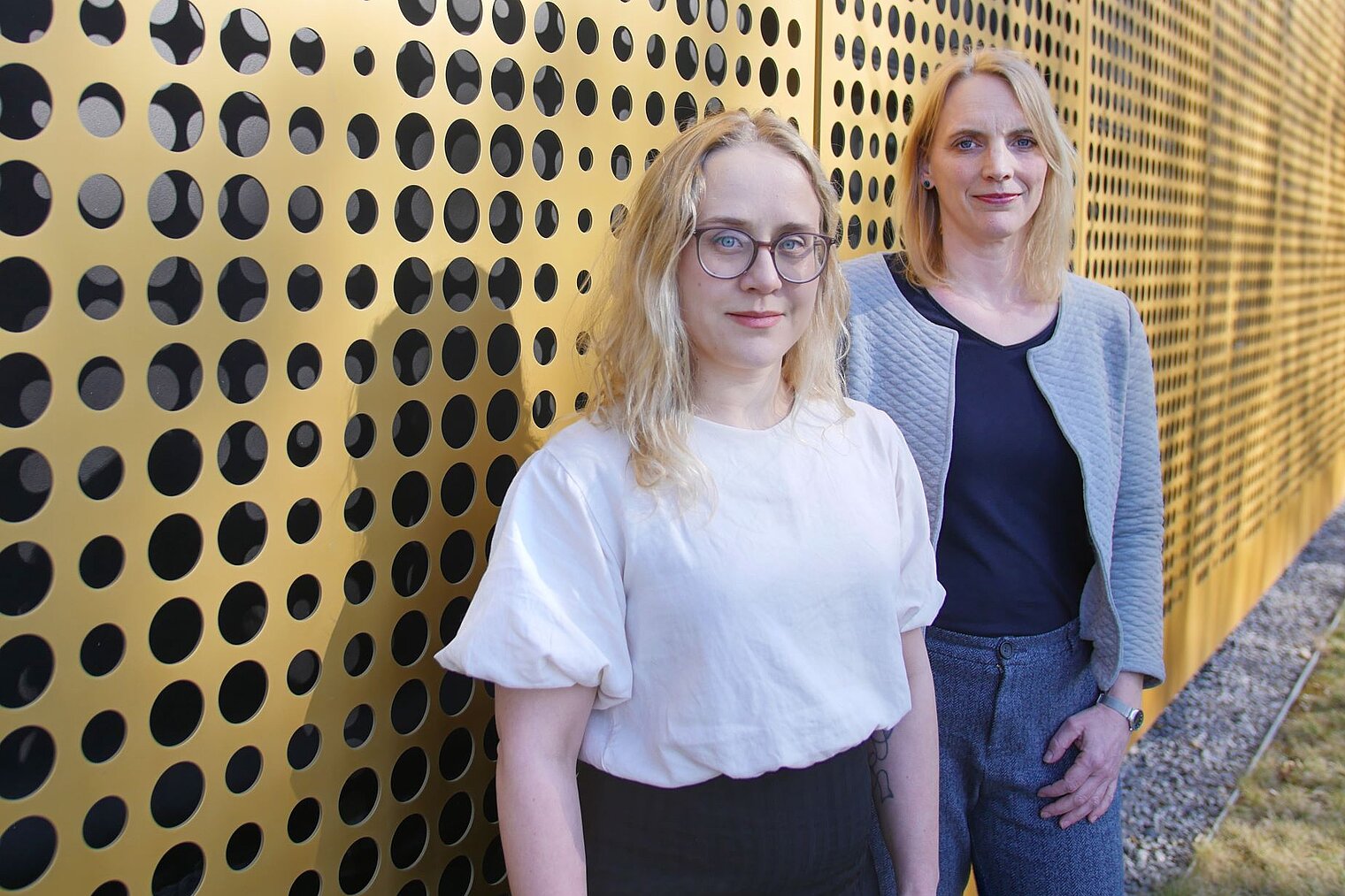
Scientists at the Helmholtz Centre for Infection Research (HZI) are studying important mechanisms for the development of infectious diseases and how they can be treated or prevented. Some of the research questions can only be answered with the help of animal experiments. Dr. Julia Port, head of the junior research group “Laboratory of Transmission Immunology”, and Dr. Marina Greweling-Pils, head of the research group “Core Facility of Comparative Medicine” and Animal Welfare Officer at the HZI, explain in an interview to mark the World Day for Laboratory Animals 2025 why not all animal experiments can be replaced and why choosing the right animal model is crucial for reliable scientific results.
Researchers at the Helmholtz Centre for Infection Research (HZI) have developed a promising new vaccine technology. Their studies to date show that just one dose of vaccine leads to effective and long-lasting immune protection. The basis of this so-called MCMV vaccine vector technology is the mouse cytomegalovirus (MCMV). It acts as a carrier virus that introduces selected antigens of a pathogen to be vaccinated against into the body. In the follow-up project VIVA-VEK-2, which was launched at the HZI at the beginning of January, a proof-of-concept vaccine candidate against respiratory syncytial virus (RSV) is now to be produced and tested for efficacy and tolerability. The researchers believe that with the new vaccine technology, one vaccine dose could possibly even provide lifelong protection. The project is funded by the GO-Bio initial program of the Federal Ministry of Education and Research (BMBF) over two years with a funding volume of one million euros.



![[Translate to English:] Charlotte Schwenner](/fileadmin/_processed_/6/9/csm_Charlotte_Schwenner_7952cfe0a7.webp "Dr Charlotte Schwenner")