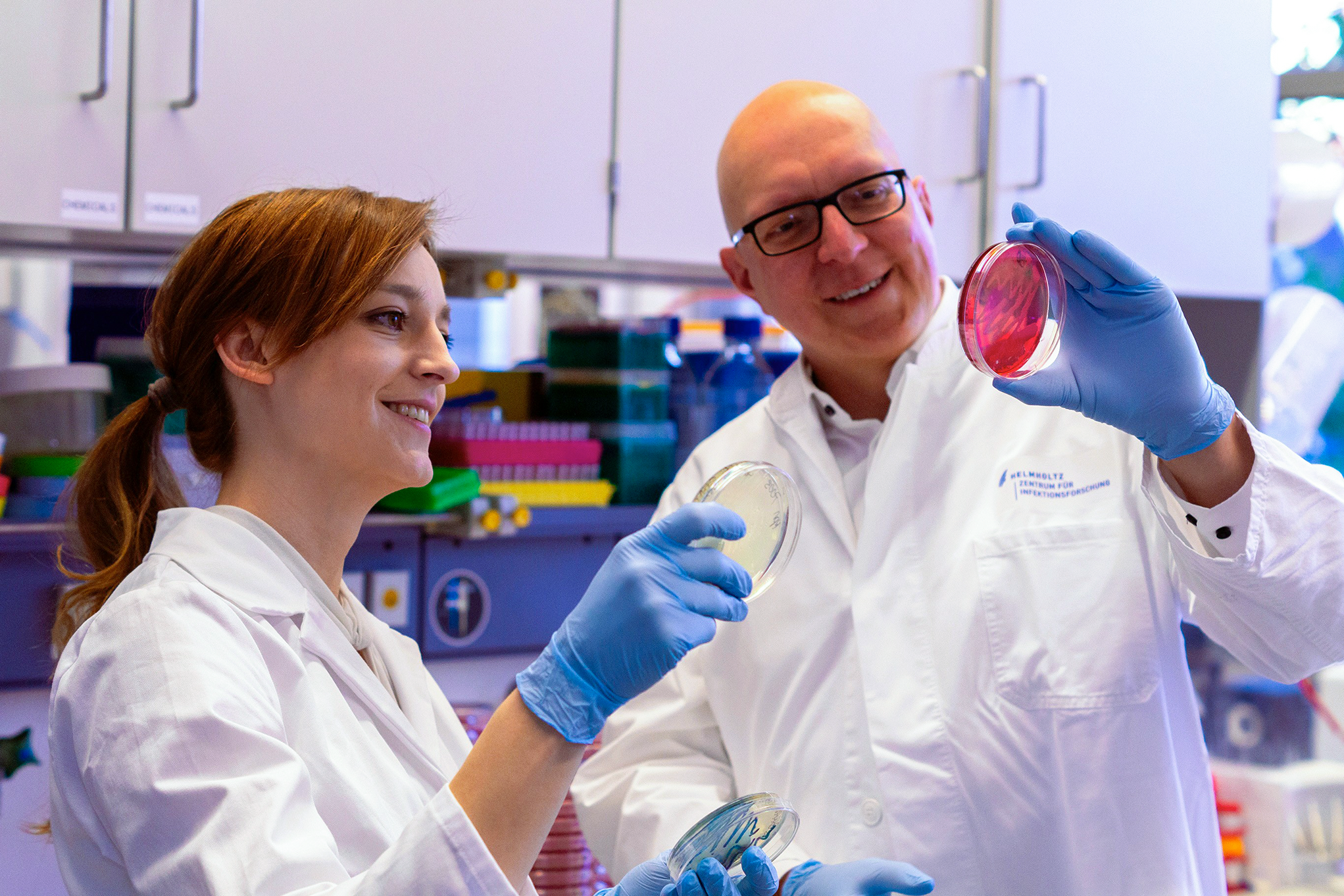
Dr Lisa Osbelt-Block and Prof. Till Strowig prevent serious infections with microbiome engineering
Story
The engineers of the microbiome
A new era of prevention: microbiome engineering at the HZI
The microbiome performs a variety of health-maintaining functions in the body. The microbes can produce nutrients, dampen inflammation or displace pathogens. In order to fulfill all these tasks, the microbiome must be in balance. For the microbiome, this means first and foremost that it is as diverse as possible. This makes it harder for harmful microorganisms to find a niche to live in. If microbiome diversity decreases or harmful germs dominate, there is a risk of inflammation, infections or chronic diseases - and this is precisely where the Helmholtz Centre for Infection Research (HZI) comes in. Using “microbiome engineering”, Dr. Lisa Osbelt-Block and Prof. Till Strowig are specifically editing the gut microbiome to prevent disease.
While probiotics usually provide transiently colonizing and harmless bacteria or fecal microbiota transplantation (FMT), also known as stool transplantation, can replace the entire microbiome, microbiome engineering aims at precise interventions: Researchers remove individual pathogens from the community, replace lost functions or redesign the ecosystem so that it repairs itself. At the HZI, the main question is: How can we prevent infections before they occur?
The microbiome engineers' tools are not measuring tapes and dial gauges, but microorganisms, bacteriophages and the CRISPR gene scissors. “In a way, we are all engineers of our microbiome. What we eat and who we surround ourselves with influences our microbiome. However, our approach to microbiome engineering is more targeted,“ says Prof. Till Strowig, head of the HZI department ”Microbial Immune Regulation”. “Our aim is to prevent serious infections that may originate in the gut. We want to remove these bacteria from the intestine before complications can arise once they break through the intestinal barrier.”
Infection prevention thanks to microbial antagonists
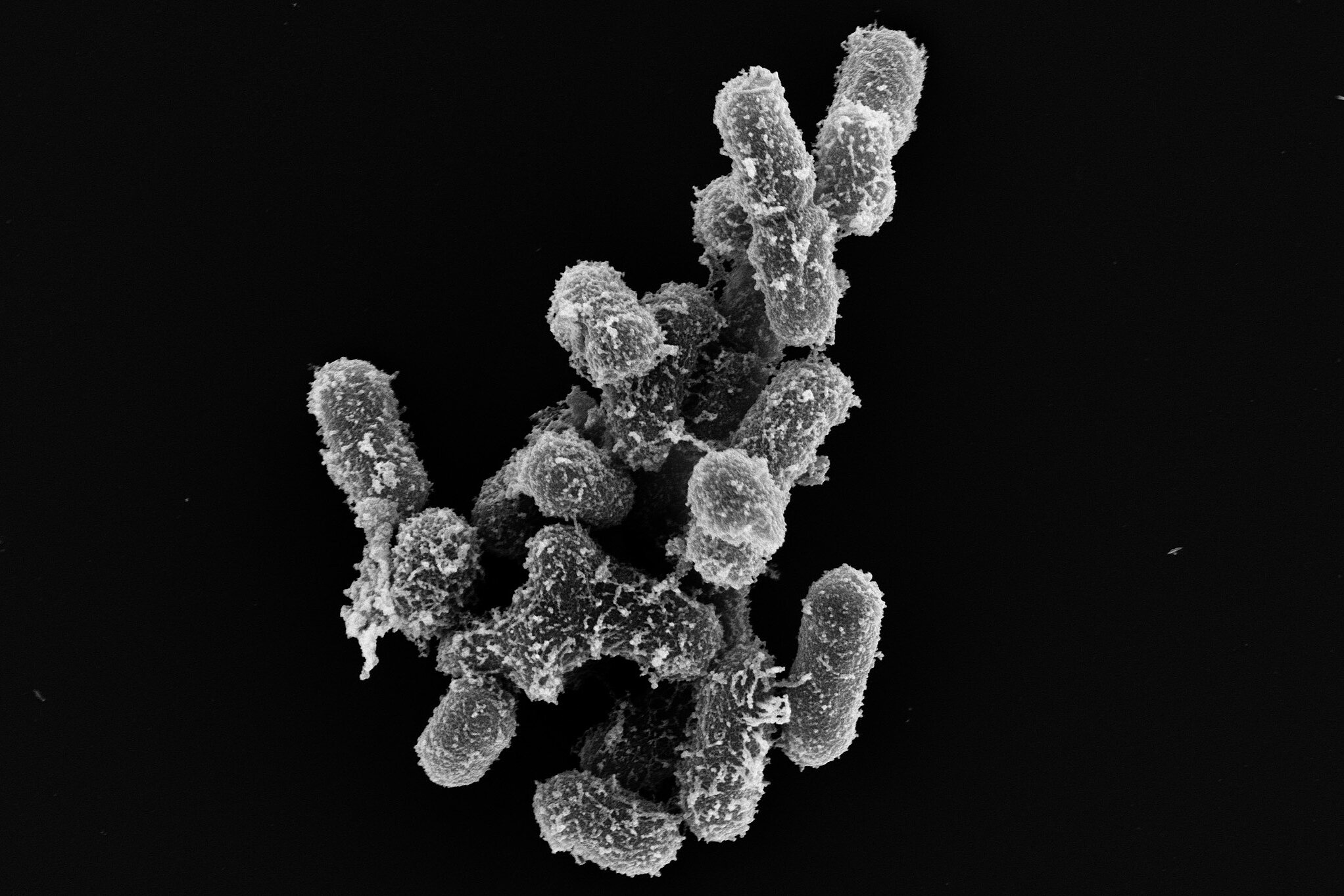
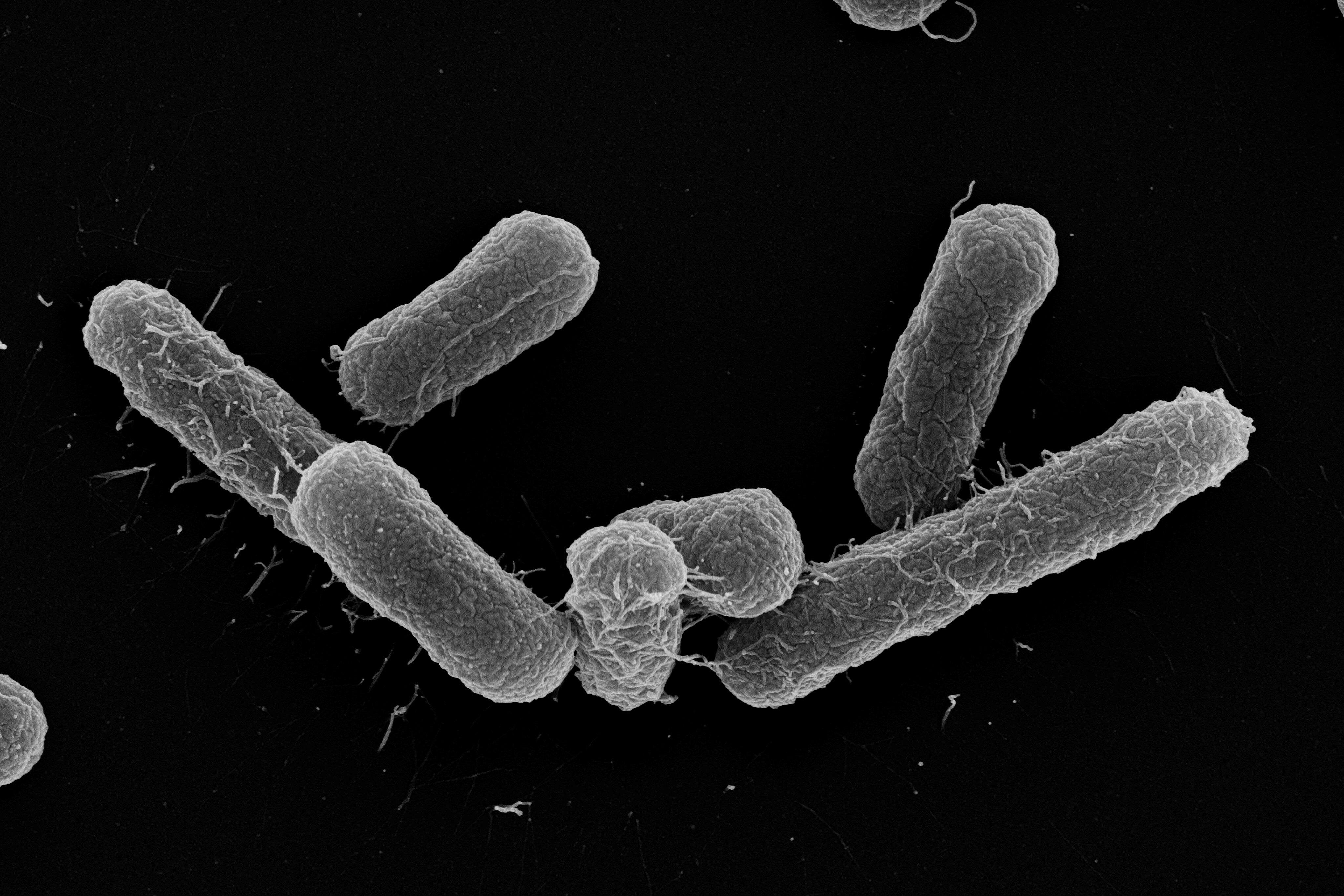
Electron micrograph of Klebsiella oxytoca, a powerful antagonist against pathogens
He and his team are relying on the power of other gut-inhabiting bacteria: They have discovered that the reservoir of pathogenic bacteria in the gut can be eliminated if it is colonized with certain antagonists: “Our research is most advanced on the species Klebsiella oxytoca, which can displace other Klebsiella and Salmonella from the gut,” says Dr. Lisa Osbelt-Block, a scientist in Strowig's department. “We were able to show that K. oxytoca competes with pathogenic Klebsiella for the same nutrients and also changes the conditions in the gut so that the community of beneficial bacteria can recover - K. oxytoca acts like a mini-engineer that repairs the microbiome.” The team, which is aiming for a spin-off, is also testing microbial antagonists against enterobacteria such as pathogenic Escherichia coli.
With the support of the German Center for Infection Research (DZIF), the team is developing its bacterial strains as living biotherapeutics (LBP). Such a preparation with freeze-dried but living microorganisms is considered a drug and must be clinically tested and approved. This also distinguishes the researchers' approach from conventional probiotics, which are marketed as dietary supplements. Although they are said to have health-promoting effects, the clinical effect is usually not proven.
“Our approach is intended to be used in cases of miscolonization, when we want to displace individual potentially pathogenic bacterial strains from the microbiome,” says Osbelt-Block. However, if the microbiome has been completely disrupted by repeated administration of broad-spectrum antibiotics or the persistent germ Clostridioides difficile has spread in the intestine, a different approach such as stool transplantation is necessary. This involves transferring healthy intestinal bacteria from a donor to a recipient in order to restore the dysfunctional microbiome.
A scalpel for the microbiome
“If stool transplantation is a sledgehammer, our microbiome engineering technology is a chisel: powerful, but still fine enough to work precisely,” says Osbelt-Block, comparing the tools. Research groups around the world, including at the HZI, are exploring complementary tools to manipulate the microbiome with a “scalpel”. They want to achieve microbiome changes with virtually no side effects. To this end, they are researching how they can use programmable antibiotics or the CRISPR gene scissors to switch individual genes of bacteria on or off directly in the intestine. Other projects are dedicated to bacteriophages, which also act directly in the intestine. These viruses can specifically infect unwanted bacterial strains and thus remove them from the community. With these tools - from the chisel to the scalpel - the researchers at the HZI not only want to repair the microbiome, but also shape it in a targeted and sustainable way - for a new era of prevention. The microbiome engineers' toolbox of methods is far from exhausted.
Further information
HZI podcast “InFact" with Lisa Osbelt-Block and Till Strowig: Our microbiome and how it keeps us healthy
The Helmholtz Association is kicking off 2026 with new research initiatives on strategic future topics to bring technological breakthroughs into practical application more quickly. The Helmholtz initiatives “Biomedical Engineering Initiative,” “Water Safety and Security Initiative,” and “Quantum Use Challenge” are generating innovative solutions – from needle-free blood glucose measurement via wearables to quantum sensors for more powerful batteries and innovative concepts for water management in large cities. The initiatives are being developed in close cooperation with partners from politics, business, and society and address key technologies and strategic research areas of the German government’s High-Tech Agenda. Four projects of the Helmholtz Centre for Infection Research (HZI) and its sites in Greifswald, Saarbrücken and Würzburg are part of the new research campaigns.
A balanced gut microbiome not only contributes to digestion, but is also an important protective factor against infections. Researchers at the Helmholtz Centre for Infection Research (HZI) led by Prof. Till Strowig, scientist in the German Center for Infection Research (DZIF), want to harness the power of the microbiome to prevent serious infections. They have discovered that bacteria of the species Klebsiella oxytoca can displace pathogenic bacteria from the gut and want to develop a living biotherapeutic based on this finding. The DZIF is now providing 2.2 million euros in funding for product development until the first tests on humans.
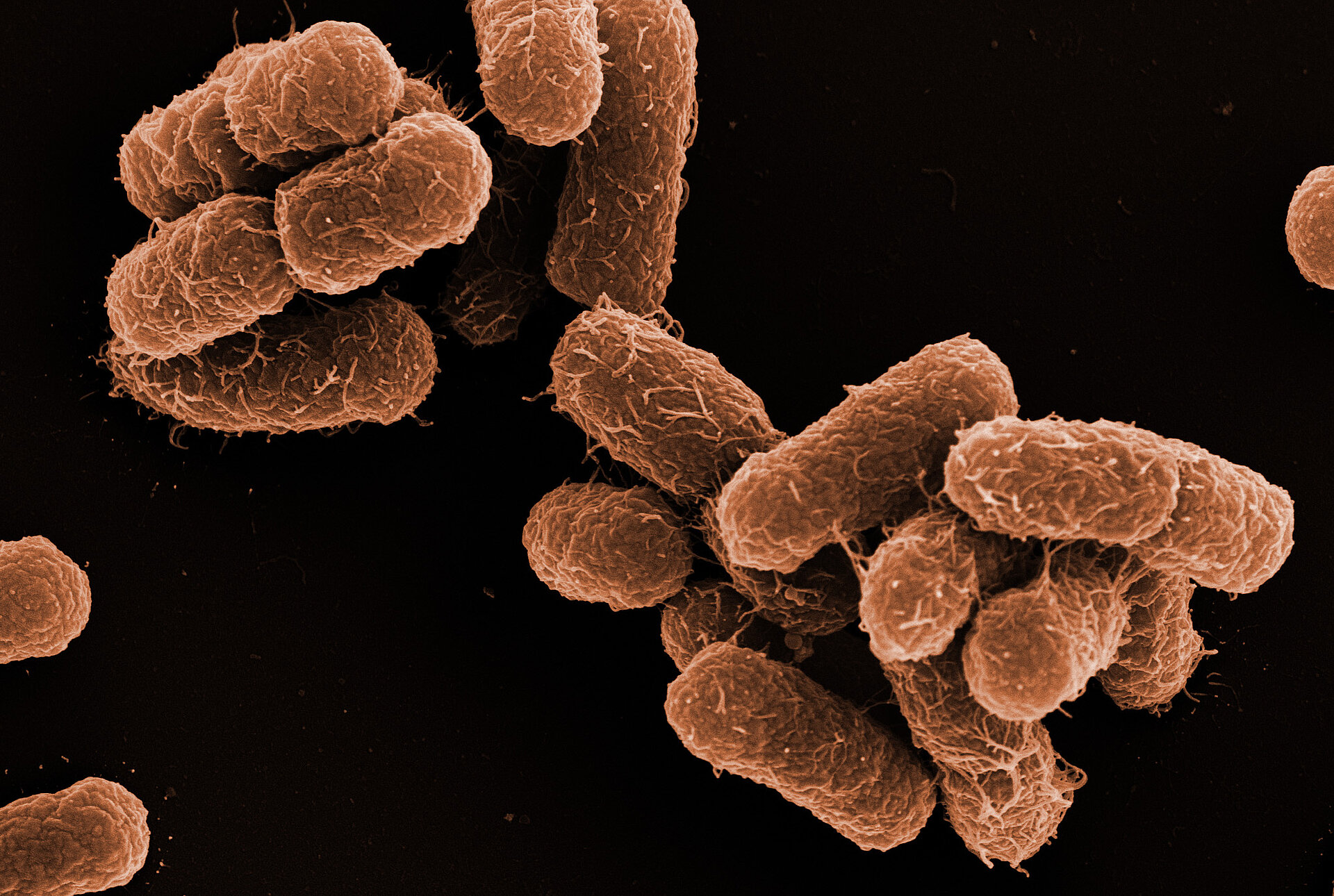
If an intestinal inhabitant such as the bacterium Escherichia coli (E. coli) becomes resistant to many antibiotics, it can cause serious health problems if it enters the bloodstream. How can such potentially dangerous multi-resistant bacteria be effectively removed from the gut? Researchers from the Helmholtz Centre for Infection Research (HZI), in collaboration with researchers from Hannover Medical School (MHH), explored this question in their latest study.

![[Translate to English:] Charlotte Schwenner](/fileadmin/_processed_/6/9/csm_Charlotte_Schwenner_7952cfe0a7.webp "Dr Charlotte Schwenner")