For over ten years, the German National Cohort (NAKO) has been monitoring more than 205,000 people nationwide. By comprehensively collecting medical, biomedical and social science data, it provides a unique basis for investigating the long-term relationship between infections, disease development and health. In addition, the biological samples stored in the central biorepository at Helmholtz Munich enable the development of early clinical markers.
“NAKO is the only Germany-wide population study that collected health data directly before and at the beginning of the COVID-19 pandemic. It thus provides valuable insights into understanding how the pandemic is affecting the long-term health of people in Germany,” explains Prof. Annette Peters, Chair of the Board of Directors NAKO e.V. and Director of the Institute of Epidemiology at Helmholtz Munich.
EpiPAIS research project: Molecular mechanisms of long COVID
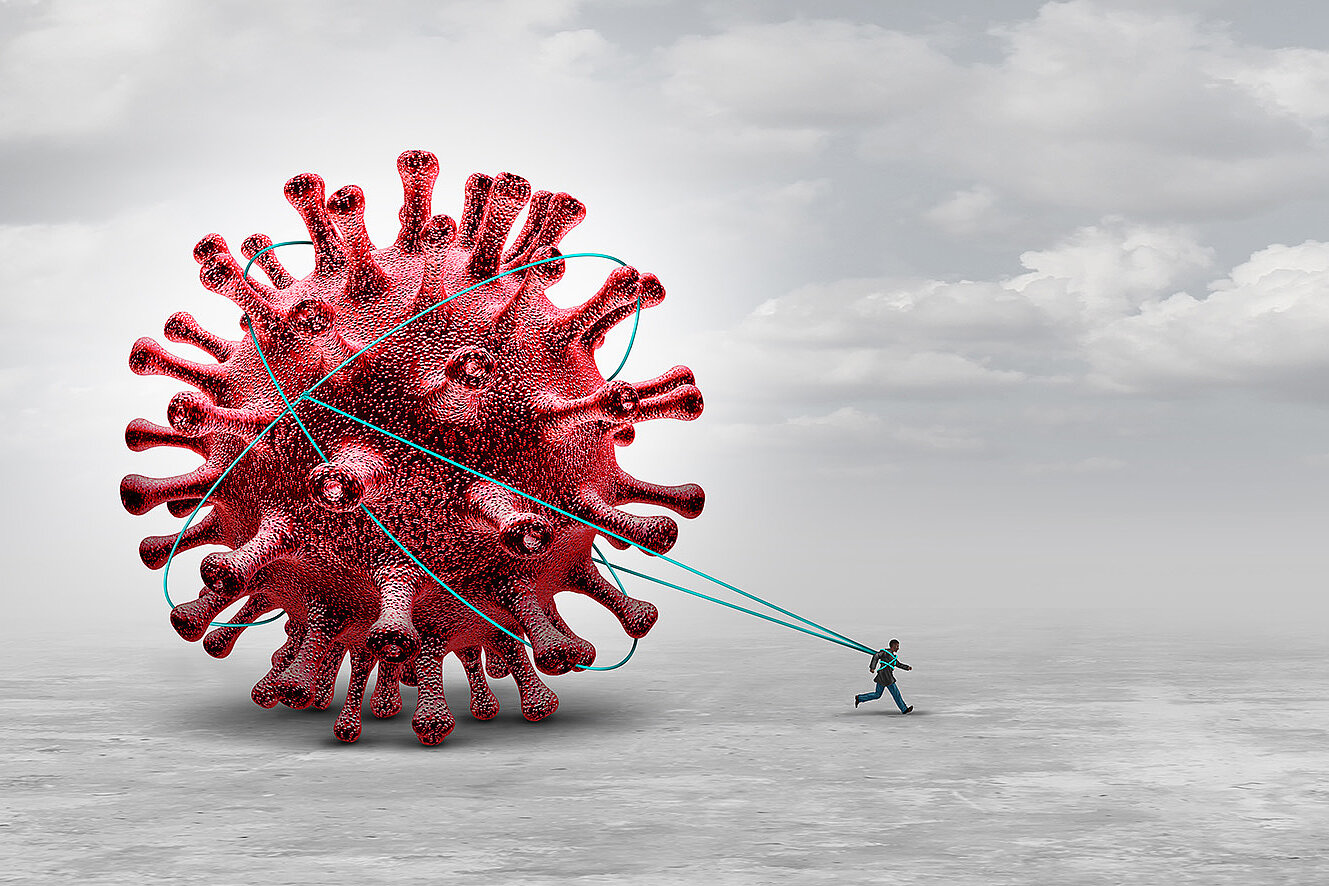
One key project is EpiPAIS – Epigenetic Patterns in the Pathogenesis of Long COVID, coordinated by Prof. Annette Peters. In EpiPAIS, around 9,000 blood samples are being examined for so-called epigenetic changes that could contribute to the development of Long COVID or similar syndromes. Epigenetic changes are like switches and regulators that determine which genes in a cell are active, when and how.
“The EpiPAIS project combines molecular research and population-wide health data. This enables us to better understand how and which biological processes influence long-term health after infections,” says Prof. André Karch, Head of Clinical Epidemiology at the Institute of Epidemiology and Social Medicine at the University of Münster. Modern statistical methods and machine learning will be used to analyse individual disease progression and risk profiles. In addition to Helmholtz Munich, the universities of Halle and Münster are also involved in the project.
Nationwide participant survey planned
“To kick off EpiPAIS, a comprehensive survey of NAKO participants is planned for early 2026, led by Halle University Hospital. The survey will collect information on symptoms, infection progression and long-term effects,” reports Prof. Rafael Mikolajczyk, Director of the Institute for Medical Epidemiology, Biometry and Informatics at University Medicine Halle.
This survey complements the ongoing third study (10-year follow-up) and enables an assessment of the frequency and severity of post-infectious diseases in the population – including Long COVID. The data obtained in this way provides a valuable basis for better understanding health risks after infections and improving long-term care strategies.
Genome sequencing: New perspectives on the development of disease
The Helmholtz Centres participating in NAKO are currently conducting extensive genome sequencing of 35,000 biosamples in 2025 and 2026. “The genome sequencing data and valuable biosamples from NAKO provide an important basis for a more precise understanding of the genetic and molecular factors that lead to post-infectious diseases. We expect that this will reveal new pathophysiological mechanisms and enable the development of targeted therapies,” says Prof. Annette Peters. The genetic analyses are being coordinated by Helmholtz Munich and carried out in collaboration with the German Cancer Research Centre (DKFZ), the Max Delbrück Centre (MDC) and the Helmholtz Centre for Infection Research (HZI).
National Decade of Post-Infectious Diseases
The National Decade of Post-Infectious Diseases, funded with a total of €500 million, will start in 2026. The initiative of the Federal Ministry of Transport and Digital Infrastructure (BMFTR), headed by Minister Dorothee Bär, brings together scientific expertise to conduct long-term research into the medical and social consequences of infections and to develop new approaches to prevention and treatment.
![[Translate to English:] Charlotte Schwenner](/fileadmin/_processed_/6/9/csm_Charlotte_Schwenner_7952cfe0a7.webp "Dr Charlotte Schwenner")