[Translate to English:] Getrocknetes Salz und Mukus in Atemflüssigkeit
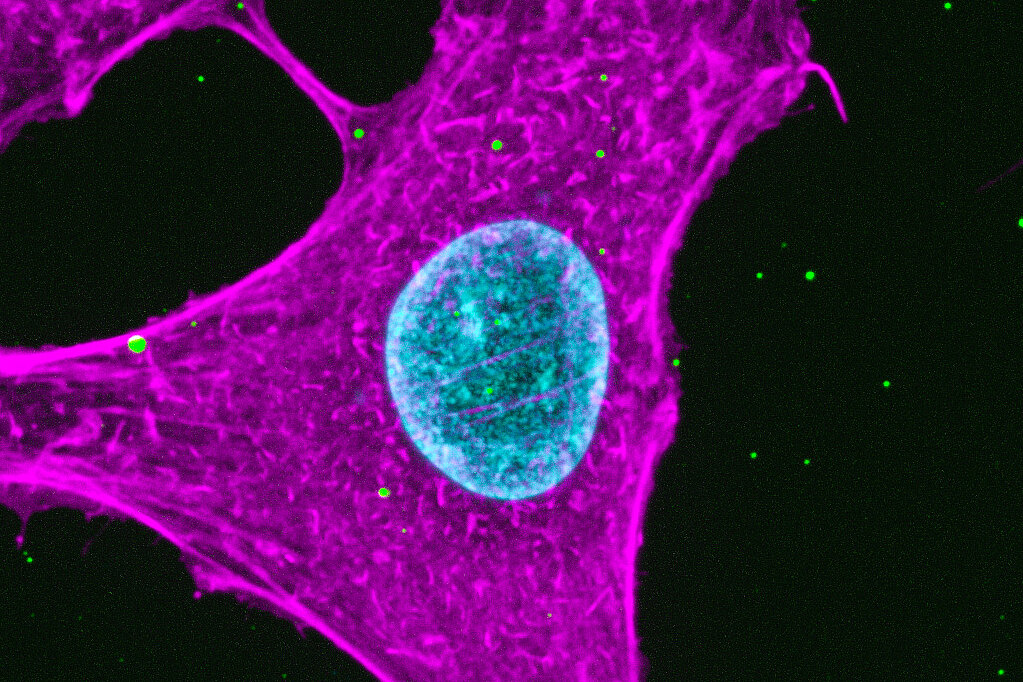
Dried salt (NaCl) and mucin (porcine origin) content of mock respiratory fluid.
News

Mucus as a virus barrier: How influenza viruses infect humans and animals

HZI coordinates BMFTR project ONEMUC, which investigates risk factors for pandemic viruses

When viruses infect the respiratory tract, they first come into contact with a viscous gel called mucus. Only viruses that can overcome this layer on the cells of the mucous membranes are able to infect a host. In the joint project ONEMUC, which is funded by the German Federal Ministry of Research, Technology and Space (BMFTR) with 4.3 million euros, researchers at the Helmholtz Centre for Infection Research (HZI) and cooperation partners are investigating the role of mucus as a barrier in the transmission of zoonotic influenza A viruses. At the HZI, group leaders Prof. Christian Sieben and Dr Julia Port are investigating how mucus and environmental factors influence virus transmission. The five-year project started on March 1, 2026.

Respiratory diseases are one of the most common causes of death worldwide. In addition, viruses that affect the respiratory tract pose a particularly high risk of pandemic spread. Influenza A viruses are a key focus of pandemic prevention because they are regularly transmitted between different animal species. Most recently, a highly pathogenic H5N1 influenza strain infected wild bird populations on various continents and made the spillover to mammals several times.

Assessing the pandemic potential of new flu strains

“When investigating the host tropism of a viral pathogen, i.e. which hosts can already be infected, the mucus barrier is often omitted,” says project coordinator Prof. Christian Sieben, head of the junior research group “Nano Infection Biology” at the HZI. The project ONEMUC (Respiratory Mucus as One Health Interface) aims to close this gap. "Our respiratory tract puts us in direct contact with our environment, which is also how pathogens can enter our bodies. Our goal is to study mucus as an interface in order to better assess risk factors for virus transmission to different species," explains Sieben. To this end, his team will investigate how the mucus of different animal species interacts with viruses and influences their ability to infect cells. They are also aiming to develop a rapid test platform with mucus from animals and humans that can show how well influenza viruses are adapted to certain species and environmental conditions.
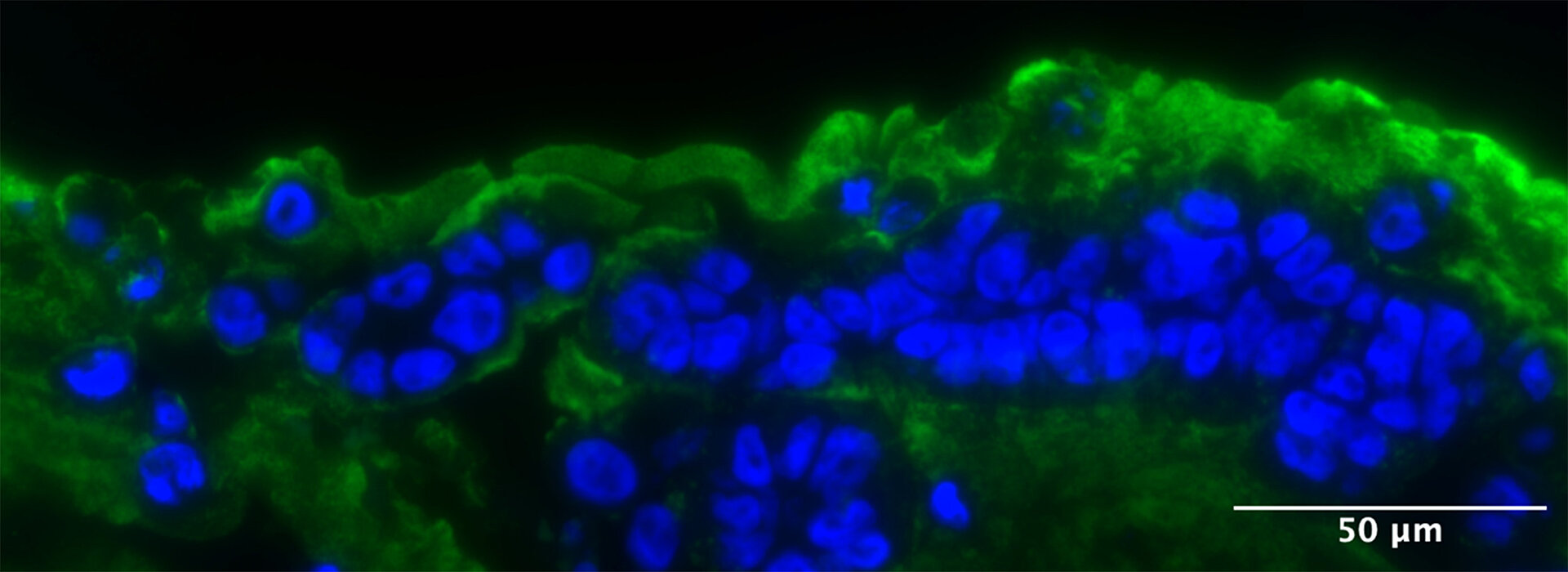
Microscopic image of blue-stained cells with green-stained mucus on top
Cross section through an air-liquid interface culture showing labelled cellular nuclei (blue) and secreted mucus (green, labelled with anti-Muc5AC). The interface with the air is located in the upper part of the micrograph.

In line with the One Health approach, which focuses on the health of humans, animals and the environment together, ONEMUC also includes environmental factors in its investigations. “Pollen, dust and exhaust fumes that we breathe in can irritate the airways and affect the composition of the mucus in the airways,” says Dr. Julia Port, head of the junior research group “Laboratory of Transmission Immunology” at the HZI. This in turn can affect the stability and infectivity of the viruses. “For SARS-CoV-2, we have already been able to show in the past that mucus influences viral stability,” says Port. “We will investigate the complex interplay between air pollutants, particulate matter and mucus and how these factors modulate the transmission of IAV.”

ONEMUC is a highly interdisciplinary collaborative project. The scientists and doctors from the HZI, Freie Universität Berlin, Charité - Universitätsmedizin Berlin, the Friedrich Loeffler Institute, the Robert Koch Institute and the Research Institute for Sustainability at GFZ Helmholtz Centre for Geosciences combine expertise from human and veterinary medicine with virology, biochemistry, biophysics and computational biology. ONEMUC is one of seven projects funded by the BMFTR on the topic of “Pandemic prevention and response as part of a One Health approach”. Of the total funding of 4.3 million euros, around 1.4 million euros will go to the researchers at the HZI.

[Translate to English:] Charlotte Schwenner

Press contact

Dr Charlotte Schwenner
Science Editor