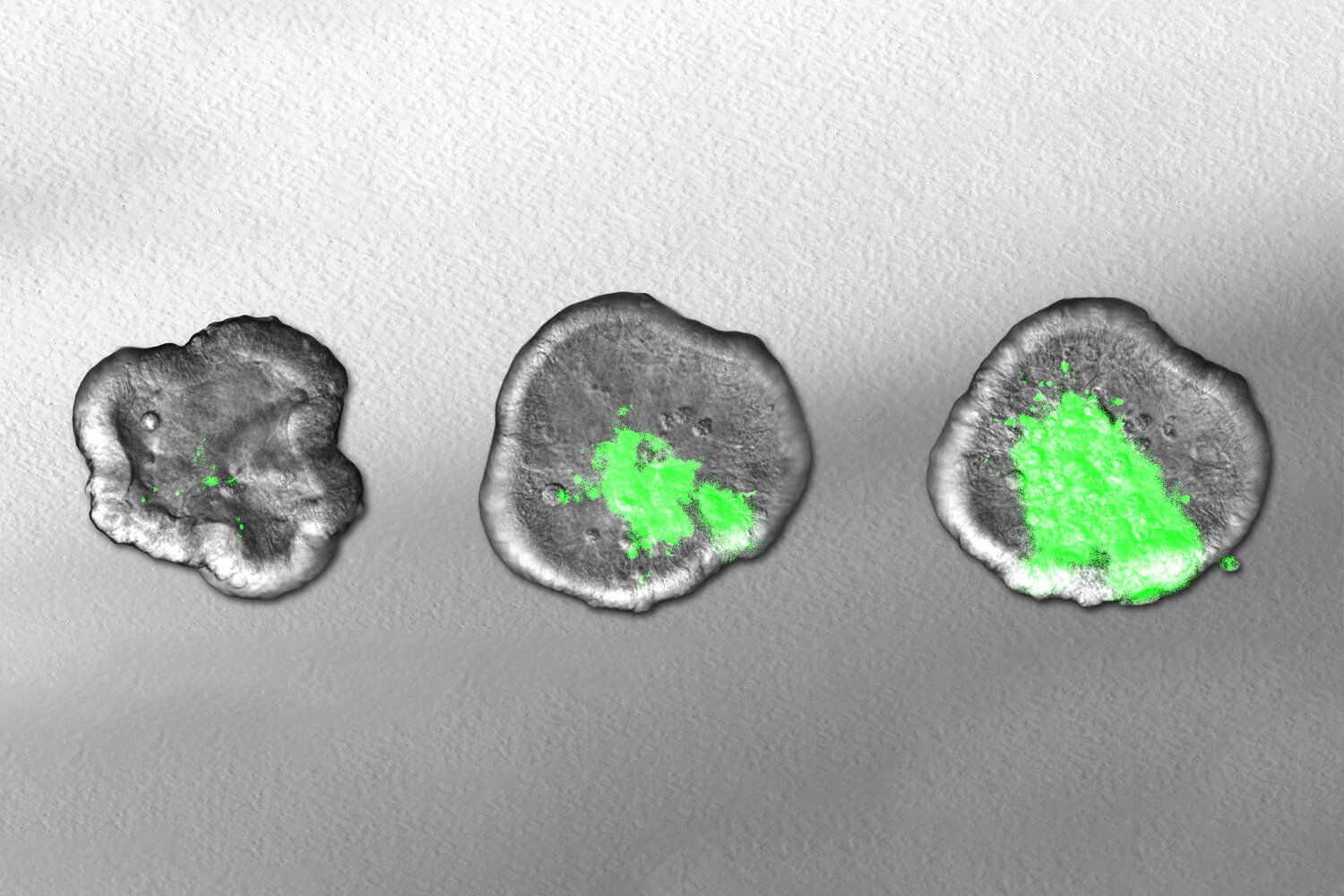
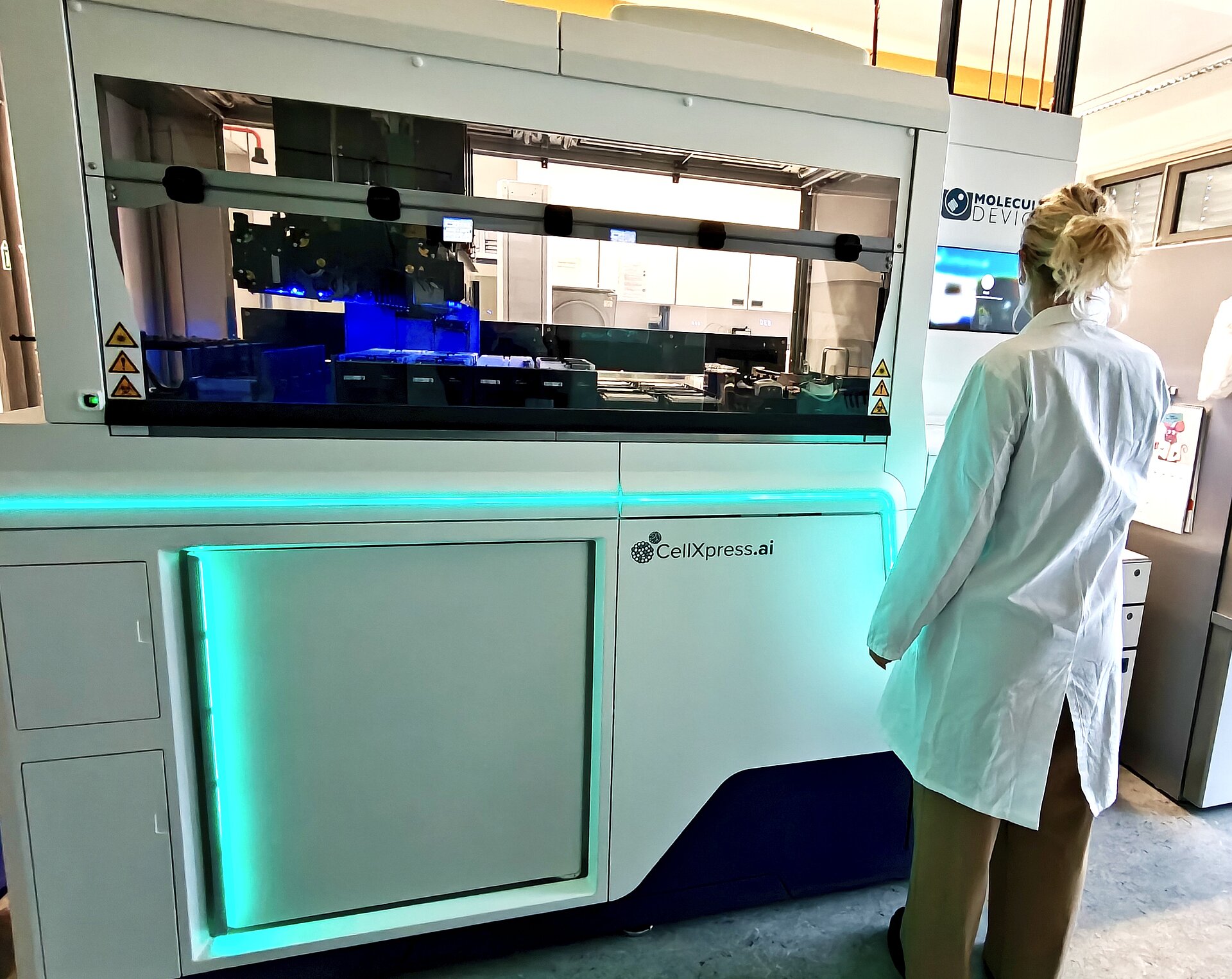
Molly works day and night. With just a soft humming sound, her gripper arm precisely moves cell plates from station to station. The tiny tissue structures are supplied with nutrient solutions through fine pipette tips. No action is random; every movement is accurate. Molly can produce up to 40,000 mini-organs in a month: small models of the intestine, kidney, or heart, often smaller than a pinhead.
© HZI/Hamzah Shahid
Story
Mini-organs for the medicine of the future
© HZI
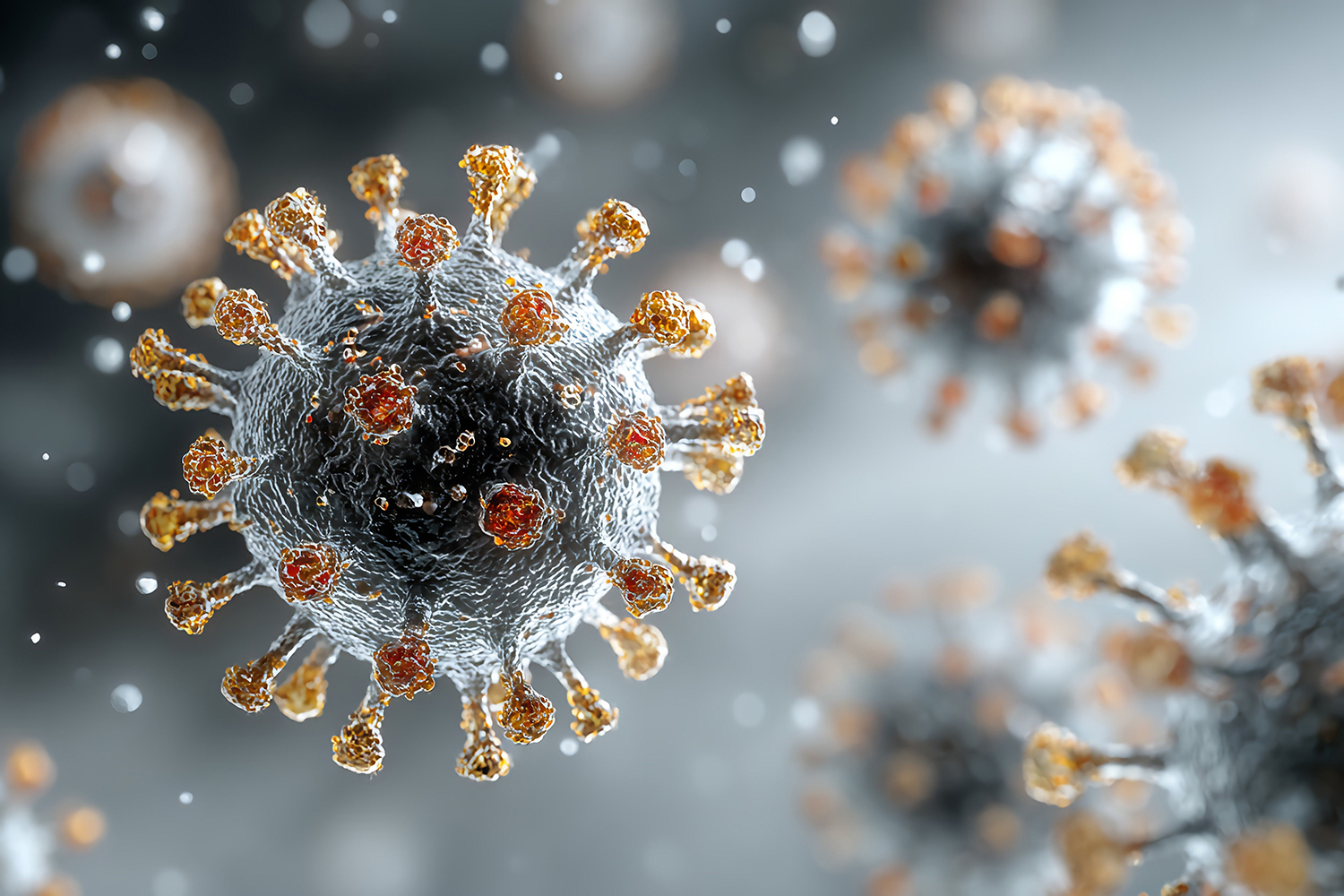
In the laboratory at the Helmholtz Centre for Infection Research (HZI) in Braunschweig, this work has long been part of daily routine. That’s because Molly isn’t a scientist—she’s a cell culture robot. Together with Dr. Kristin Metzdorf’s team, she cultivates so-called organoids—artificially created organ-like structures that open up entirely new possibilities for medicine and infection research. Using these, researchers investigate how viruses and bacteria attack human tissue, how immune cells react, and why some people are better at fending off pathogens than others. Such investigations initially begin in classical cell culture, that is, in a Petri dish containing cells from a specific tissue. However, the limits of what is possible are quickly reached here, because in the human body, many cell types work together and are also influenced by the immune system. Since this complex interaction cannot be replicated in cell culture, the next steps previously had to be carried out in animal models—but now organoids are closing this gap.
However, Kristin Metzdorf explains that organoids should not be thought of as fully functional hearts, lungs, or brains: “Organoids are not complete organs; rather, they mimic organ-like structures. In the case of the intestine, for example, the different sections—such as the small and large intestines—have different functions, and we can grow an organoid that more closely resembles the small or large intestine, respectively.”

© HZI/Verena Meier
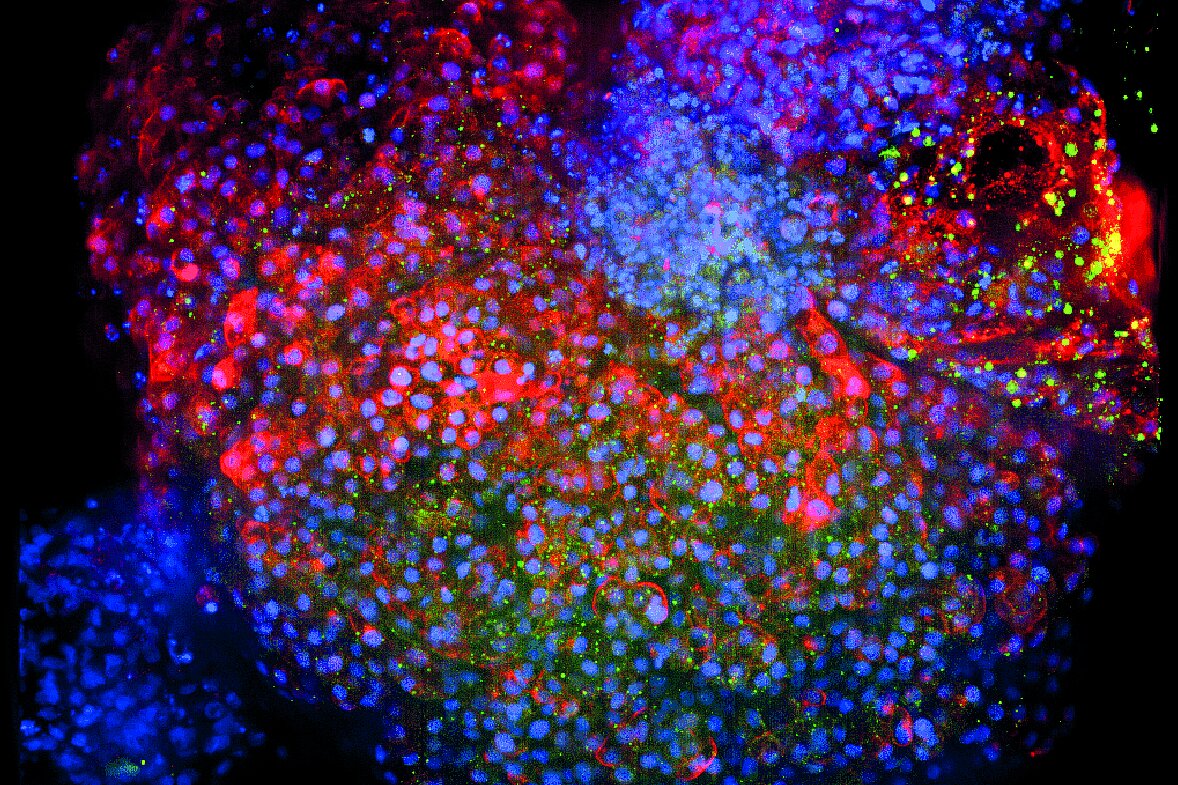
To grow organoids, the researchers use so-called pluripotent stem cells—cells that still carry all the genetic blueprints in their genome and can develop into almost any type of cell. With the help of specific growth factors, the researchers guide them to develop into a specific organ structure. The cultured organoids can then be infected under high-security conditions with, for example, monkeypox viruses, SARS-CoV-2, or the tuberculosis pathogen Mycobacterium tuberculosis. “Organoids can be cultured for a very long time. This allows us to observe the progression of infections and treatment options in human tissue,” says Metzdorf. “In these three-dimensional mini-organs, cells behave more like they do in the human body: They organize themselves spatially, send signals, and react to attacks by pathogens much more realistically than in flat cell layers.”
Organoids cannot yet replicate the interaction with the immune system, but they can at least reduce the need for animal testing. Their greatest strength lies in the high reproducibility made possible by automation. “Molly carries out her work 24 hours a day and can achieve high throughput with great precision. This ensures the comparability of the organoids, which is essential for later analyses,” says Kristin Metzdorf. Getting Molly to perform her routine tasks reliably didn’t work right away. First, she had to be extensively trained and learn the correct procedures with the help of artificial intelligence. “We’ve now gotten past Molly’s childhood illnesses and her puberty, so to speak,” says Metzdorf. “Now she takes over many physically demanding tasks for us, such as lengthy pipetting protocols, so that we have more time for evaluations and the development of more complex organoids.”
A key focus at the HZI is personalized medicine, as cells isolated from patient samples can also be stimulated to form organoids. One such project is MARITH, short for “Mapping Recall Immunity in Human Tonsil Organoids Across Viral Histories”, which the HZI team is undertaking in collaboration with the MRC–University of Glasgow Centre for Virus Research and Hannover Medical School (MHH). The researchers aim to generate organoids from cell samples of the pharyngeal tonsils of donors and use them to investigate the development of immune memory in humans. It has long been known that our immune system remembers characteristic components of pathogens when they enter the body and then forms memory cells for future encounters. However, why this immune memory triggers a much stronger defense in some people than in others remains a mystery. Due to their location at the foremost part of the respiratory tract, the tonsils are particularly frequently exposed to viruses transmitted via the air and droplets. Thus, they are an ideal tissue for studying immune memory. “We can grow organoids from tonsil tissue that reflect the key characteristics of their natural environment and contain functional immune cell populations,” says Kristin Metzdorf. In this way, these mini-organs help uncover the next secrets of our immune system.
Further Information
- You can also listen to Kristin Metzdorf in our podcast episode “Mini-Organs, Big Impact: How Organoids Are Revolutionizing Infection Research”
- You can learn more about organoids on our info center.