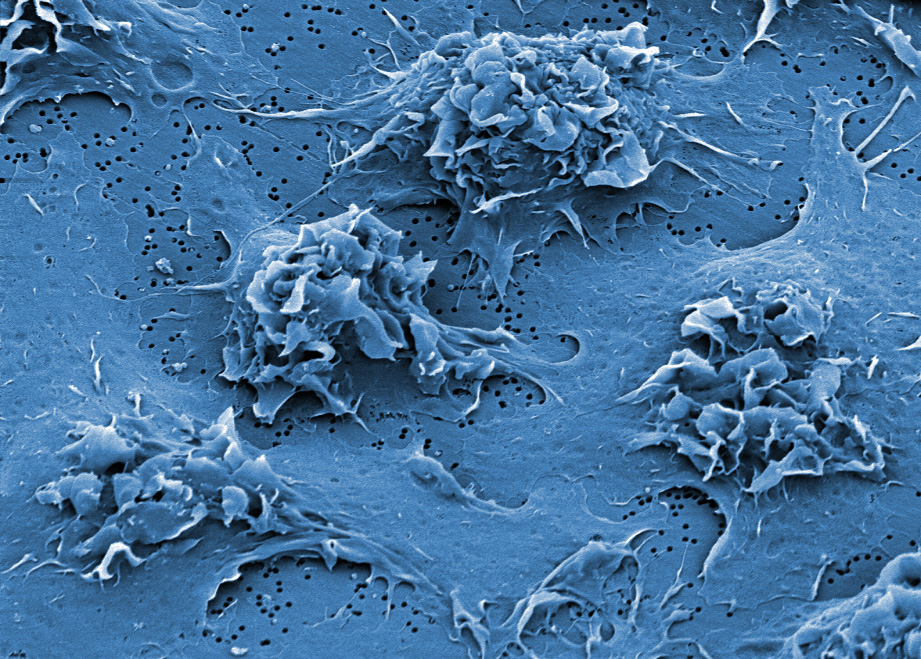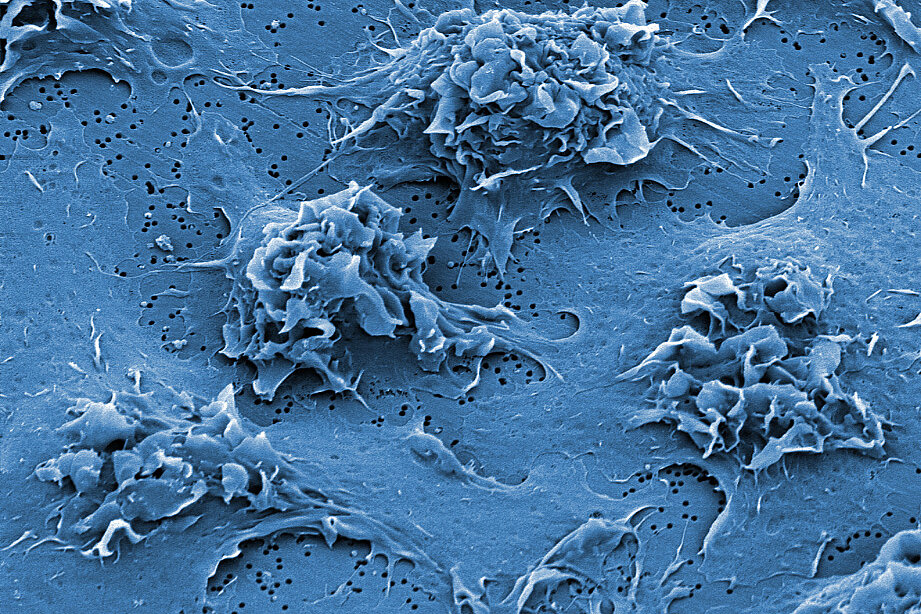
Macrophages are a key component of the human immune system and help the body fight off infections: as soon as a pathogen invades, the macrophages engulf and “digest” it. Hence, macrophages are often referred to as “scavenger cells”. However, some intracellular pathogens such as Salmonella manage to outwit macrophages and even multiply inside them. How these immune cells maintain the balance between self-preservation and effective pathogen clearance has not yet been fully elucidated. Researchers at the Helmholtz Institute for RNA-based Infection Research (HIRI) in Würzburg, a site of the Braunschweig Helmholtz Centre for Infection Research (HZI) in cooperation with Julius-Maximilians-Universität Würzburg (JMU), have now, together with scientists from Philipps-Universität Marburg, identified a factor that plays an important role in this balancing act: a long non-coding ribonucleic acid, or lncRNA for short.
“We have identified an RNA molecule specific to humans called SAILR,” says Alexander Westermann, an affiliated scientist at HIRI and a professor at JMU. He is the first author of the study published in the Proceedings of the National Academy of Sciences (PNAS). In resting macrophages, SAILR binds to the “survival protein” 14-3-3β and helps keep the cells alive. During a bacterial infection, however, SAILR is rapidly silenced. As a result, macrophages are more likely to die, which eliminates the safe havens where bacteria can multiply inside the cell. “This makes SAILR an RNA-based kill switch,” concludes Westermann.
“Until now, it was generally assumed that macrophages primarily upregulate defense mechanisms to combat pathogens, rather than triggering their own destruction,” explains Leon Schulte, a professor at the University of Marburg and corresponding author of the study. “It was therefore completely unexpected that an infection would actively suppress a factor that promotes cell survival,” adds HIRI Director Jörg Vogel, in whose lab the study was initiated.
A biomarker for severe infections
SAILR directly connects macrophage survival to the interaction between host and pathogen. This links a fundamental molecular mechanism to human disease. It suggests that the RNA molecule may be useful as a diagnostic marker or therapeutic target for severe infections and inflammation. Clinical research already points in this direction: In severe cases of COVID-19 or sepsis, SAILR levels in blood cells drop significantly. In the future, SAILR could help predict the severity of an infection. “In the long term, SAILR could potentially be used as a biomarker for severe disease progression, for instance, through blood tests,” says Schulte.
However, SAILR is not only of interest as a marker but also as a potential therapeutic target: “The prospect of specifically modulating SAILR—for example, by lowering it to eliminate infected macrophages or stabilizing it to limit tissue damage—could prove promising. This could lead to new RNA-based therapies for sepsis and other severe inflammatory conditions by enabling targeted control of macrophage survival,” Vogel suggests.
At the same time, the findings offer new perspectives on the development of the human immune system: SAILR is present only in primates and thus represents an evolutionarily recent form of immune regulation absent from standard experimental models. “This highlights why certain infection mechanisms can only be replicated to a limited extent in the laboratory and could help tailor drugs and testing systems more specifically to humans,” says Westermann.
Research at the interface of RNA, immunity, and infection
This work opens up new avenues of research at the interface between RNA biology, immunity, and infection. Future studies could investigate in greater detail how RNA-protein interactions in immune cells regulate inflammatory processes and host-pathogen interactions. At the same time, non-coding RNAs are coming into sharper focus as potential key regulators of the immune response.