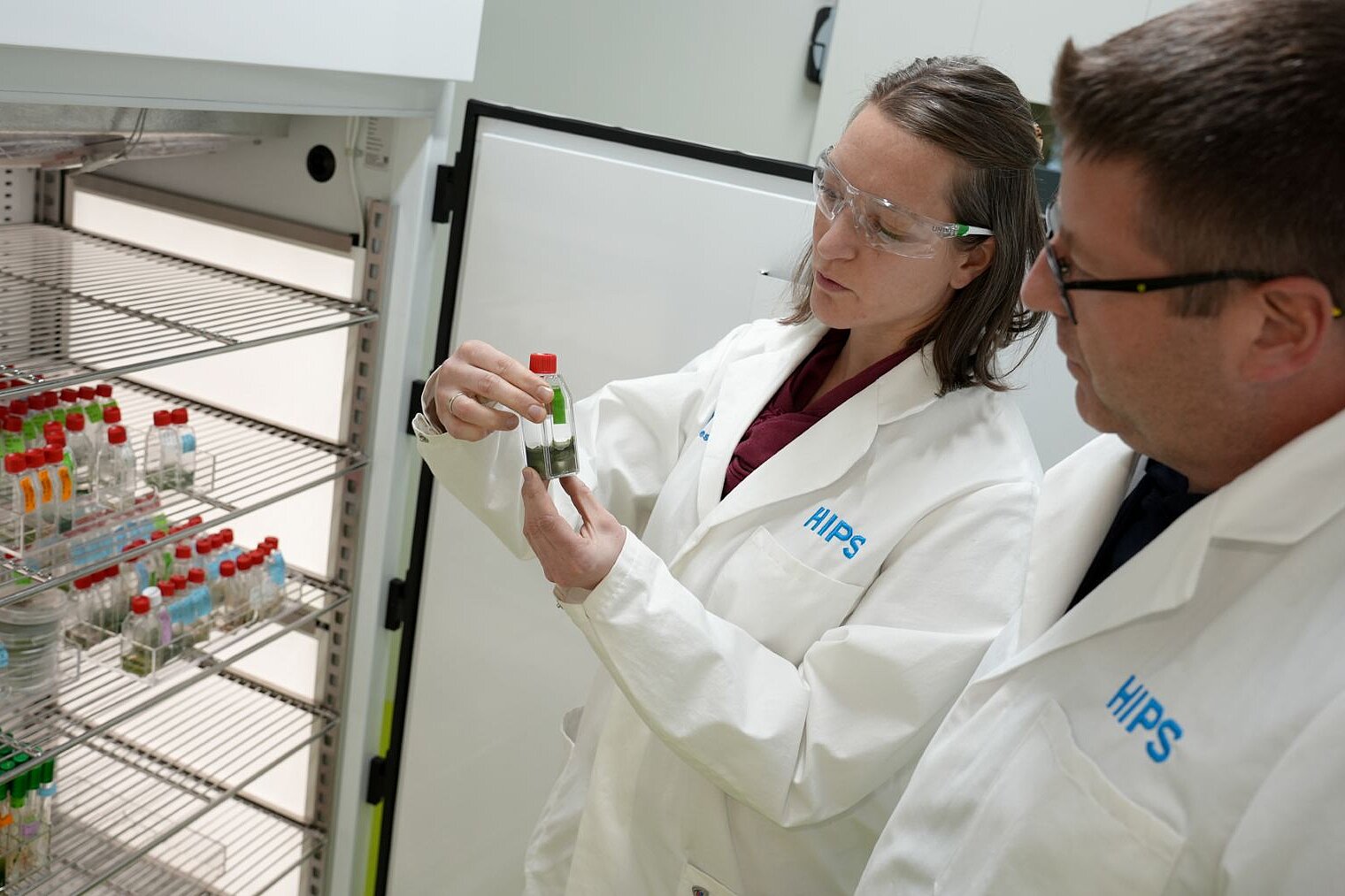
AIMARIA combines artificial intelligence methods with modern synthetic biology and biotechnological process development. The goal is to create an end-to-end development pipeline: from the digital identification of promising molecules, through laboratory testing of their efficacy, to large-scale production. The researchers aim to identify new drug candidates and develop sustainable processes for the production of complex marine natural products. These natural products are also of economic interest in other fields. At the same time, the project aims to identify new bioactive compounds and enzymes for pharmaceutical and biotechnological applications. AIMARIA brings together basic research, technology development, and application prospects in a joint European research initiative, thereby also serving as an excellent platform for research at HIPS. HIPS is a site of the Helmholtz Centre for Infection Research (HZI) in collaboration with Saarland University.
At HIPS, Prof. Tobias A. M. Gulder and his team are leading work packages focused on the identification and functional characterization of new bioactive natural products, as well as on the characterization of relevant enzymes for drug discovery. “In our part of the project, we can contribute our expertise in the production and optimization of complex natural products from microorganisms, as well as in the expression of marine natural products and enzymes,” says Gulder, head of the department “Natural Product Biotechnology”. “At AIMARIA, we are part of a strong consortium of research and industry partners that brings a broad spectrum of expertise to the table. This enables us to develop promising drug molecules much more quickly and efficiently than we could on our own.” With its integrative approach, AIMARIA also contributes to achieving overarching European goals. The project aims to contribute to the sustainable use of marine resources, tap into innovation potential for the blue bioeconomy, and strengthen Europe’s position in marine biotechnology.