

Newsroom

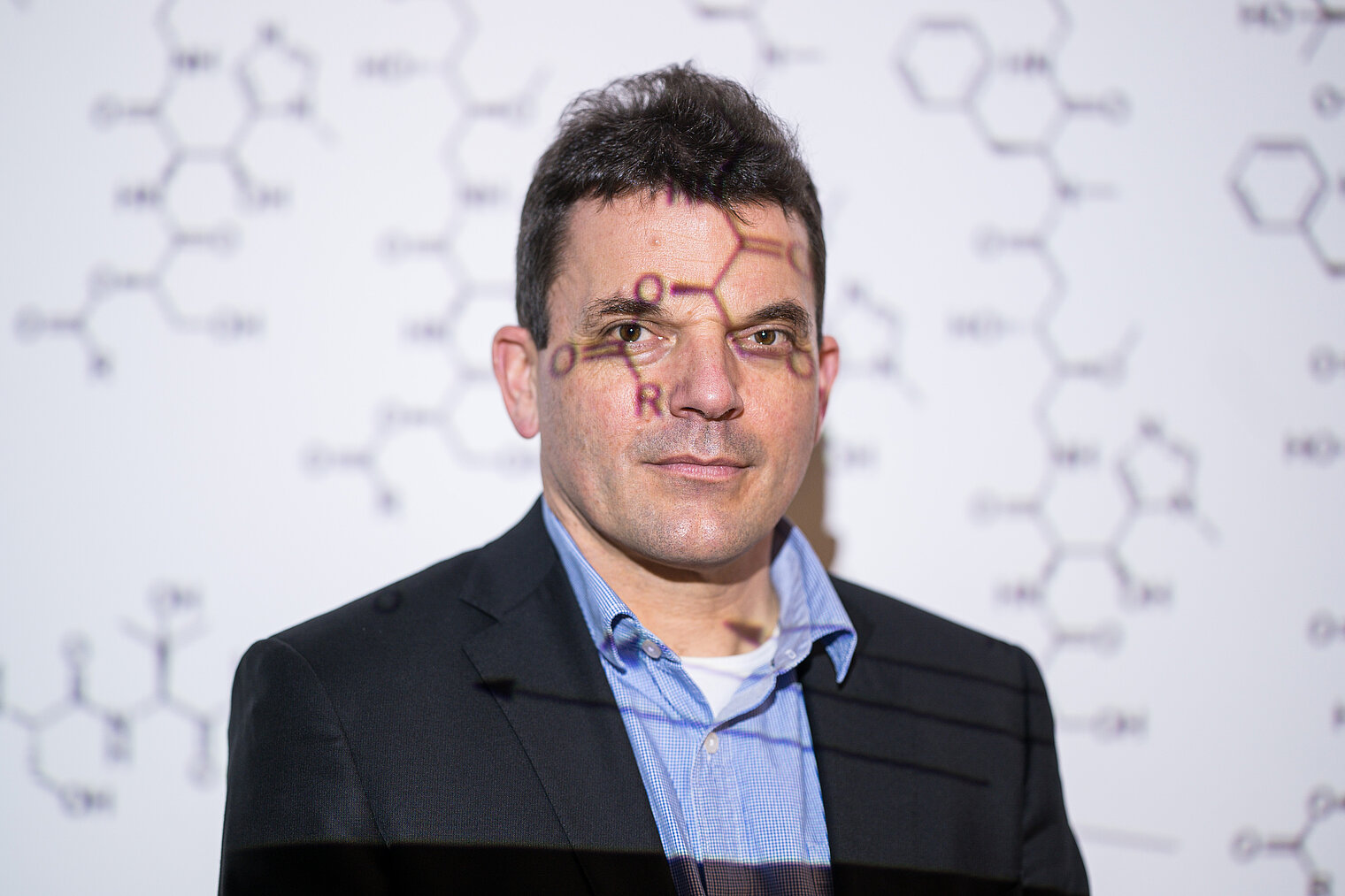
Thomas Pietschmann at the podcast recording
News
Depending on where you are travelling, different viruses are on the move, some of which can cause life-threatening illnesses. Either through contaminated water or food or through insects that can transmit them when bitten. They can spread all over the world due to climate change, travelling and global transport chains. We have all experienced what this can mean in recent years. What can help: Vaccines and other medicines that help our immune system to fight off these pathogens. Finding them is not so easy. For Professor Thomas Pietschmann, head of the Institute of Experimental Virology at TWINCORE and spokesperson for the "Infection Research" research programme at the HZI, this means: challenge accepted!
31.05.2024
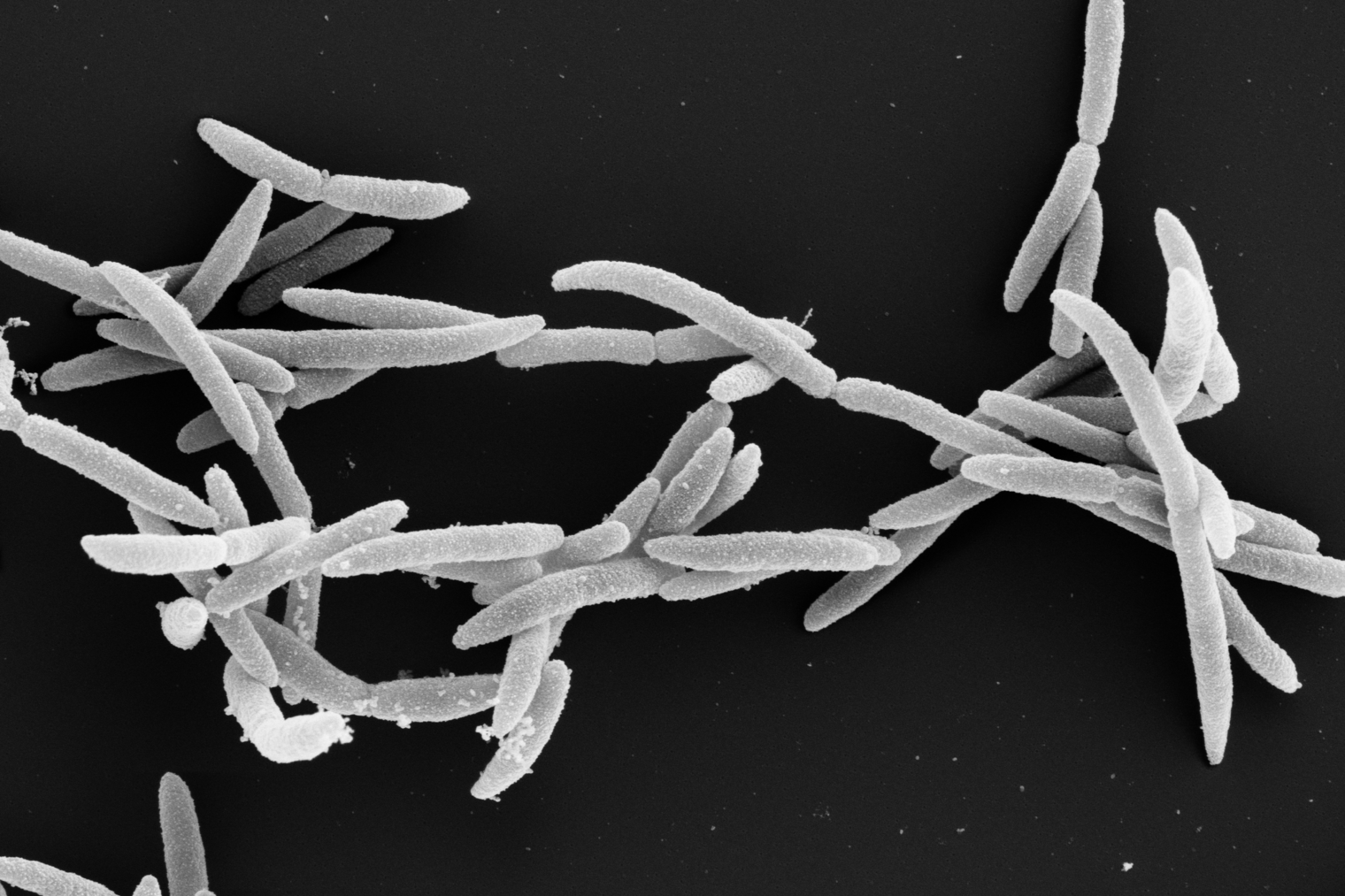
Microscopic image of a colony of Pendulispora rubella
News
Most antibiotics used in human medicine originate from natural products derived from bacteria and other microbes. Novel microorganisms are therefore a promising source of new active compounds - also for the treatment of diseases such as cancer or viral infections. A team from the Helmholtz Institute for Pharmaceutical Research Saarland (HIPS) has now been able to isolate a completely new family of bacteria that has particularly high potential for the production of active substances. The researchers published their findings in the journal Chem.
16.05.2024
Bioreactors
News
A team led by Prof. Achim Hoerauf, University Hospital Bonn (UKB), in cooperation with the University of Bonn and the Helmholtz Centre for Infection Research (HZI), is developing the antibiotic corallopyronin A (CorA) as a treatment for the neglected tropical diseases river blindness and lymphatic filariasis. They have now succeeded to enter into a partnership with the Japanese pharmaceutical company Eisai and to raise a large amount of funding. The team's aim is to develop a safe and sustainably effective drug against these worm diseases, which are transmitted to humans by mosquitoes. The people affected mainly live in Africa and tropical regions and urgently need active ingredients that kill the long-lived adult worms. The project is now being funded with around €5.6 million by the Japanese Global Health Innovative Technology (GHIT) Fund.
16.05.2024
Arm with erythema due to Borrelia infection
News
Lyme disease is the most common disease transmitted by tick bites in Germany. Whether a particular genetic predisposition plays a role in the development of the disease and which immunological processes in the body are involved is not yet sufficiently understood. A research team from the Centre for Individualised Infection Medicine (CiiM), a joint institution of the Helmholtz Centre for Infection Research (HZI) and Hannover Medical School (MHH), has now discovered a responsible gene variant and the immune parameters involved in cooperation with Radboud University Hospital (Radboundumc; Radboud Universitair Medisch Centrum) and Amsterdam UMC (both in the Netherlands). The researchers have published their findings in two studies. These have been published in the journal Nature Communications and BMC Infectious Diseases.
13.05.2024
People in the organoid platform
News
Dr Katarina Barley, Member of the European Parliament, visited the Helmholtz Centre for Infection Research (HZI) in Braunschweig on Tuesday, 30 April 2024. She was accompanied by Braunschweig's Mayor Dr Thorsten Kornblum and other party colleagues. During the visit, the management of the HZI, led by Prof. Josef Penninger and Christian Scherf, presented the current research program and the future strategy of the center. They also provided insights into the management of research data and the use of artificial intelligence.
30.04.2024
A participant of the Future Day 2024 in a laboratory
News
Today, around 70 students from years 5 to 9 visited the Helmholtz Centre for Infection Research (HZI) in Braunschweig to get an idea of what it is like to work in a modern research facility. They got a taste of the world of science and its administration in ten scientific and two administrative departments.
25.04.2024

HZI in the media

Lange , Kommissarische Leiterin der Abteilung Epidemiologie am Helmholtz-Zentrum für Infektionsforschung (HZI), Braunschweig, gegenüber dem

16.01.2026
|
Medscape

... maßgeblich vorantreiben. In Zusammenarbeit mit dem Braunschweiger Helmholtz-Zentrum für Infektionsforschung (HZI) und der Utah State ...

16.01.2026
|
IT Boltwise

... Deutschen Zentrum für Neurodegenerative Erkrankungen, am Helmholtz-Zentrum für Infektionsforschung und am Max-Delbrück-Centrum für ...

16.01.2026
|
Handelsblatt

Das interdisziplinäre Team aus TWINCORE , Helmholtz Zentrum für Infektionsforschung (HZI) und der Medizinischen Hochschule Hannover ( ...

15.01.2026
|
Arzt & Wirtschaft

Manche fordern Placebo-kontrollierte Vergleiche von Geimpften und Ungeimpften, um die Sicherheit der Masern-Impfung zu testen. ...

15.01.2026
|
BR Bayerischer Rundfunk

... können wir Pandemien früh erkennen? Forschende des Helmholtz‑Instituts für One Health zeigen, warum Mensch, ...

13.01.2026
|
Deutsche Welle

... gewinnbringend eingesetzt werden. Das HIPS ist ein Standort des Helmholtz-Zentrums für Infektionsforschung (HZI) in Zusammenarbeit ...

13.01.2026
|
juraforum.de

... nach SARS-CoV-2, sagt Fabian Leendertz. Er ist Direktor des Helmholtz-Instituts für One Health (HIOH) in ...

13.01.2026
|
Deutsche Welle

from the University Hospital Würzburg (UKW), the Helmholtz Institute for RNA-based Infection Research (HIRI), and University of Münster. The

12.01.2026
|
MSN.com

... des Universitätsklinikums Würzburg (UKW), des Helmholtz-Instituts für RNA-basierte Infektionsforschung (HIRI) und der Universität ...

12.01.2026
|
Biermann Medizin

... potential pandemics early on? Researchers at the Helmholtz Institute for One Health are showing why ...

12.01.2026
|
Deutsche Welle

Entdeckung


Forschende am Helmholtz-Institut für RNA-basierte Infektionsforschung (HIRI), einem Standort des Braunschweiger Helmholtz- ...

09.01.2026
|
Bionity.COM

Register now for the HZI-Newsletter