


Newsroom

interactive exhibit
News
Have you ever wondered where our medicines actually come from? The answer often lies right beneath our feet, in the hidden world of bacteria and fungi. At Lower Saxony Day 2026, you can dive into the fascinating world of microorganisms with the Helmholtz Centre for Infection Research (HZI) and discover how nature helps us in the fight against infectious diseases and antibiotic resistance. The HZI will be represented at the state mile on Kurt-Schumacher-Straße at the booth of the Lower Saxony Ministry of Science and Culture (MWK). The public festival will take place from June 12–14, 2026, in Braunschweig.
29.05.2026
Portrait Luka Cicin-Sain
News
The Croatian Academy of Sciences and Arts (Hrvatska akademija znanosti i umjetnosti (HAZU)) has announced the election of 32 new members to its ranks. Among the newly elected corresponding members is Prof. Luka Čičin-Šain, head of the department “Viral Immunology” at the Helmholtz Centre for Infection Research (HZI). Čičin-Šain studies how our immune system responds to widespread viruses and develops new vaccine technologies against viral diseases.
28.05.2026
 A view of the HIPS exhibit MYXO-MAT-3000, where visitors can feel objects with their gloved hands
News
The floating science exhibition “MS Wissenschaft” has been on tour again since May 7, and the Helmholtz Institute for Pharmaceutical Research Saarland (HIPS) is represented on board with an interactive exhibit. As part of the 2026 Science Year on the theme “Medicine of the Future,” MS Wissenschaft is making stops in more than 30 cities in Germany, Austria, and, for the first time, Poland. On board: the “MYXO-MAT-3000,” which playfully sends visitors on a quest to discover new sources of active ingredients, immersing them in the world of antibiotic research. HIPS is a site of the Helmholtz Centre for Infection Research in collaboration with Saarland University.
18.05.2026
group photo of 8 persons with funding check
News
At the 6th Portfolio Conference of the Institute for Biomedical Translation (IBT) Lower Saxony at Medical Park Hannover, the “DeColi” project of the Helmholtz Centre for Infection Research (HZI) in Braunschweig was awarded a grant of approximately 1 million euros. DeColi takes a preventive approach: Instead of reacting to infections that have already developed, the project aims to specifically eliminate Gram-negative pathogens from the gut reservoir before they cause disease. A total of 2.3 million euros was awarded at the conference. In addition to DeColi, the “Pathopress” project by the University Medical Center Göttingen and HAWK Göttingen received funding.
07.05.2026
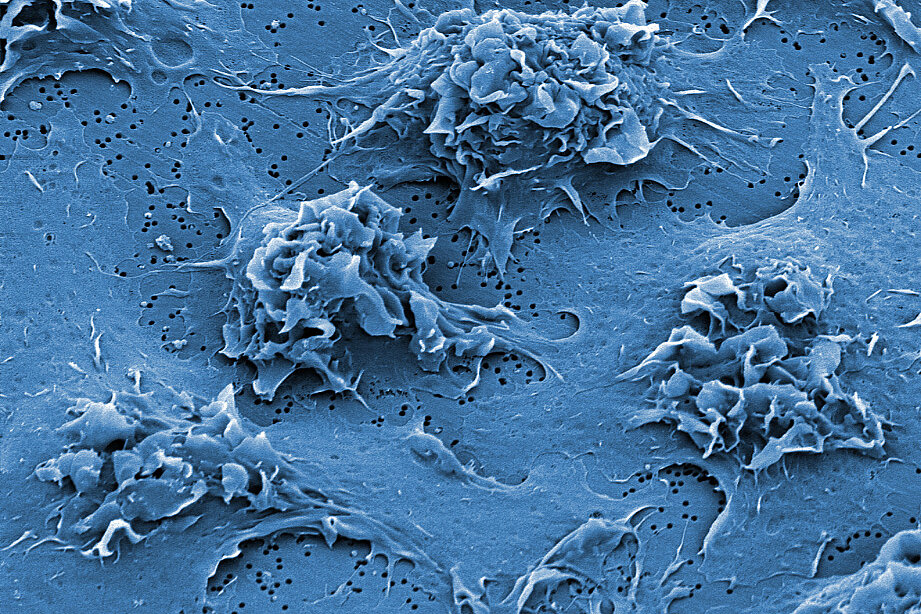
Light microscope image of cervical cancer cells with magenta stainings
News
Many applications—whether in medicine, biotechnology, or agriculture—require the ability to eliminate unwanted cells, since these can compromise health, reduce productivity, or interfere with desired biological processes. However, doing so without affecting other cells remains a significant challenge. A collaboration of the Helmholtz Institute for RNA-based Infection Research (HIRI) in Würzburg, Akribion Therapeutics in Zwingenberg, as well as the University of Utah and Utah State University in the US, has now resulted in a CRISPR-based tool that can target specific cells based on a recognized transcript, opening up numerous potential uses. The findings were published today in the journal Nature.
06.05.2026
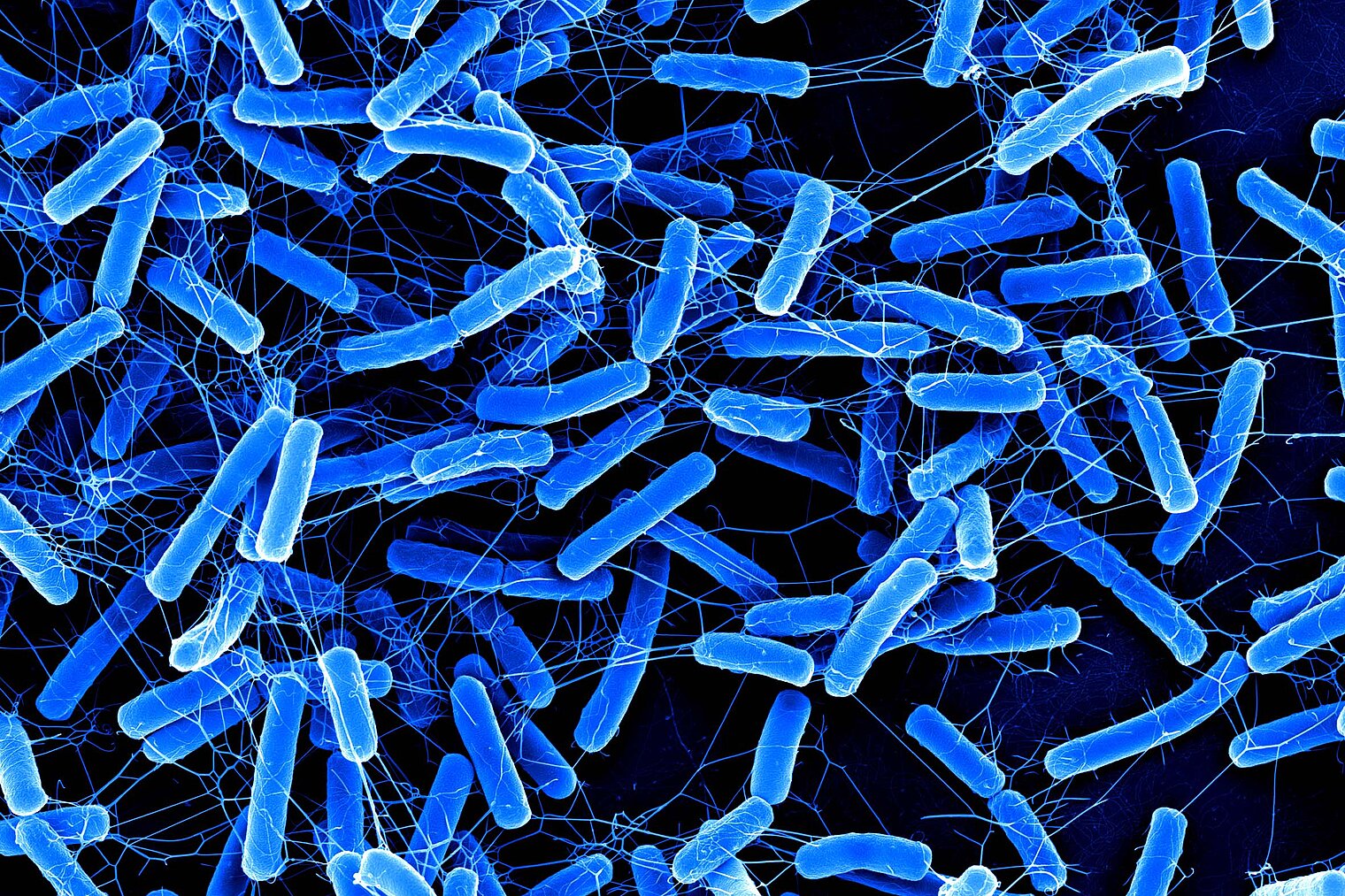
Digital illustration of various rod-shaped bacteria in different colors
News
The bacterium Segatella copri is one of the most common inhabitants of the human gut. In their latest study, researchers at the Helmholtz Centre for Infection Research (HZI) have discovered that some strains of this bacterial species possess genetic bonus material that makes them more oxygen-tolerant. The presence of the molecular regulator OxyR is crucial for this. Using extensive data analyses, the HZI team discovered that strains of Segatella copri carrying OxyR are particularly prevalent in industrialized regions of the world. The researchers suspect that the presence of OxyR provides a selective advantage for the bacterium in these environments. Disruptions to the gut microbiome, such as those caused by antibiotics, can lead to temporary increases in oxygen levels in the gut. The scientists aim to determine the health effects of intestinal colonization by different strains of Segatella copri in further studies. The study was published in the journal “Cell Host and Microbe” today.
06.05.2026

HZI in the media

Critters that dine on flesh and waste also consume the animal’s DNA. That genetic material is helping scientists detect and map elusive species and their pathogens.

27.05.2026
|
Knowable Magazine
26.05.2026
|
DER PRIVATARZT DIGITAL: Specialist articles for medical staff
23.05.2026
|
Kronen Zeitung (Online)
22.05.2026
|
SR Saarländischer Rundfunk

Polio in Deutschland – die Kinderlähmung ist noch lange nicht Geschichte

21.05.2026
|
Medical Tribune
20.05.2026
|
DocCheck News
18.05.2026
|
Rheinische Post

Register now for the HZI-Newsletter