Infections and Cancer
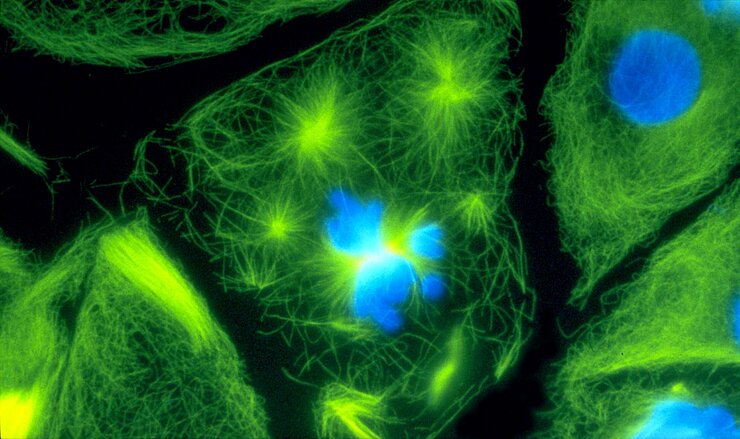
For a long time one believed, cancer and infections were two completely independent desease fields. This opinion still prevails: One gets infection illnesses from the outside while cancer originates in the body. Such a strict separation is obsolete as the worldwide most frequent tumor illnesses are cervical, liver and stomach cancer.
Cervical cancer is the result of exposure to human papilloma viruses (HPV). Chronic liver inflammation caused by hepatitis B and C viruses can lead to liver cancer. More than 75 percent of stomach tumors can be traced back to infections with Helicobacter pylori.
Vaccinations as cancer prevention
Vaccinations are therefore an important component of cancer prevention. The HPV vaccination is recommended for boys and girls aged 9 to 14. In addition to cervical cancer, it also prevents other HPV-related cancers, e.g., in the mouth and throat, in the anal area, and on the genitals. Chronic hepatitis B can be treated with antiviral drugs that inhibit virus replication. However, since these drugs do not usually completely cure the infection, the TherVacB project, in which vaccine researchers from the HZI are also involved, is developing a therapeutic vaccine against hepatitis B.
The bacterium Helicobacter pylori is the most common cause of stomach cancer. To prevent these cases of cancer and also reduce the use of antibiotics, the Vax2Muc consortium is developing a vaccine against the bacterium that is designed to trigger an immune response in the stomach lining and prevent infection.
Worldwide, some 20 million people develop cancers annually - a high percentage of those diseases are caused or promoted by pathogens like viruses or bacteria. And, of course, many cancer patients are particularly susceptible to infection due to a weakened immune system. By extension, infection research is cancer research - and vice versa.
Oral cavity bacteria promote cancer growth
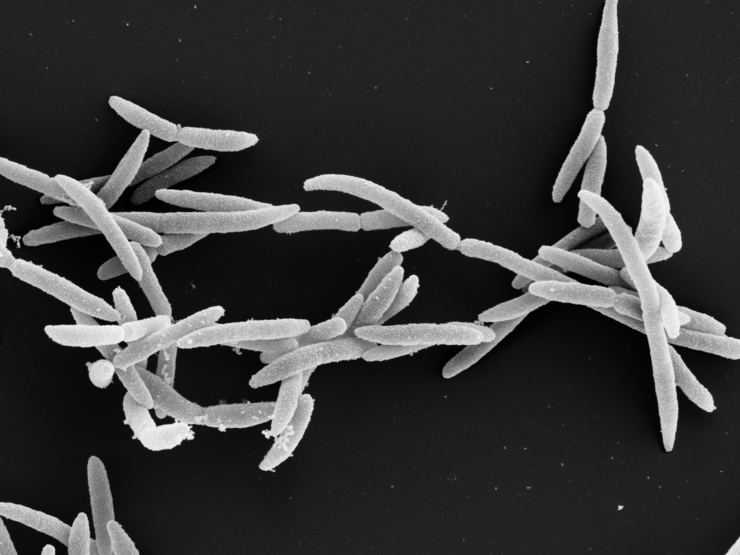
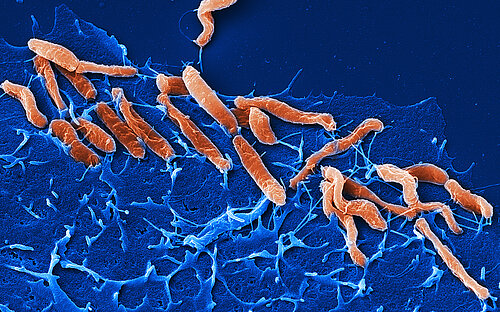
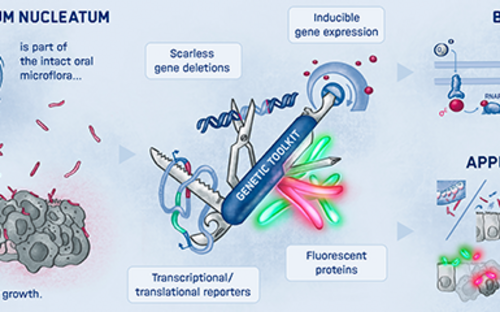
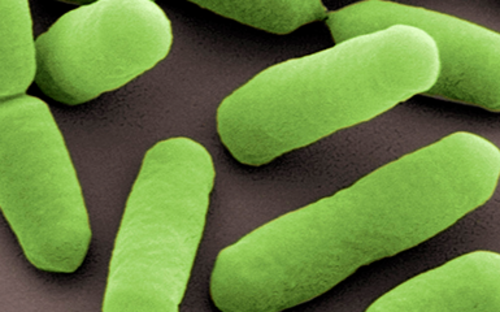
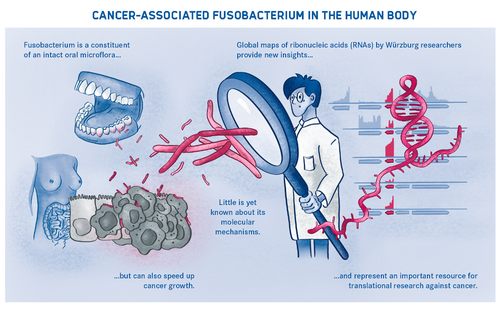
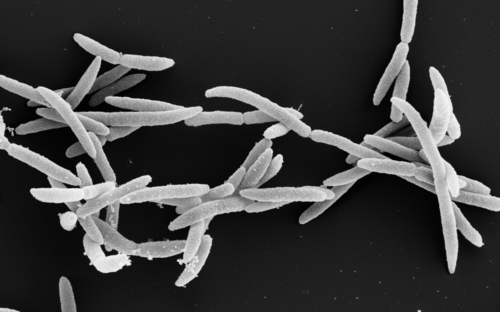
Cancer and microorganisms have other points of contact beyond infectious diseases: Fusobacteria are a normal component of the oral cavity microbiome. At the same time, Fusobacterium nucleatum is suspected of promoting tumor growth in esophageal, colon, and breast cancer and influencing metastasis formation. Researchers at the Helmholtz Institute for RNA-based Infection Research (HIRI) are therefore developing strategies to specifically eliminate the bacteria in carcinomas. To this end, they are focusing on peptide nucleic acids (PNAs). These are artificially produced molecules that resemble DNA or RNA, but, in contrast, have a backbone made of a protein-like structure. Scientists can tailor PNAs to specifically block the genes of pathogens. At the same time, these precisely tailored antibiotics spare beneficial members of the microbiome. The goal of the HIRI researchers is to develop an alternative to conventional antibiotics with fewer side effects. Eliminating Fusobacteria from tumors could also improve the chances of curing cancer.
New drugs from natural substances
Unlike PNA, many antibiotics developed by drug researchers at the HZI are not artificially produced but originate from nature. They have also isolated an effective substance from soil bacteria that can be used to treat cancer. Epothilone was isolated from myxobacteria by researchers at the German Research Centre for Biotechnology mbH (GBF) – a predecessor of the HZI – developed into a breast cancer drug, and approved for use in the US in 2007.
Status: February 2026
(jgr, cwe)
Involved research groups
-
Experimental Virology
 Prof Dr Thomas Pietschmann
 -
RNA Biology of bacterial infections
 Prof Dr Jörg Vogel

![[Translate to English:] Portrait Thekla Cordes](/fileadmin/_processed_/f/6/csm_TheklaCordes_1a_f7fae35073.jpg)